London Daily

Focus on the big picture.
Friday, Jun 19, 2026

Government denies top doctor's claims UK is low on Pfizer vaccines

Government denies top doctor's claims UK is low on Pfizer vaccines

Claims by a leading NHS doctor that the UK is running ‘very low’ on Pfizer vaccines have been rebuffed by the Government.

Dame Clare Gerada also claimed the vaccine is being offered to people three weeks after their first jab – against Government advice for an eight-week wait.

It received regulatory approval in December on a minimum gap of three weeks and ‘hundreds’ of GPs are following this guidance with their patients, according to reports.

The UK government originally settled on recommending a 12-week gap between Pfizer-BioNTech jabs to allow more people to get a first jab.

Last month, the gap between appointments was cut to eight weeks as the NHS strives to double jab all adults by mid-September.

Dame Clare, co-chair of the NHS Assembly, made her comments on the BBC Radio 4 Today show on Tuesday.

It was put to her that ‘a lot of GPs have chosen to offer a shorter time difference [between doses] and that’s causing quite a lot of confusion’.
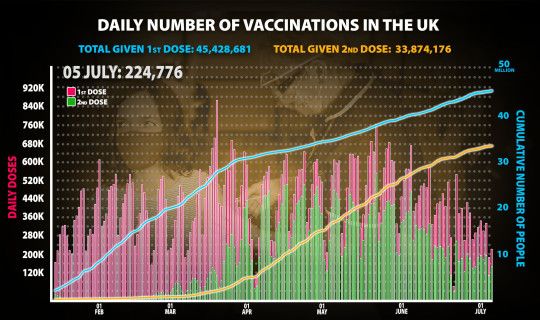
Nearly 80 million jabs have been delivered in the UK since December


She replied: ‘We are offering the Pfizer one at three weeks [after someone’s first jab].

‘At the moment, we’ve mainly got the AstraZeneca vaccine and very few Pfizer.

‘So I think the confusion has been the fact that we’re calling people for the AstraZeneca and actually cancelling people for the Pfizer as our supplies are running short.’

A spokesperson for the Department of Health and Social Care denied the statement.

They told Metro.co.uk: ‘There are no shortages of vaccines and our vaccination programme is making phenomenal progress with more than 4 in 5 people in the UK receiving their first dose.

‘We have reduced the dose interval for the under 40s from 12 weeks to 8 weeks to ensure every adult has the chance to have two doses by mid-September.

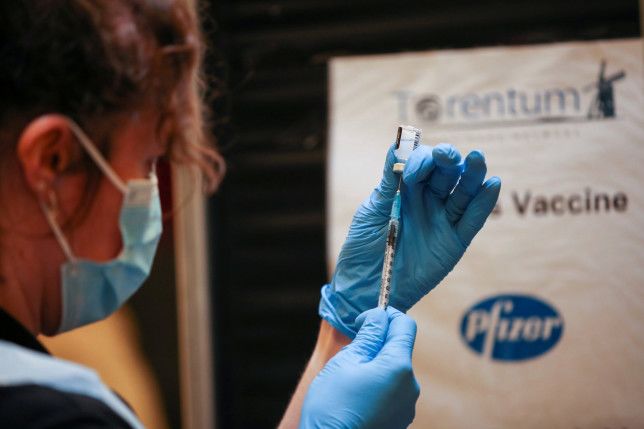
A shortage of the Pfizer-BioNTech coronavirus vaccine has been reported by a leading doctor


‘We are on track to offer every adult a first dose and two-thirds of adults a second dose by the 19th July.’

People in their 20s and 30s aren’t being offered the AstraZeneca jab amid concerns there is a small chance of young people developing an extremely rare blood clot.

Speaking alongside Dame Clare, Professor Peter Openshaw of Imperial College London was asked if it’s better for people to bring forward their second Covid jab or stick to the 12-week gap.

He said: ‘That’s a really interesting one. I’m terms of how the vaccines work… there is what you might call a sour point … where if you administer the second dose between six and seven weeks, you might actually have a much less effective boost than if you wait for eight weeks or more.

‘So eight weeks is the minimum and 12 weeks was a very sensible choice because of that effect of your immune system needing to go into a resting state before you give it a second boost.’

Newsletter

Related Articles

0:00
0:00
Close
Payment Fraud Losses Reach £1.28 Billion and Raise National Security Concerns
Lending to Small Businesses Climbs to Highest Level Since Late 2024
Middle East Conflict Clouds UK Economic Recovery Despite Strong First-Quarter Growth
Bank of England Moves to Simplify Capital Rules for Smaller Lenders
UK Government Fast-Tracks National Security and Cyber Resilience Legislation
Ofcom Investigates Telegram Over Alleged Role in Organising Arson Attacks
MPs Press Fujitsu to Speed Compensation for Post Office Horizon Victims
Bank of England Delays Final Basel III Implementation Changes to Support UK Banking Competitiveness
Pound Falls as Political Uncertainty and Bank of England Signals Weigh on Markets
0Andy Burnham Wins Makerfield By-Election and Emerges as Main Challenger to Keir Starmer
Dorset Council Tests AI Tools to Streamline Local Planning Applications
UK Researchers at Kew Gardens Use AI to Speed Up Identification of Threatened Plant Species
UK Gilt Yields Ease Toward 4.8% as Inflation and Labour Market Data Weigh on Bonds
Bank of England Data Shows Resilient SME Lending Despite Economic Slowdown
UK Finance Reports Weakening Services Activity as Business Confidence Softens
UK Introduces Mandatory Internal Complaints Process Under Data Use and Access Act
Bank of England Governor Andrew Bailey Flags Geopolitical Uncertainty as Key Risk to Inflation Outlook
Bank of England Holds Interest Rates at 3.75% as Policymakers Signal Cautious Stance on Inflation Risks
Cornwall Clergy Raise £40,000 for Church Repairs Through Everest-Themed Charity Challenge
UK Business and Social Landscape Reflects Strain From Geopolitical and Domestic Pressures
Tensions Grow in UK Over Sikh Kirpan and Religious Symbolism in Public Debate
Energy Price Cap Increase Set to Lift UK Household Bills by 13 Percent
University of Reading Ranked 196th in QS World University Rankings
UK Maritime Archaeologists Identify 17th-Century Dutch Shipwreck Off Devon Coast
Oxford Union Islam Debate Sparks Protest From Faith Leaders in UK
UK Social Cohesion Debate Intensifies After Religious Prejudice Survey Findings
UK SME Lending Rises Despite Geopolitical Uncertainty and Cautious Outlook
Foreign Demand for UK Gilts Remains Sensitive to Global Inflation Trends
Labour Party Faces Leadership Pressure After Weak Local Election Results in UK
Transport Costs Drive Inflation Pressure as Petrol Prices Push Up UK CPI
British Chambers of Commerce Cuts Growth Forecast as Middle East Conflict Weighs on Investment
UK Economy Grows 0.6 Percent in First Quarter but Outlook Remains Weak
Bank of England Holds Interest Rates at 3.75 Percent as Inflation Risks Persist
Energy Price Cap Rise Expected to Keep UK Inflation Above Target Through 2026
Health Authorities Warn of Rising Cases of Seasonal Respiratory Illnesses
BAE Systems and Rolls-Royce Advance Multi-Nation Fighter Aircraft Programme
National Archives Publish Declassified Documents on Cold War Energy Security Planning
British Retail Spending Rises Despite Continuing Cost-of-Living Pressures
Wales Launches Social Housing Pilot to Address Affordability Pressures
British Energy Companies Commit £5 Billion to Geothermal and Hydrogen Projects
Northern Ireland Debates Cross-Border Healthcare Partnership With the Republic of Ireland
UK Establishes National Artificial Intelligence Safety Centre With Leading Universities
UK Reports Decline in Small Boat Crossings After Expanding Intelligence Cooperation With France
Scottish Parliament Launches Inquiry Into Delays to Renewable Energy Projects
National Crime Agency Dismantles Alleged Multi-Million-Pound Money Laundering Network in London
Transport Strikes Disrupt Rail and Bus Services Across Northern England
United Kingdom and European Union Open New Security Dialogue on Defense and Border Cooperation
Bank of England Holds Interest Rates at 5% as Services Inflation Remains Elevated
UK Government Unveils Major National Health Service Reform Focused on Decentralization and Performance Funding
Government Advances New Airport Slot Rules to Ease Airline Operating Constraints
×