

Glass extension ideas – create light-filled glazed spaces to enlarge and enhance any home
Looking to extend your living space and add more natural light? These glass extension ideas are just the thing to inspire a home renovation that adds both space and a sense of openness to any style of home. From modern barn conversions to period properties in need of extra space, a glass extension always delivers the wow factor.
For spaces large and small a glass extension is one of the most exciting ways to open up the layout of your home. As the popularity of open-plan kitchen and dining areas increases so does the demand for stunning glass extensions.
A dramatic glass structure across the wasted space of a side return, a contemporary glass box in a courtyard or elegant traditional-style conservatory added to the rear can all revitalise the feel of our homes, making them more suited to 21st-century living.
There are so many magnificent ways in which you can add space to your home with a glass extension. No longer restricted to the traditional white glass conservatory, there’s a wonderful variety of architecture that will increase your space and hugely improve your home life.
You might want to extend your living room, add a new kitchen-dining space, study or playroom. Done well, a glass extension can improve the flow of the entire ground floor and how the spaces are connected, allowing you to transform your living space with a more open and inviting feel.
Glass extension ideas
A glass structure is the modern hero of any home renovation project. Our edit of stunning glass extension ideas offers plenty of architectural inspiration for all property types and lifestyle needs.
1. Renovate with a captivating glass corridor
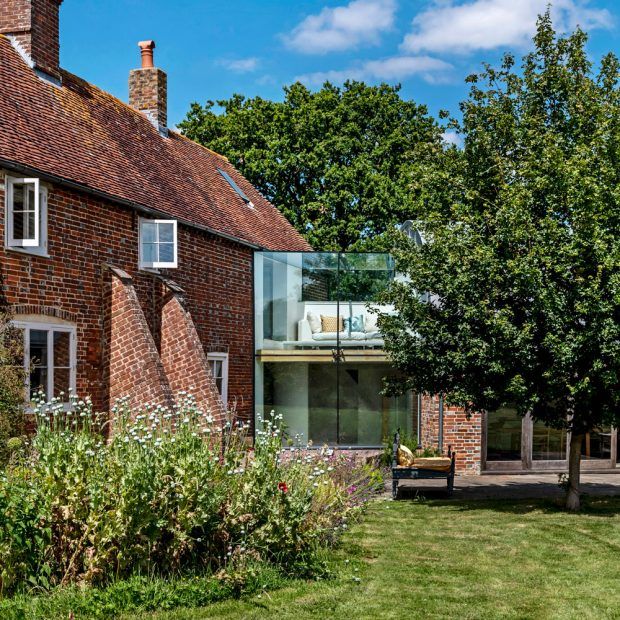
Would you ever believe this was once a run-down property? A dilapidated farmhouse and outbuildings, which hadn’t been updated for in over 30 years? Now it’s a charming farmhouse with an eye-catching extension. Keen to bring in more space and light, the owners of this farmhouse added an eye-catching extension.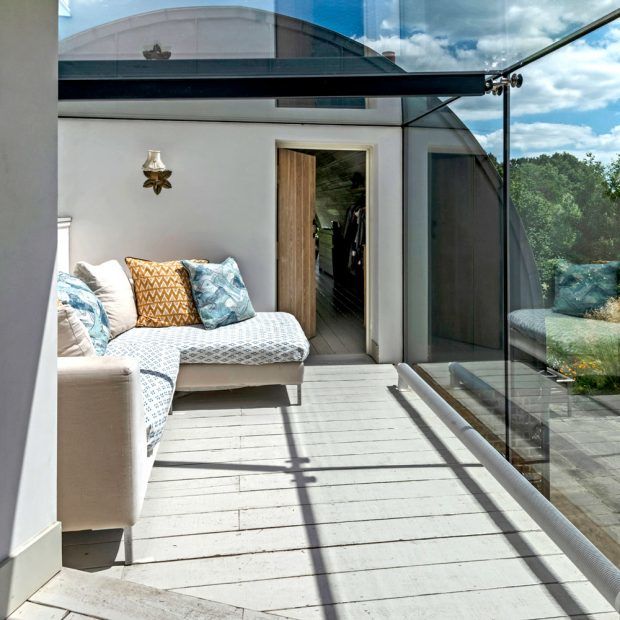
A glass walkway links the old to the new, and an arched zinc-clad roof on the upper storey holds the main bedroom, dressing room and en suite, and a light-filled kitchen and dining area below.
When choosing vast expanses of glass for an extension, Architect Peter Chiu of FC Architects shares his tips. ‘Be mindful of solar gain and over heating,’ he says. ‘If it’s west or south facing you’ll want a reflective coating to keep the space cool.’
‘Frameless glazing always has a frame. Ot’s just hidden or minimal. If you try and hide the frames all round, make sure the glass can actually be inserted and removed in case of breakages.’
2. Create a courtyard within a glass box extension
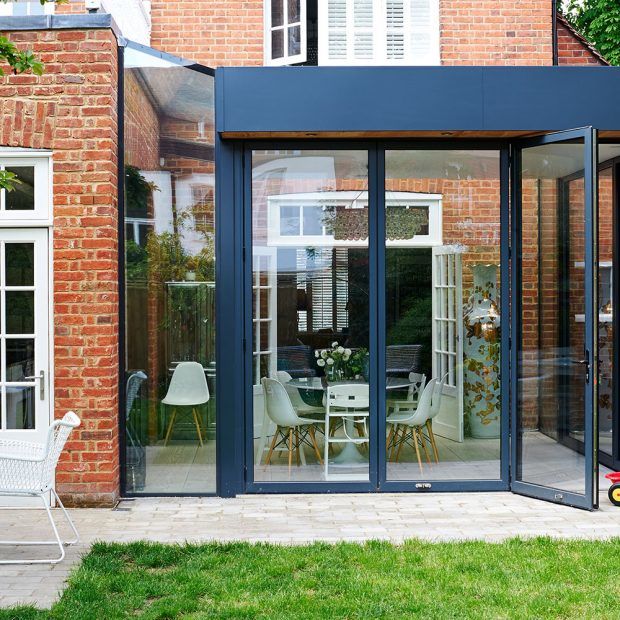
It’s hard to beat the ‘wow’ factor of a glass-box extension. Their ultra-modern design provides a bright living area, with unbroken views of the garden. They even work with period homes, but it’s essential to use the best-possible glass with a high-performance coating for year-round use.
Building solely with glass is costly, but you can achieve the look for less by using smaller panes and ultra-thin low-profile steel frames.
3. Extend out with a glass lean-to
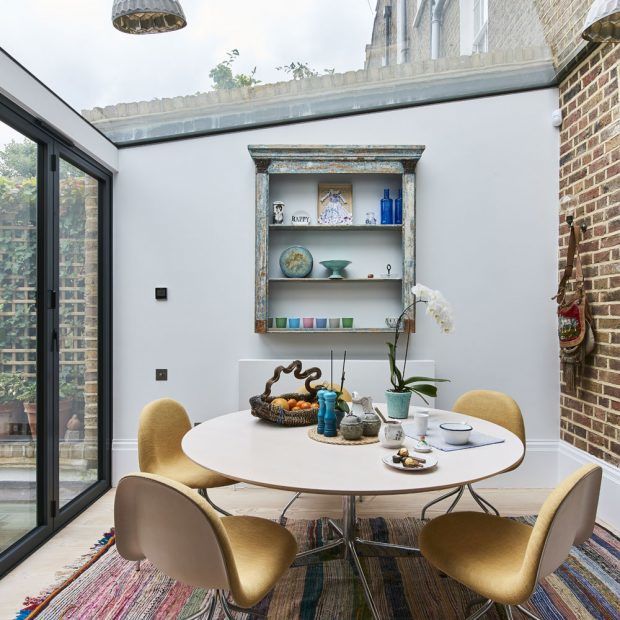
Go out to the permitted boundary line for your extension but feel like you’re getting more from the space by choosing a glass roof. The single glass panel will make the space feel endless, and far less enclosed that a a timber framed alternative. Ensure to opt for the right glazing to ensure it’s not allowing the heating to escape throughout the colder months.
4. Square off available space
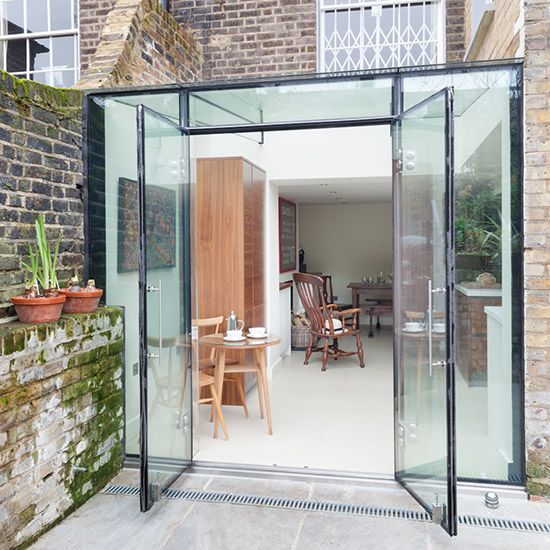
Interior designer Andrew Dunning of London Contemporary Ltd, says that modern glass box structures are favoured by English Heritage for use on listed buildings as they make a clear distinction between old and new. Constructed from structural glass, this version on a Grade II-listed terrace house cost around £42,000.
5. Maximise living space with a three-storey extension
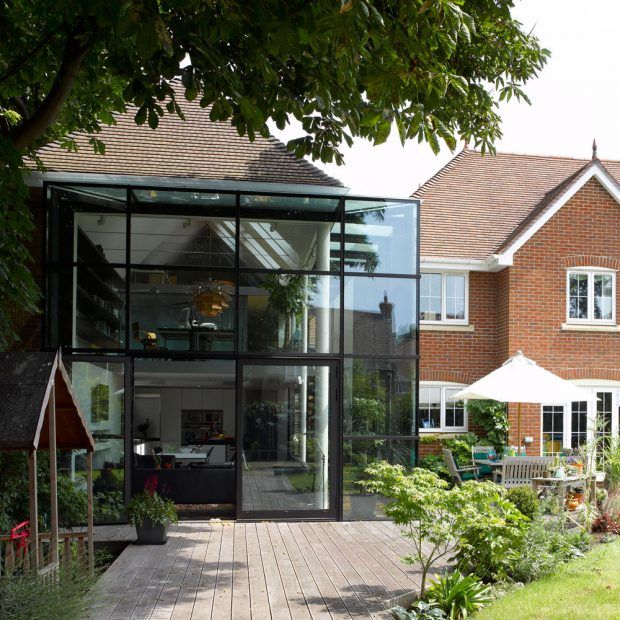
This new-build traditional style detached house boasts an impressive modernist steel glass extension out onto the garden. The triple-height glass cube has been attached to an extension that is the same size again as the original house, and connected to it by an open-tread glass staircase.
The extension is grand but due to the open nature of the steel and glass structure the large-scaled design doesn’t feel oppressive in the space. Instead it creates volume, and as a largely glass structure, it bounces daylight around the rooms.
Do consider the practicality of a multiple-height space. ‘Warm air rises, so a double- or triple-height space will need good insulation, as well as suitable heating and ventilation,’ advises Nigel Green from architectural design firm Lusted Green. ‘However, they do transform the look of a house. And allow artwork and dramatic lighting to be displayed to full effect.’
6. Set your sights on the sky
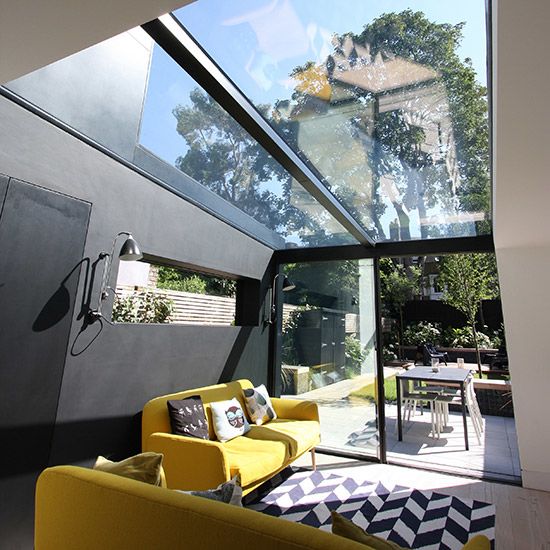
The sky’s literally the limit when it comes to adding elegant glass extensions. Vast 4m-long panes of structural glass cut a dash in this modern garden room by IQ Glass and HUT Architecture.
Walls painted in off-black help draw attention upwards and out. The sliding doors are on a two-track system with one sliding and the other fixed plus minimal framework to maximise views. A similar glazing package would cost around £30,000.
When it comes to sliding door systems like these, you can go big – perhaps even bigger than you’d imagined. ‘With the majority of the designs on the market made from strong aluminium frames, they’re able to support huge panes of glass,’ says architect Simon Whitehead. ‘Minimal window systems from IQ Glass are available with sliding panes up to 8.5 square metres in size.’
7. Create rooms with a view
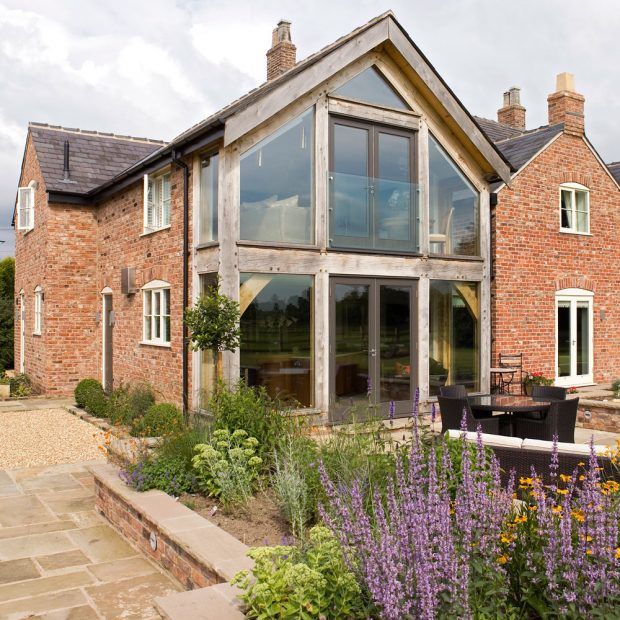
This exterior of a converted farmhouse demonstrates how a modern glass wall fronted facade can totally transform a traditional home. An architects vision the glass frontage is supported by rustic wooden beams to retain the character of the style of house, while integrating a more modern aesthetic with the thoughtful glass walls.
8. Add a subtle modern touch to a period property
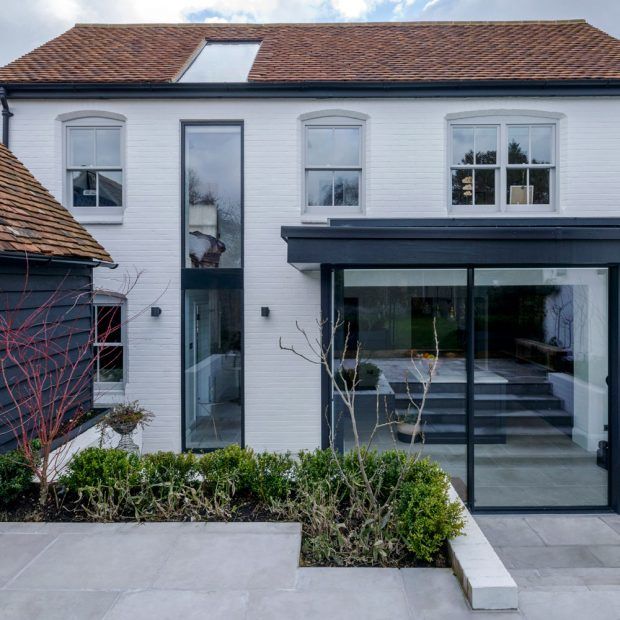
This period village house Berkshire features a contemporary glass extension and modern interior. The light-filled glass extension offers a seamless transition to the outside via steps to a tiled patio area with flowerbeds. To maximise the glass features the house benefits from an additional side panel, across two floors, and a roof skylight.
9. Open up a corner with glass
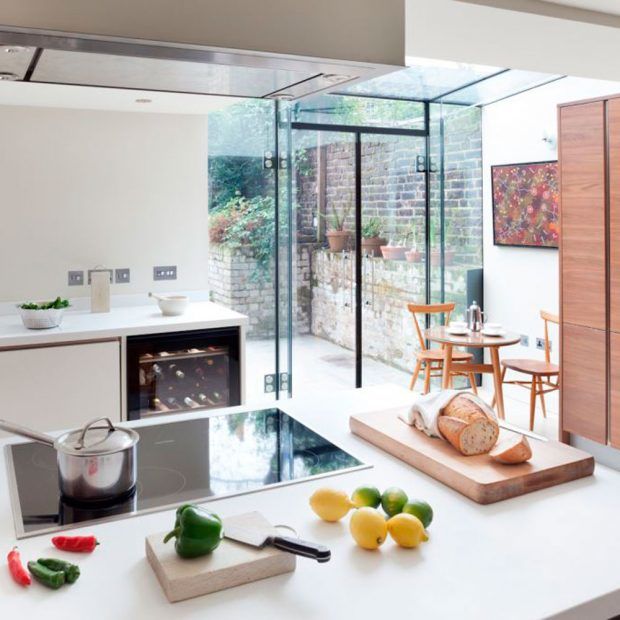
Use a small extension to open up the corner of a room to flood the space with light. At the back of the house, leading into the garden means that you will not require planning permission because you don’t have to build past the permitted boundary of two metres out or above the existing roof height.
Using specialist glazed glass in place of structural brick walls allows for maximum light quality. Meaning no corner is left in the dark.
10. Preserve period style
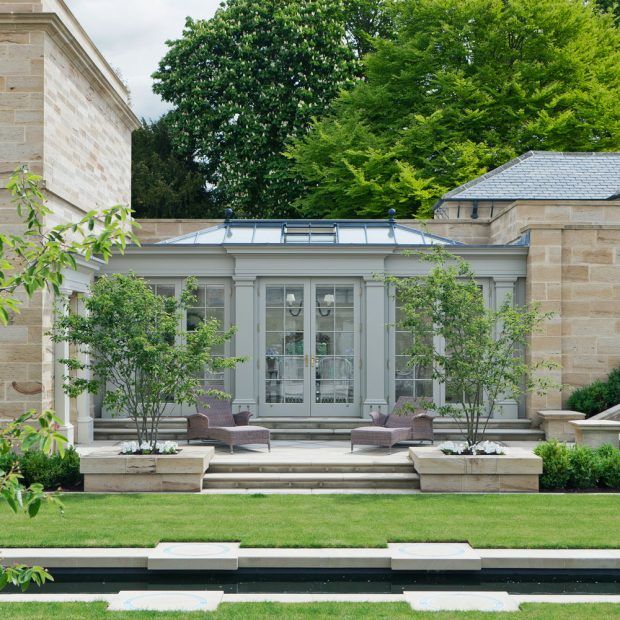
Used as a light-filled dining room, this stunning orangery by Vale Garden Houses, prices from £40,000, features Georgian style glazing to match the main house, complete with classical columns and a deep entablature. The woodwork is painted in ‘Caribous Coat’ from Vale’s own Period Paint Collection.
‘It may be considered by many to put a very modern glazed structure onto a period house’ explains Lisa Morton, Director at Vale Garden Houses. ‘However trends do change and as a conservatory is expected to be around for several decades, this may not be appropriate for your property in the long term.’
‘Also bear in mind that a contemporary approach is not to everyone’s taste and a modern conservatory may be considered an eyesore to some when considering a house purchase, should you need to move. Personal tastes and approaches in style are best applied in the final decoration and interior design.’
11. Welcome the outside in
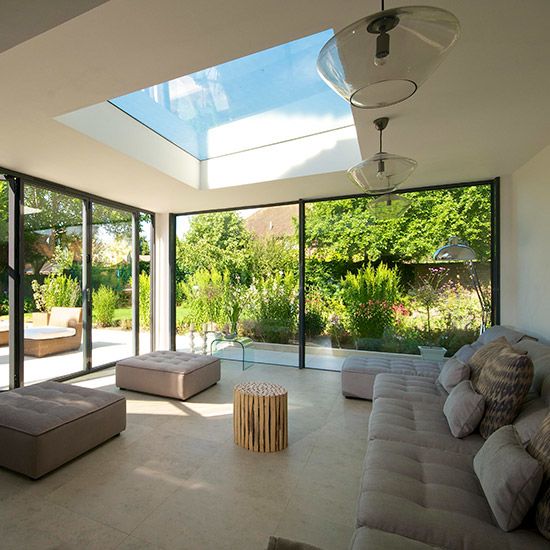
The wide-pane folding sliding doors in this contemporary bespoke orangery by Viva Folio, from £40,000, can be folded right back so that they practically disappear, effectively turning the interior into an extension of the garden. Solar-control glazing prevents the room from overheating, even in blazing sunshine.
12. Choose a light-filled kitchen addition
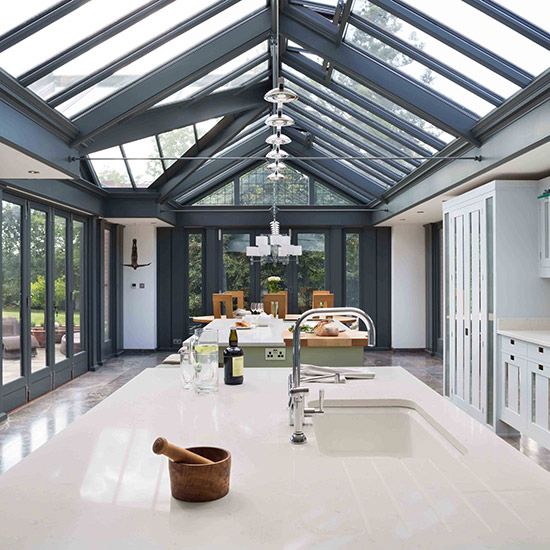
This large extension accommodates a generous kitchen by Smallbone of Devizes, which was relocated to create more space in the main house.
Cooking in a heavily glazed room requires extra attention to ventilation, provided in this design by automatically opening roof vents. With less wall space for cabinetry island units are a savvy choice.
When creating a glass extension like this, think about the space at night, advises Dihan Bornat, co-director at ZCD Architects. ‘If a rooflight is above a table, then fit pendants or downlight to make sure the dining area doesn’t feel dark or cold.’
13. Use glass panels within your extension
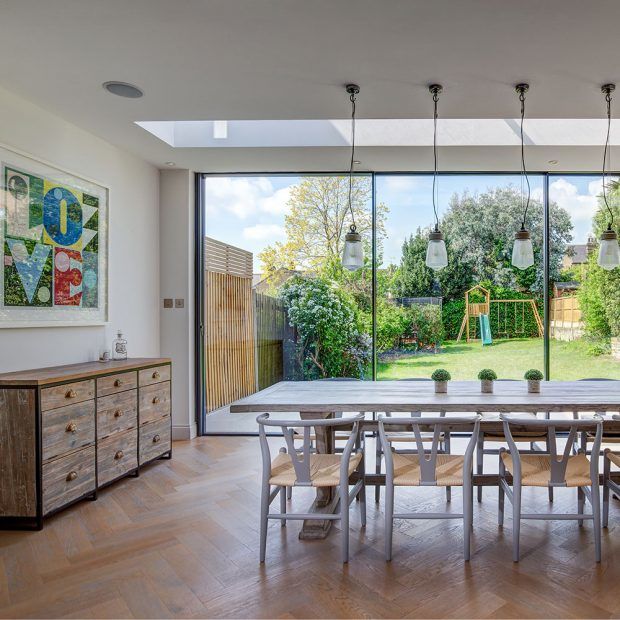
The lower ground floor layout of this Victorian home was completely reconfigured to create an open plan living area and spacious kitchen/diner, housed in a glazed extension.
‘We wanted a large space for entertaining as it’s something we love to do. The large glass doors and a skylight make it such a light filled space.’
14. Add flat roof windows to the rear of the extension
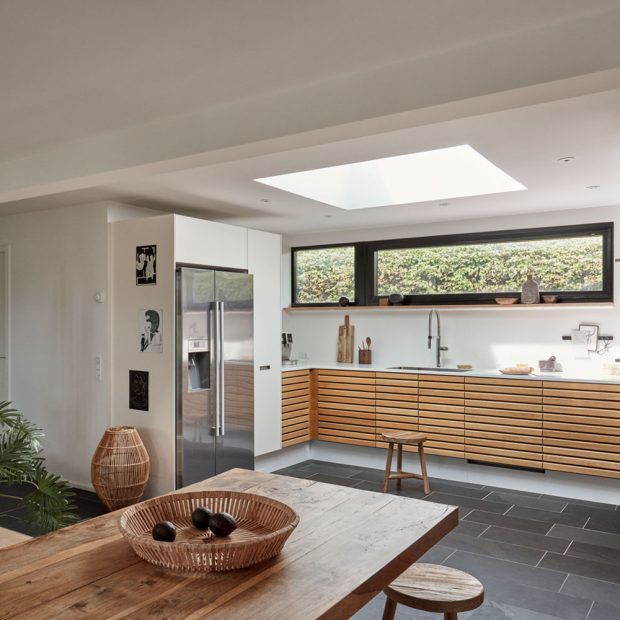
‘When adding a single-storey extension to the rear of your house, it’s important to ensure plenty of daylight reaches the area located furthest from the main wall of glazing,’ says Velux’s product manager Grant Sneddon.
‘Roof windows are one of the easiest ways to achieve this, and flat roof windows also help improve the sense of height in a room, instantly making it feel larger and brighter.’
15. Mix materials for a stylish side extension
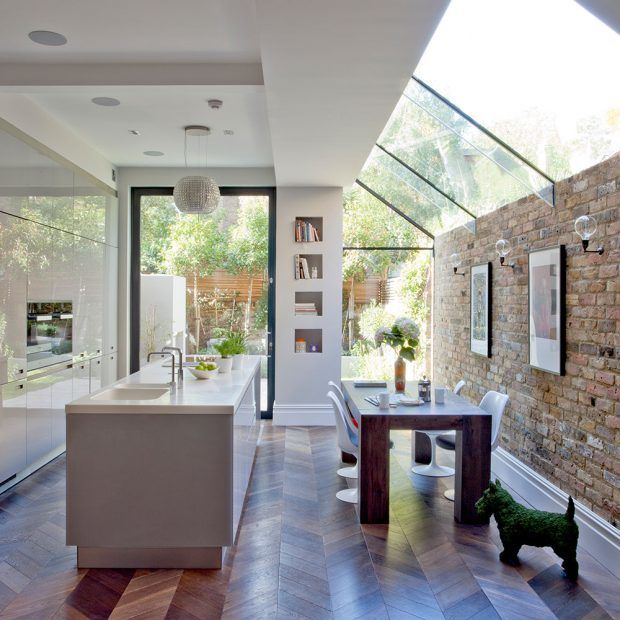
Your extension doesn’t have to be made entirely of glass to benefit from the qualities this material offers. Glass panels and glass doors used liberally within an extension helps to extent the sense of space. This impressive open-plan kitchen and dining room extension welcomes the use of glass in the ceiling, side panels and sliding door which opens the space out into the garden beyond.
Reclaiming an unloved passage along the side of a home will increase the ground-floor footprint. Building into this space and fitting a glass roof will transform a narrow kitchen into the light-filled social hub for any home.
16. Blur the boundaries between inside and outside
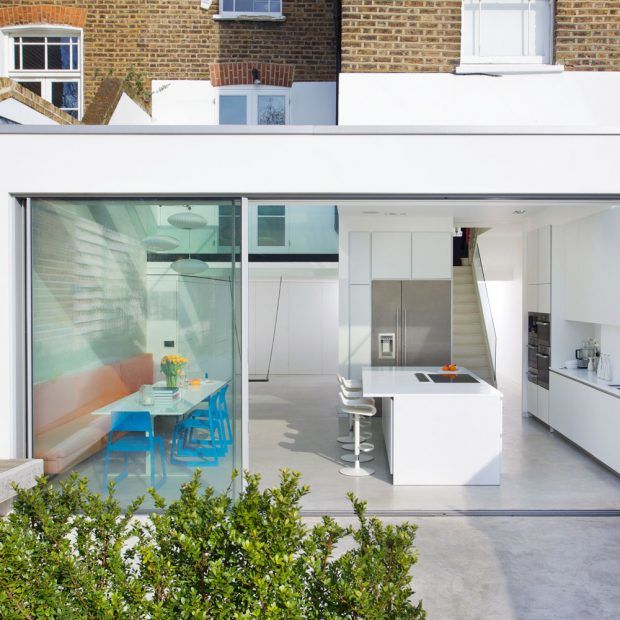
Use an extension to continue your kitchen space outside. For a seamless connection between extension and garden, choose flooring that works both inside and out, such as polished concrete. Combine with discreet drainage and a flush threshold to avoid an awkward step. Here, glazing is streamlined and unobtrusive, and sliding doors with slim frames visually connect the spaces even when closed.
17. Make it open-plan
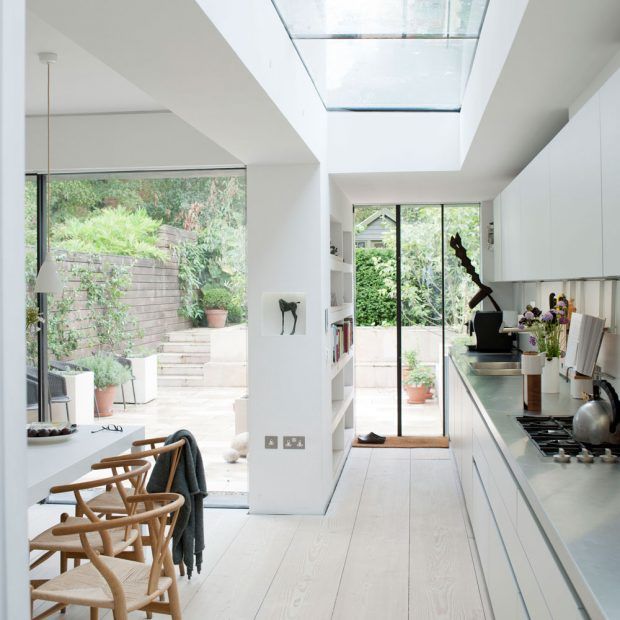
This modern kitchen-diner extension has been designed with no awkward angles or inefficient corner cupboards, just practical ideas such as a simple worksurface that can be wiped from one end all the way down. Focus on adding a skylight. Skylights can be fitted from the inside or outside of a property, by a roofer, carpenter or specialist. You don’t always need to cut the rafters in a roof to insert a skylight.
18. Go for a ‘doll’s house’ feel with double height bi-folds
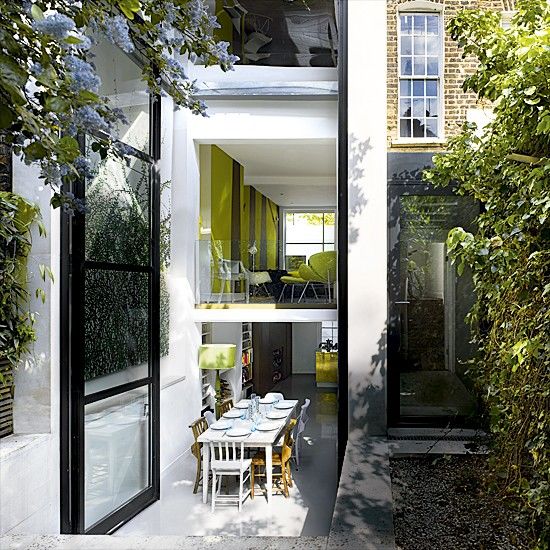
Be inspired by this spectacular triple-height extension. These bespoke powder-coated steel-framed doors, which, at five metres tall, rise up to a mirrored ceiling above the sitting area at first-floor level.
This structure offers amazing possibilities for alfresco summer dining. Traditionally, an extension was designed to blend in with your existing property, but a more ‘honest’ approach is becoming popular with today’s homeowners. Differentiate between old and new with contrasting styles and looks. It’s important to try new materials while continually reinventing the way we use the old ones.
19. Pick something dramatically different
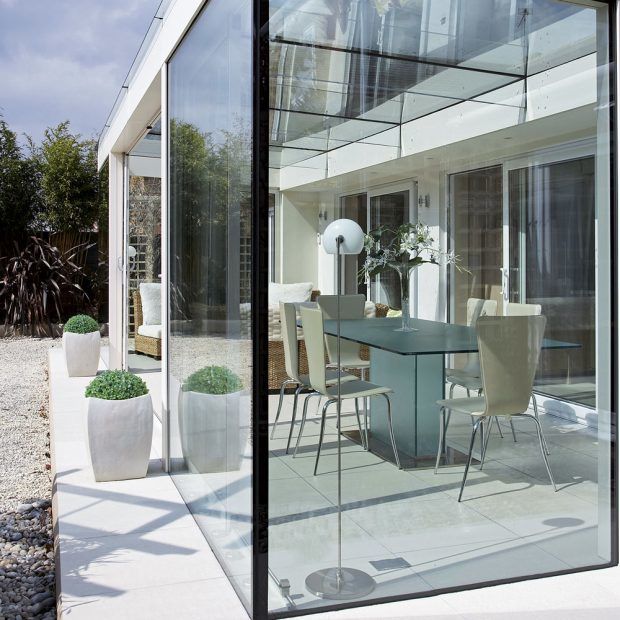
Glass is now a very sophisticated material. Glass technology has advanced so much so that it’s now possible to create dynamic structures made almost entirely of glass. Modern ‘glass box’ structures are favoured by English Heritage for use on Listed Buildings, as they make a clear distinction between old and new.
This design is constructed from strong structural glass, meaning you can even stand on the roof to clean the glass if desired.
20. Opt for style and substance
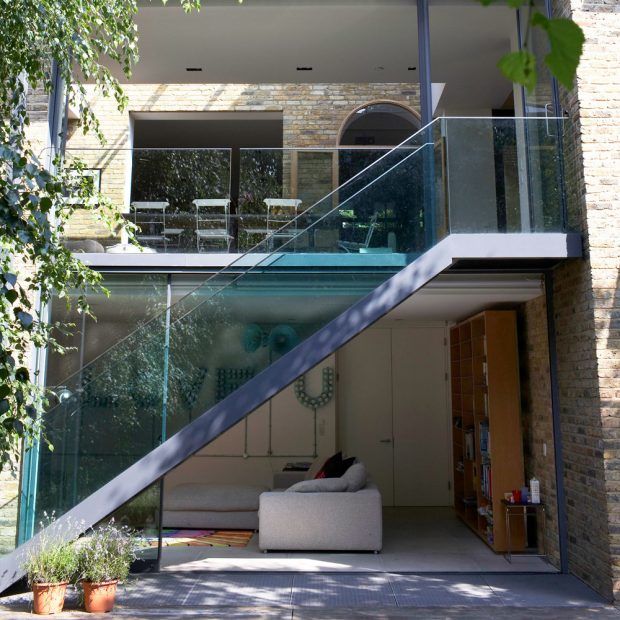
This striking extension boasts a terrace, staircase and a room for lounging. Long panes of structural glass cut a dash in this modern garden room. The sliding doors are on a two-track system with one sliding and the other fixed, plus minimal framework to maximise views.
21. Unite spaces with glass enclosures
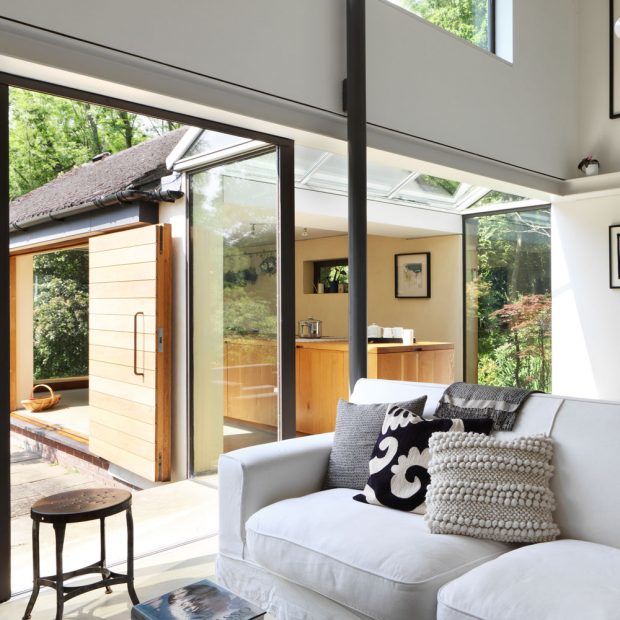
A living room room with a view through to the kitchen is as good as open-plan, without having to knock through walls. How to make this possible? With smart glass structures. This bright living room features floor-to-ceiling glass wall windows and sliding doors which provide a view of kitchen extension beyond.
Glass extensions – what you need to know
Made up your mind about the type of glazed extension you want? These key points will help keep you on the right track for putting plans in place to build.
1. Know your permitted development rights
Permitted development rights have made extending easier – in many cases, you won’t need formal planning consent to extend. But the rules are complex. In every instance, we’d advise that you contact the local council, a planning consultant or architect to make sure it’s safe to proceed.
The guidelines by Planning Portal state, ‘extensions cannot be higher than the highest part of the existing roof’. Read more on the Government’s Planning Portal website.
‘Always seek advice from a reputable company,’advises Lisa Morton at Vale Garden Houses. ‘They will have up to date knowledge on the permissions required. If your property is listed you will require permission to extend and the design will need to adhere to certain criteria.’
‘Some companies will liaise on your behalf with conservation and planning officers – which can often be quite a complex and time consuming element best left in the hands of the experts. This way you can ensure your new structure makes the best use of the available space within the parameters of legislation.’
2. Notify your neighbours in advance
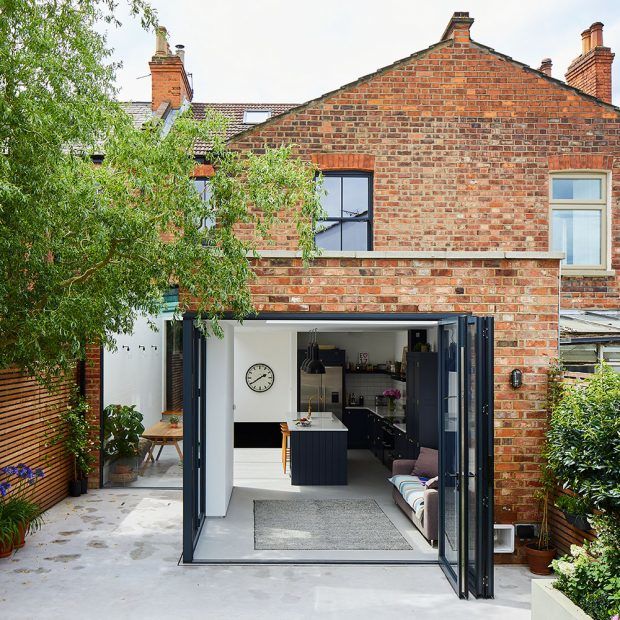
Keep neighbours in the picture about your plans for a glass extension, to avoid friction down the line. If you’re building up to a boundary wall, you’ll need a party wall agreement and written consent from your neighbours. If they decide to object or don’t reply, you’ll require a surveyor to oversee the process, to ensure you’re not damaging any neighbouring property.
Be aware rules are less generous if you’re in a conservation area or live in a listed property, and you may require extra consent.
3. Hire an architect
Use an architect on a major build to provide design inspiration, plan the space, draw up accurate plans and ensure the project is compliant with planning rules.
4. Manage the build
Decide who will manage your build. Any home renovation show highlights the cons where this is missed – it never ends well for the budget! If you’ve used an architect or designed the extension yourself, you’ll need to find a main contractor or a project manager.
5. Budget correctly
Be clear on budget and allow an extra 20 per cent for unforeseen expenses that may occur. Ensure final designs, costings and payment schedules are agreed before work begins. Prioritise your money by spending on structural elements that will add a sense of space – large windows, bifold doors and roof windows are worth it.
Are glass extensions cold?
The main downside to glass extensions revolves around heat loss/gain. Solar control glass, underfloor heating and automatic ventilation can all be used to ensure a comfortable year-round environment.
Sometimes the use of glass can limit your plans. For instance in a kitchen, with so much glazing there are fewer solid walls to support cabinetry. It’s wise to position the hub of your kitchen in the house and add an open-plan glass extension for dining and relaxing. Orangeries are more practical solution for kitchens, as they have solid walls topped with a glazed roof.
As well as using glare-reducing glass and installing blinds, it pays to select paler surfaces in any glass extension. These won’t show the effects of sun-bleaching as noticeably. Using UV-protective varnishes on woods and light paint finishes on stable materials will significantly minimise sun damage.