

Forget EU, the future is Asia! UK set to seal historic £9 TRILLION trade deal
Speaking to the Sunday Express, international trade Liz Truss has hailed her Australia trade deal this week as a key part of getting Britain into the £9 trillion Comprehensive and Progressive Agreement for Trans-Pacific Partnership (CPTPP) made up of 11 countries including Canada and Japan. She has made it clear that it is the first part of changing Britain’s international focus from a eurocentric one to embracing the rest of the world. The minister believes there is a prize of a 65 percent increase in trade with CPTPP countries in the next decade in Britain’s grasp.
She also said that a deal with New Zealand, another member of the CPTPP, is just a few months away from being completed while experts have told the Sunday Express that another one with Canada is likely to be signed in the next year.
Ms Truss said: “The Australia deal paves the way for us to join the Trans-Pacific Partnership, which will help our farmers and businesses reach some of the biggest and fastest-growing markets in the world. Asia-Pacific is where the richest opportunities lie for Global Britain.”
Lobbying groups for farmers and former Remain supporters with the EU have this week tried to attack the trade deal with Australia.
And the TUC has been sending a briefing to media outlets and politicians claiming that entering the CPTPP will be bad for Britain.
Sources close to Ms Truss have noted that the very people who attacked Brexit for being “parochial and inward looking” are now attacking it for having a global outlook.
“We engage and consult widely before, during and after negotiations. The idea that CPTPP will undermine workers or harm Britain is nonsense - total scaremongering. Funny how people who complained Britain would be inward-looking and defensive after Brexit are now complaining about it being global,” the source close to the international trade secretary said.
According to the Department for International Trade (DIT), both the Australia deal, agreed this week, and the New Zealand deal, which could be concluded in the next few months, are key stepping stones into the bigger CPTTP trade area – which covers £9 trillion of GDP and over half a billion consumers.
It has 11 member nations, from old allies like Canada and Australia, to huge economies like Japan, and fast-growing Asian markets like Malaysia and Vietnam.
If Britain joins, the country would get all the benefits of being in a modern free trade area with lower tariffs for exports like whisky and cars; better access for our services and tech firms.
But unlike the EU Britain would not have to cede control over its laws, borders or money and would keep all our regulatory sovereignty or agree to free movement of people.
Formal negotiations are expected to launch shortly, with a full economic impact assessment. Parliament will get to scrutinise the deal when it’s signed.
The source close to Ms Truss said: “Joining the Trans-Pacific Partnership is one of the biggest opportunities of Brexit. Liz sees it as the big glittering trade prize. It’s a £9 trillion free trade area, but membership doesn’t require us to give up sovereignty or lose control of our laws, borders or money as we did with the EU.
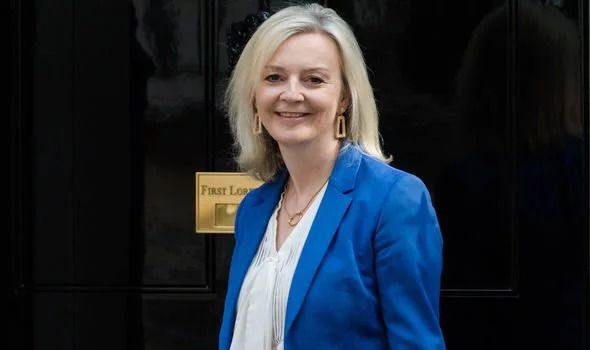 Liz Truss says the UK won't give up its laws or borders with the deal
“We want and need to be a country that looks well beyond Europe and has closer links with old Commonwealth friends and fast-growing Asia-Pacific markets. Pivoting Britain towards Asia Pacific will help secure our future and boost our economy, and that’s what we’re focused on.”
Even before a trade deal CPTPP countries accounted for £110 billion worth of UK trade in 2019 and UK trade with CPTPP member countries has grown by 8 percent annually for the last five years.
CPTPP also contains some of the fastest growing economies, and UK Government projections point to the potential for UK exports to these countries to increase by 65 percent by 2030 from £57 billion to £94 billion.
Accession could also see 99.9 percent of UK exports being eligible for tariff-free trade with CPTPP countries. British manufacturers will also benefit from greater choice and lower prices on inputs from CPTPP countries.
Matt Kilcoyne from the Adam Smith Institute said: “It was made explicit that this bilateral deal is part of a process that will enable the UK to join the wider CPTPP.
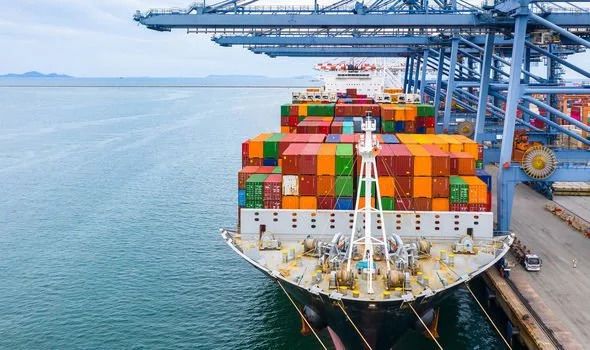 Asia has some of the fastest growing economies
“We are engaged with removing barriers to trade without signing up to political unions. Joining this will show the EU that you can have free trade without signing up to political agendas.
“This is about showing you can trust the legal systems of friendly foreign nations. It allows the UK to continue to be at the forefront of emerging technology markets while also being the bulwark against US and Chinese expansion.”
He added: “We’ll have New Zealand by the end of this year and Canada by the middle of next year. Once that happens there will be a good basis for all the Canzuk countries to come together and formalise on a multilateral basis.”
Australian senator Eric Abetz, member of the International Parliamentary Alliance on China said: “We were the first nation to offer a post-Brexit UK a deal, and it’s very significant from a trade point of view. We feel as though a wrong has now been righted from when the UK dumped us in favour of the EU.
“In terms of agricultural labour, financial services, telecommunications and professional services it offers lots of opportunities for people in both our countries.”