London Daily

Focus on the big picture.
Saturday, Jun 20, 2026

Era of cheap supermarket fuel has 'gone' as chains battle rising costs

Era of cheap supermarket fuel has 'gone' as chains battle rising costs

An industry source tells Sky News that supermarket chains are investing in keeping the cost of essentials in check as they, and the public, battle the highest pace of price increases seen for decades.

Motorists should not expect to see a return of supermarkets using cheap fuel to lure in shoppers, an industry source has told Sky News.

They spoke out after weeks of criticism from motoring groups and fuel price campaigners that supermarket petrol stations are failing to reflect plunging wholesale fuel prices.

Data supplied by the AA and RAC has consistently shown costs for unleaded and diesel becoming cheaper at many independent forecourts, with supermarket fuel at around average or just below average levels.

They argue the sector should be leading the way on fuel prices due to its bulk-buying power, after Brent crude oil nudged levels not seen since January on Tuesday.

The pair are pushing their case at a time when the industry regulator is investigating British fuel price behaviour.

RAC fuel spokesman, Simon Williams, said: "There is yet more pressure on the biggest fuel retailers today to pass on savings to drivers as the price of oil has dipped below $80 for the first time since the start of the year causing the wholesale cost of petrol to tumble to 105p a litre and diesel to 119p.

"If a cut of at least 10p a litre doesn't come soon it will be yet more evidence of 'rocket and feather' pricing for the Competition and Markets Authority (CMA) to take note of.

"The disparity between average pump prices at 158p for petrol and 182p for diesel and their wholesale equivalents is truly shocking.

"Even taking account of major retailers' buying cycles, we can see no justification for them not cutting their prices significantly."

Supermarkets have historically charged around 3.5p per litre less at the pump than the UK average.

Fuel was effectively subsidised as part of the big four chains' efforts to grow their respective grocery market shares.

But that changed last year when COVID pandemic restrictions ended and oil prices shot up - pushed even higher this year by the effects of the war in Ukraine.
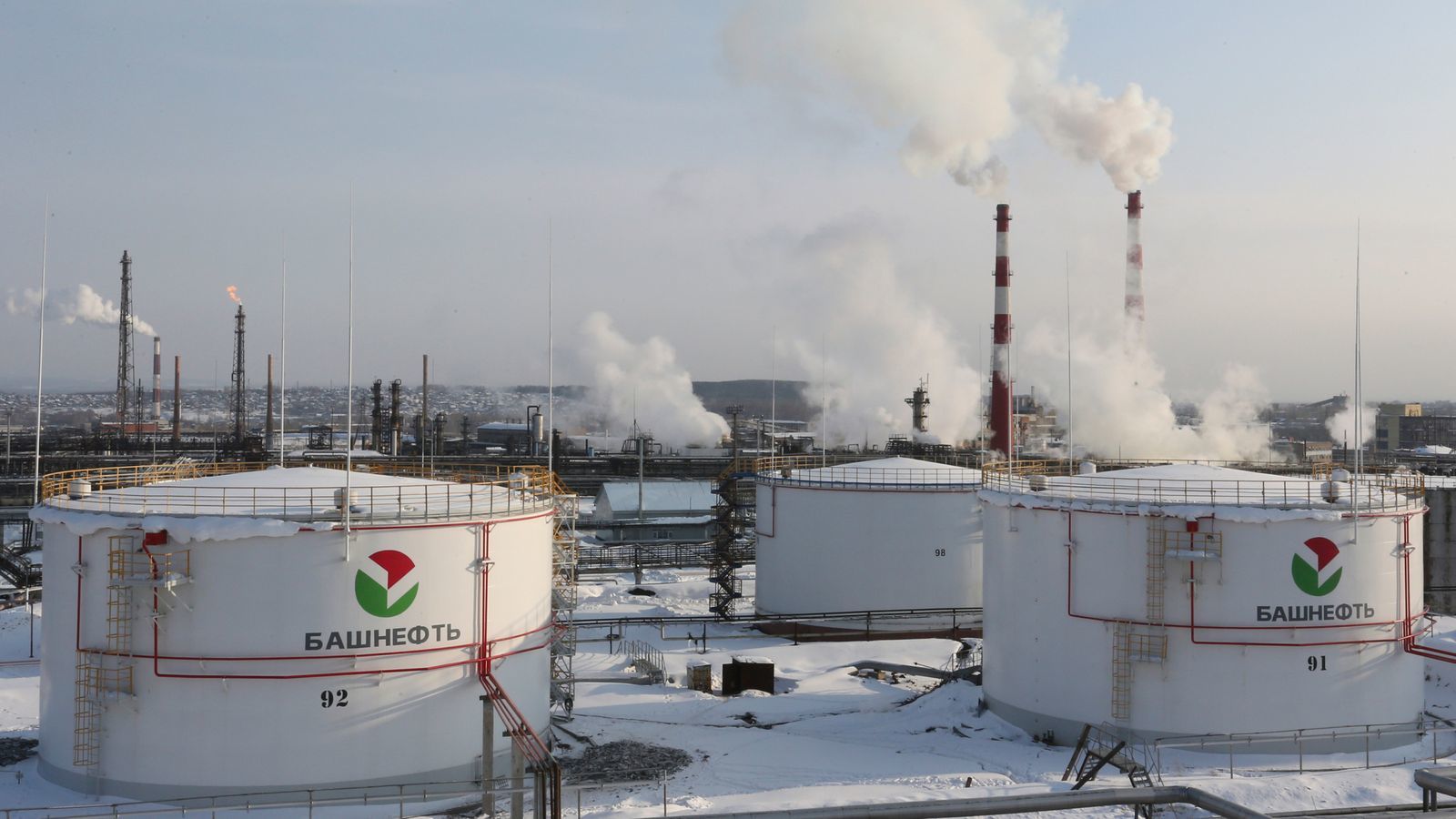

The market, particularly for diesel, has been distorted by the war in Ukraine and the West's sanctions on Russia

The source suggested that the increased costs that supermarkets were grappling, largely linked to the war, meant they were now more focused on delivering value in areas other than fuel to keep essentials down in price as much as possible.

They said that, as a result, fuel was no longer a loss leader and pre-pandemic pricing behaviour was "gone".

Oil prices have generally fallen back since July though diesel costs have remained elevated, relative to unleaded, because of Europe and the UK's past reliance on imports from Russia.

The CMA's investigation into British fuel prices, started during the summer, has been widened after it found evidence of so-called 'rocket and feather pricing' - when prices are quick to go up but slow to ease.

Andrew Opie, director of food & sustainability at the British Retail Consortium which represents supermarkets, told Sky News last month: "Retailers understand the cost pressures facing motorists and will do everything they can to continue to offer the best value-for-money across their forecourts, passing on cost reductions as they feed through the supply chain."

Susannah Streeter, senior investment and markets analyst at Hargreaves Lansdown, said of the recent oil price falls: "The shivers of apprehension about the prospects for the world economy pushed oil prices to their lowest point in a year, with the benchmark Brent Crude dropping to $79 a barrel.

"Prices have edged up very slightly on the latest zero-COVID easing moves from Beijing, but worries about weakening global demand as recessions are predicted, are still set to limit gains.
Newsletter

Related Articles

0:00
0:00
Close
UK Health Authorities Introduce Drug Price Concessions Amid Record NHS Medicine Shortages
Sir David Attenborough Supports Sherwood Forest Conservation Efforts After Loss of Major Oak
Aardman Animations Marks 50 Years With Major Exhibition in Bristol
Drax Cleared After Investigation Into Wood Pellet Sourcing Practices
Jaguar Land Rover Shifts Toward Hybrid Vehicle Production for US Export Strategy
UK Police Arrest Liberal Democrat MP Cameron Thomas on Suspicion of Assault
Health Concerns Grow Over Elevated Kidney Cancer Rates Near Lancashire PFAS Factory
Royal Navy F-35 Jets Conduct First NATO Air Warfare Exercise from Finnish Airspace
UK NHS Issues Price Concessions for Medicines Amid Severe Drug Shortages
Heathrow Third Runway Project Faces Sharp Downward Revision in Expected Economic Benefits
Amber Heat Warning Issued Across Parts of England and Wales as Temperatures Rise
Train Collision Near Bedford Disrupts UK Rail Network and Leaves Multiple Injured
Bank of England Data Suggests Brexit Has Reduced UK Economic Output by Around Six Percent
UK Borrowing Costs Hold Near 4.8 Percent as Political Uncertainty Fuels Market Pressure
Andy Burnham Emerges as Front-Runner to Succeed Keir Starmer After Landslide Makerfield Victory
Prime Minister Keir Starmer Faces Mounting Pressure to Resign After Labour By-Election Defeat in Makerfield
Payment Fraud Losses Reach £1.28 Billion and Raise National Security Concerns
Lending to Small Businesses Climbs to Highest Level Since Late 2024
Middle East Conflict Clouds UK Economic Recovery Despite Strong First-Quarter Growth
Bank of England Moves to Simplify Capital Rules for Smaller Lenders
UK Government Fast-Tracks National Security and Cyber Resilience Legislation
Ofcom Investigates Telegram Over Alleged Role in Organising Arson Attacks
MPs Press Fujitsu to Speed Compensation for Post Office Horizon Victims
Bank of England Delays Final Basel III Implementation Changes to Support UK Banking Competitiveness
Pound Falls as Political Uncertainty and Bank of England Signals Weigh on Markets
0Andy Burnham Wins Makerfield By-Election and Emerges as Main Challenger to Keir Starmer
Dorset Council Tests AI Tools to Streamline Local Planning Applications
UK Researchers at Kew Gardens Use AI to Speed Up Identification of Threatened Plant Species
UK Gilt Yields Ease Toward 4.8% as Inflation and Labour Market Data Weigh on Bonds
Bank of England Data Shows Resilient SME Lending Despite Economic Slowdown
UK Finance Reports Weakening Services Activity as Business Confidence Softens
UK Introduces Mandatory Internal Complaints Process Under Data Use and Access Act
Bank of England Governor Andrew Bailey Flags Geopolitical Uncertainty as Key Risk to Inflation Outlook
Bank of England Holds Interest Rates at 3.75% as Policymakers Signal Cautious Stance on Inflation Risks
Cornwall Clergy Raise £40,000 for Church Repairs Through Everest-Themed Charity Challenge
UK Business and Social Landscape Reflects Strain From Geopolitical and Domestic Pressures
Tensions Grow in UK Over Sikh Kirpan and Religious Symbolism in Public Debate
Energy Price Cap Increase Set to Lift UK Household Bills by 13 Percent
University of Reading Ranked 196th in QS World University Rankings
UK Maritime Archaeologists Identify 17th-Century Dutch Shipwreck Off Devon Coast
Oxford Union Islam Debate Sparks Protest From Faith Leaders in UK
UK Social Cohesion Debate Intensifies After Religious Prejudice Survey Findings
UK SME Lending Rises Despite Geopolitical Uncertainty and Cautious Outlook
Foreign Demand for UK Gilts Remains Sensitive to Global Inflation Trends
Labour Party Faces Leadership Pressure After Weak Local Election Results in UK
Transport Costs Drive Inflation Pressure as Petrol Prices Push Up UK CPI
British Chambers of Commerce Cuts Growth Forecast as Middle East Conflict Weighs on Investment
UK Economy Grows 0.6 Percent in First Quarter but Outlook Remains Weak
Bank of England Holds Interest Rates at 3.75 Percent as Inflation Risks Persist
Energy Price Cap Rise Expected to Keep UK Inflation Above Target Through 2026
×