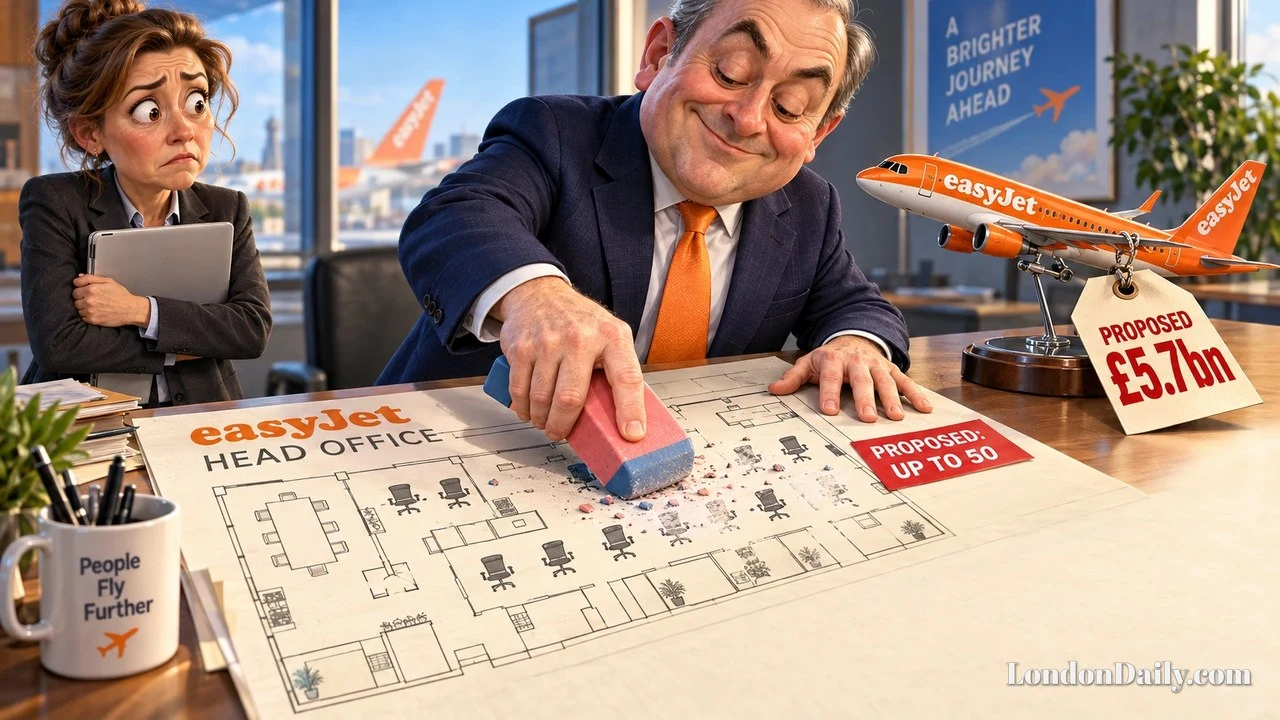
EasyJet plans to cut up to about 50 head office roles before its proposed £5.7 billion takeover by Apollo, although the reductions are understood to be unrelated to the deal or the US buyer.
The Luton-based airline has confirmed plans to reduce its head office workforce and is understood to be consulting on proposals affecting a team of 2,300. Shareholders are due to vote on the takeover on Wednesday. If approved, the acquisition is expected to complete in the first quarter of 2027.
EasyJet presents the proposed cuts as part of maintaining its low-cost business model. A spokesperson said: “Our people are integral to easyJet’s success and as a low-cost airline we always operate efficiently so we can keep fares low for our customers and invest in future growth opportunities.”
The spokesperson added: “These proposals affect a very small proportion of head office roles to ensure we are best set up to support the business’ ambitious plans.”
The current proposals are separate from the employment commitments Apollo has made for its ownership. The private equity firm has pledged not to cut jobs for one year after completing the acquisition, but unions in Britain and Europe have raised concerns about possible subsequent reductions and debt that the transaction would place on the airline’s balance sheet.
The British Airline Pilots Association, Balpa, said “important questions remain regarding the long-term implications of the transaction”. It added: “Balpa’s principal concern is the extent to which the transaction may affect employees beyond the 12-month period covered by the statements of intention.”
EasyJet agreed to Apollo’s offer of 715p a share in July. Apollo, which also owns Wagamama’s parent company, The Restaurant Group, prevailed over US investment firm Castlelake. Its rival had proposed £5.5 billion, or 690p a share, before withdrawing from the bidding in August.
Sir Stelios Haji-Ioannou and his family, who own about 15% of easyJet, support the takeover. He founded the airline in 1995 as a low-cost alternative to British Airways; it has since developed one of Europe’s largest networks.
For employees, the immediate consultation and the takeover pose distinct questions: how many head office posts will go now, and what happens once Apollo’s one-year commitment expires.








Join the conversation