
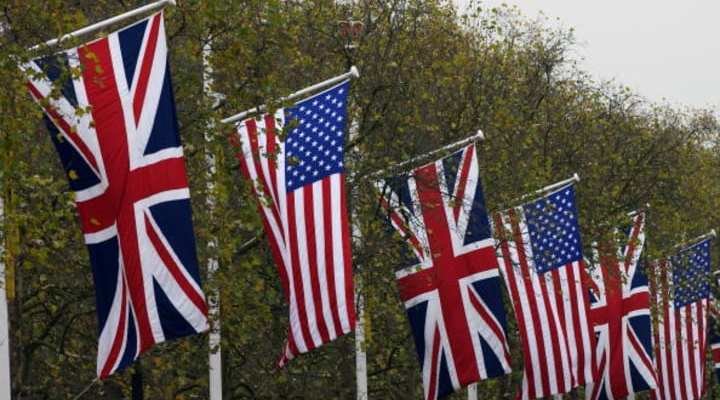
Does the US–UK Special Relationship Still Exist? An Alliance Tested but Intact
Despite political shifts and strategic divergence, the transatlantic partnership remains anchored in intelligence, defense, and nuclear cooperation, even as its global dominance is increasingly contested
The SYSTEM-DRIVEN structure of the US–UK “special relationship” is defined by a dense network of institutional ties in defense, intelligence sharing, nuclear deterrence, and diplomatic coordination that has evolved since the mid-20th century and continues to shape both countries’ strategic behavior today.
The question of whether the relationship still exists is therefore not about sentiment or symbolism, but about whether these underlying mechanisms still function at scale and with strategic relevance.
What is confirmed is that the core architecture remains operational.
The two countries continue to cooperate through intelligence-sharing arrangements, most notably within the Five Eyes framework, which integrates signals intelligence among five Anglophone democracies.
They also maintain deep military interoperability through NATO, where US–UK coordination remains central to European defense planning and deterrence strategy.
A defining pillar of the relationship is nuclear cooperation.
The UK’s continuous-at-sea deterrent is based on US-designed Trident missile systems, maintained under long-term agreements that tie British strategic nuclear capability to American technology and logistical support.
This creates a structural dependency that is rarely visible in public debate but is fundamental to the relationship’s strategic depth.
Defense-industrial collaboration also reinforces the tie.
Joint development programs, arms procurement alignment, and integrated operational planning ensure that UK forces can operate alongside US systems at scale.
This interoperability has been repeatedly tested in joint military operations over recent decades, reinforcing the practical, rather than symbolic, nature of the alliance.
At the same time, the relationship is no longer uncontested in its global dominance.
The strategic environment has shifted due to the rise of China, renewed great-power competition, and changing US foreign policy priorities that increasingly emphasize the Indo-Pacific.
These shifts have introduced friction into traditional transatlantic alignment, particularly on trade, technology regulation, and burden-sharing within NATO.
The UK, post-Brexit, has also pursued a more independent trade and foreign policy posture while simultaneously reinforcing ties with the United States through defense-focused initiatives such as AUKUS, which further embeds UK capability within an Anglo-American security framework alongside Australia.
This reflects a diversification of alliances rather than a replacement of the US–UK axis.
Politically, the relationship fluctuates with leadership changes in both countries, but institutional continuity has proven stronger than electoral cycles.
Even when policy priorities diverge—on issues such as climate regulation, military engagement strategies, or economic policy—the underlying security and intelligence infrastructure remains largely insulated from political volatility.
The key issue is therefore not whether the special relationship exists, but how its function has changed.
It is less a singular geopolitical alliance directing global order and more a set of embedded systems that continue to deliver mutual strategic advantage while adapting to a more fragmented international landscape.
In practical terms, the US–UK relationship still operates as one of the most integrated bilateral partnerships in global security affairs, even as its relative influence is shaped by a multipolar world in which it is no longer the sole organizing axis of Western strategy.
The question of whether the relationship still exists is therefore not about sentiment or symbolism, but about whether these underlying mechanisms still function at scale and with strategic relevance.
What is confirmed is that the core architecture remains operational.
The two countries continue to cooperate through intelligence-sharing arrangements, most notably within the Five Eyes framework, which integrates signals intelligence among five Anglophone democracies.
They also maintain deep military interoperability through NATO, where US–UK coordination remains central to European defense planning and deterrence strategy.
A defining pillar of the relationship is nuclear cooperation.
The UK’s continuous-at-sea deterrent is based on US-designed Trident missile systems, maintained under long-term agreements that tie British strategic nuclear capability to American technology and logistical support.
This creates a structural dependency that is rarely visible in public debate but is fundamental to the relationship’s strategic depth.
Defense-industrial collaboration also reinforces the tie.
Joint development programs, arms procurement alignment, and integrated operational planning ensure that UK forces can operate alongside US systems at scale.
This interoperability has been repeatedly tested in joint military operations over recent decades, reinforcing the practical, rather than symbolic, nature of the alliance.
At the same time, the relationship is no longer uncontested in its global dominance.
The strategic environment has shifted due to the rise of China, renewed great-power competition, and changing US foreign policy priorities that increasingly emphasize the Indo-Pacific.
These shifts have introduced friction into traditional transatlantic alignment, particularly on trade, technology regulation, and burden-sharing within NATO.
The UK, post-Brexit, has also pursued a more independent trade and foreign policy posture while simultaneously reinforcing ties with the United States through defense-focused initiatives such as AUKUS, which further embeds UK capability within an Anglo-American security framework alongside Australia.
This reflects a diversification of alliances rather than a replacement of the US–UK axis.
Politically, the relationship fluctuates with leadership changes in both countries, but institutional continuity has proven stronger than electoral cycles.
Even when policy priorities diverge—on issues such as climate regulation, military engagement strategies, or economic policy—the underlying security and intelligence infrastructure remains largely insulated from political volatility.
The key issue is therefore not whether the special relationship exists, but how its function has changed.
It is less a singular geopolitical alliance directing global order and more a set of embedded systems that continue to deliver mutual strategic advantage while adapting to a more fragmented international landscape.
In practical terms, the US–UK relationship still operates as one of the most integrated bilateral partnerships in global security affairs, even as its relative influence is shaped by a multipolar world in which it is no longer the sole organizing axis of Western strategy.