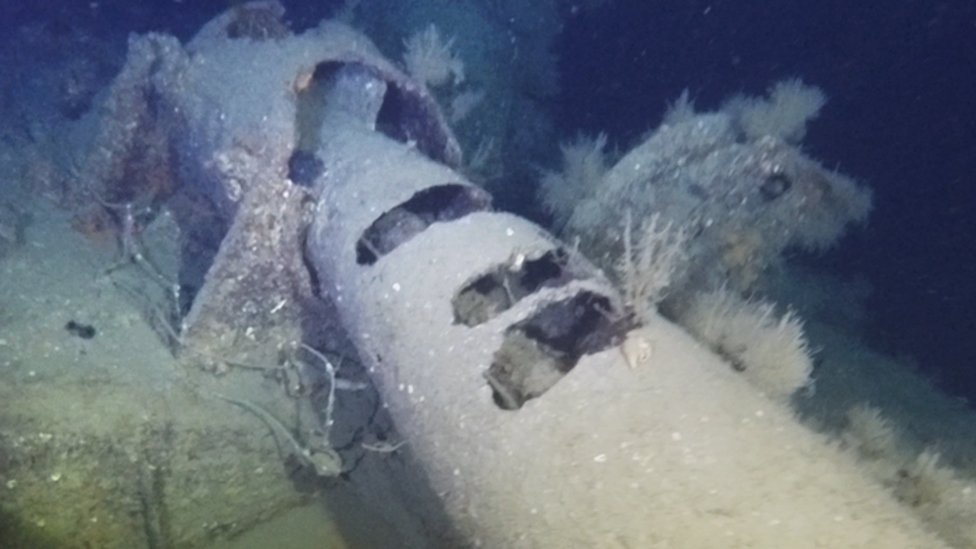
Divers Confirm Identity of German World War One U-boat Wreck Off Shetland Coast
A German World War One U-boat, SM UC-55, has been identified by divers off the coast of Shetland.
The submarine was sunk by the Royal Navy in 1917, about eight miles southeast of Lerwick, after it was forced to surface due to a technical fault while laying mines in the convoy channel between Orkney and Shetland.
The wreckage had been known about since the mid-1980s, but it took 10 years of planning for divers to inspect the site.
The divers, aboard the Stromness boat Valhalla, spent three-and-a-half hours exploring the wreckage, which sits at a depth of 110m (361ft), to confirm that it was the SM UC-55.
"This has been known about for a long time, the question was, is this the wreck we thought it was," said Hazel Weaver, the owner of the Valhalla.
"After three-and-a-half hours of divers being in the water, they came and confirmed yes, this is the UC-55." U-boats, which were used by Germany in both World War One and Two, posed a significant threat to merchant ships and military vessels, inflicting heavy losses.
Today, only four U-boats remain intact, while many others lie on the ocean floor.
The SM UC-55 met its end when a loss of trim caused it to sink below its maximum dive depth, resulting in some flooding.
The submarine then rose to the surface, where it was spotted by two Royal Navy destroyers, which opened fire and sank it.
Jacob Mackenzie, one of the divers who visited the wreck, described the experience as "eerie" given that some of the crew had perished along with the vessel.
"You are aware of that, although I believe about 15 of the crew did escape.
The rest of the crew, of course, didn't, so they are still inside, and that's very obvious when you're looking around it," he said.
The divers were able to confirm the identity of the wreck because details of the damage had been recorded in the logbooks of the Royal Navy destroyers that sank the submarine.
The wreckage had been known about since the mid-1980s, but it took 10 years of planning for divers to inspect the site.
The divers, aboard the Stromness boat Valhalla, spent three-and-a-half hours exploring the wreckage, which sits at a depth of 110m (361ft), to confirm that it was the SM UC-55.
"This has been known about for a long time, the question was, is this the wreck we thought it was," said Hazel Weaver, the owner of the Valhalla.
"After three-and-a-half hours of divers being in the water, they came and confirmed yes, this is the UC-55." U-boats, which were used by Germany in both World War One and Two, posed a significant threat to merchant ships and military vessels, inflicting heavy losses.
Today, only four U-boats remain intact, while many others lie on the ocean floor.
The SM UC-55 met its end when a loss of trim caused it to sink below its maximum dive depth, resulting in some flooding.
The submarine then rose to the surface, where it was spotted by two Royal Navy destroyers, which opened fire and sank it.
Jacob Mackenzie, one of the divers who visited the wreck, described the experience as "eerie" given that some of the crew had perished along with the vessel.
"You are aware of that, although I believe about 15 of the crew did escape.
The rest of the crew, of course, didn't, so they are still inside, and that's very obvious when you're looking around it," he said.
The divers were able to confirm the identity of the wreck because details of the damage had been recorded in the logbooks of the Royal Navy destroyers that sank the submarine.