Covid vaccine: All UK adults to be offered jab by 31 July - PM
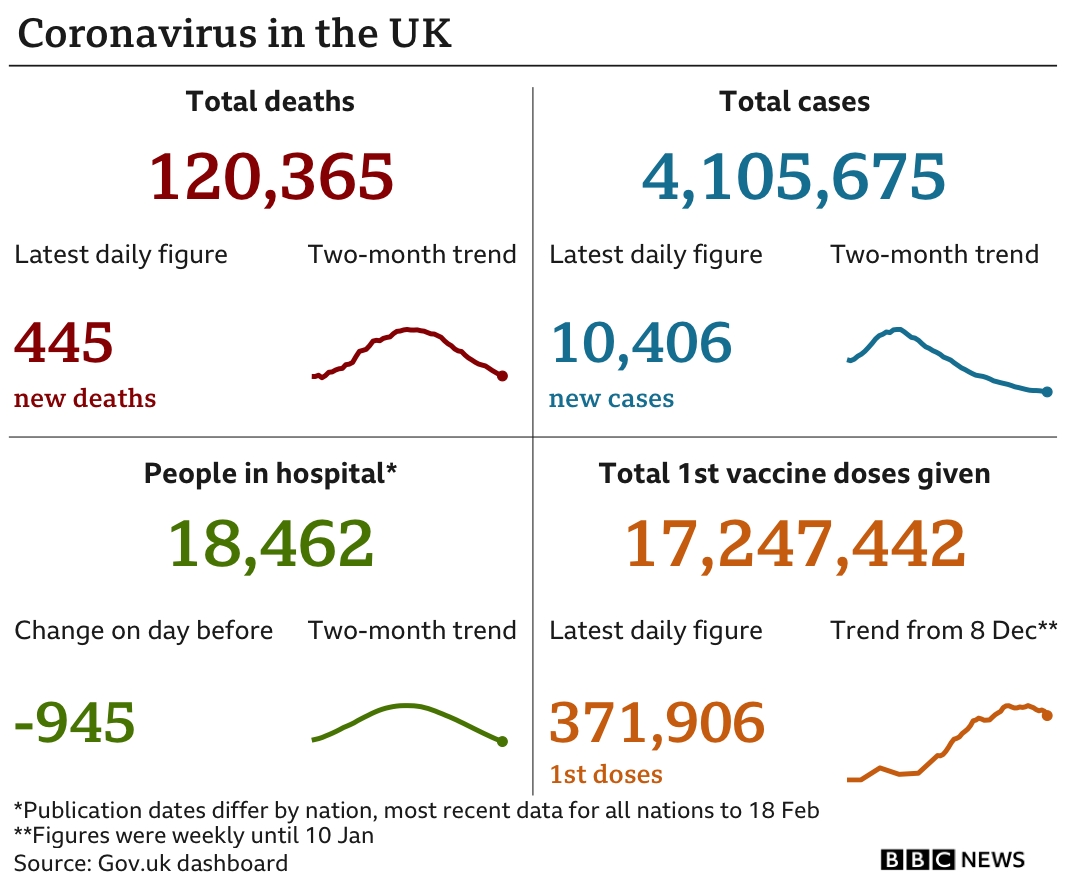
More than 17 million people have been given a jab since the UK's Covid vaccine rollout began in December 2020.
But Boris Johnson said he now wants the programme to "go further and faster".
He said the July target would allow vulnerable people to be protected "sooner" and would help to further ease lockdown rules across the country.
NHS England chief executive Sir Simon Stevens said there were "early signs" the vaccine rollout was contributing to a fall in hospital admissions.
The PM is due to hold a final meeting with senior ministers about how to ease England's lockdown later, before he sets out the full "road map" on Monday.
A speedy rollout of the vaccine to all vulnerable people is seen as critical to reducing the pandemic's death toll and relieving pressure on the NHS.
The government's previous target was to offer all adults the first dose by September.
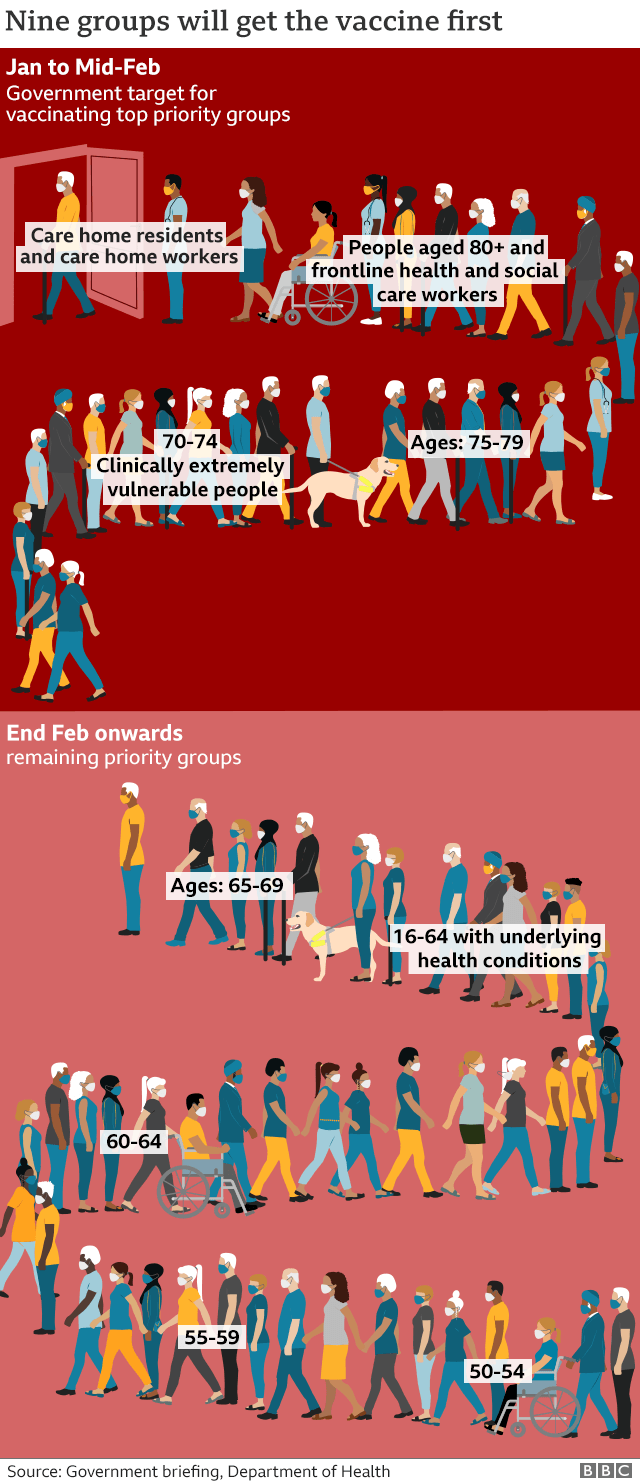
The new plan means that by 15 April, all adults aged 50 and over, as well as younger people with underlying health conditions that put them at higher risk, should have been offered a jab.
However, the order of priority for under-50s has yet to be outlined by the Joint Committee on Vaccination and Immunisation (JCVI).
Prof Adam Finn, a member of the JCVI, said he expected that a public announcement would be made on vaccine priorities at some point in the next week.
He told BBC Breakfast: "The strategy from JCVI that's being provided as advice to the government is just being finalised at the moment, and then government will make their decision as to how to do this during the coming days, so I think there'll be some kind of public announcement around that in the next week or so."

The speedier rollout of the vaccine is likely to raise expectations - and pressure - for a swifter unlocking in England, but the government is still talking the language of caution.
Senior ministers will finalise the plan today before it's presented to the wider Cabinet for approval tomorrow.
It's unlikely that any restrictions will change before 8 March, when the government hopes to get all children back into schools.
The prime minister has long said that is his top priority.
But it is likely that a small tweak will be made from that date to allow people to meet one other person outdoors for social purposes rather than just for exercise.
A Downing Street source said this would be the beginning of allowing people to meet each other for socialising once again as the government recognised the impact of not seeing loved ones.
It's understood various options - which could include reintroducing the rule of six - are being considered for the weeks beyond.
Labour, meanwhile, welcomed the vaccine targets being moved forward, but called on the government to prioritise people based on their job.
Shadow health secretary Jonathan Ashworth said: "It's perfectly reasonable for teachers, police officers and other key workers who haven't been able to stay at home in the lockdown to ask when their turn will be.
"If government aren't going to prioritise by occupation in the next phase, they need to set out why."
Mr Ashworth also said the vaccination programme needed to be supported by stronger measures to break the chain of infection, such as "decent financial support" for people who have to self-isolate, updated guidance on face coverings and better ventilation standards in workplaces.
Some 17.2 million people in the UK have received their first dose of a vaccine at one of the 1,500 vaccination sites across the country, and almost 600,000 have received their second dose.
NHS England said that more than two-thirds of those aged between 65 and 69 have had their first dose of a vaccine - just one week after invitations went out.
Next, about 460,000 people aged 64 will be invited to get their jab.
NHS England medical director Prof Stephen Powis said: "Over 14.5 million of the most vulnerable people in England have already safely had their first dose of the Covid-19 vaccine and with people aged between 65 and 69 now eligible too, we want everyone else in this age group to consider making this week your week to get a jab."
The government previously met its pledge of offering a vaccine to everyone in the top four priority groups - including those aged 70 and over, care home residents, healthcare workers and people required to shield - by 15 February.
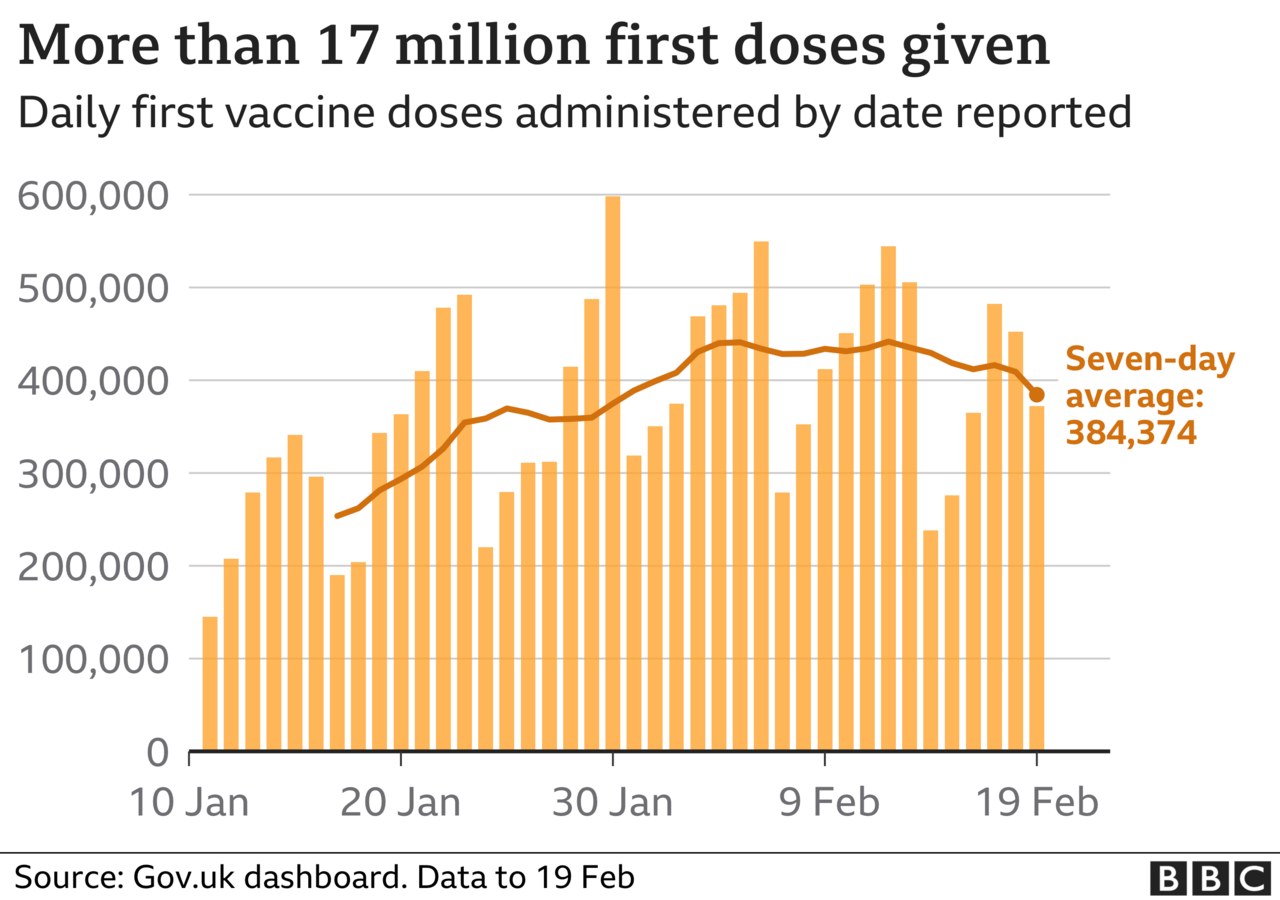
Mr Johnson said: "Hitting 15 million vaccinations was a significant milestone - but there will be no let up, and I want to see the rollout go further and faster in the coming weeks.
"We will now aim to offer a jab to every adult by the end of July, helping us protect the most vulnerable sooner, and take further steps to ease some of the restrictions in place."
He added, however, that the "route out of lockdown" would be "cautious and phased".
Reuniting families and allowing people to have more social contact will be an "absolute priority" in easing measures once schools have reopened, No 10 said on Saturday.
One of the first steps towards this is that care home residents in England will each be allowed one regular visitor from 8 March.
Those nominated visitors will be able to meet indoors and hold hands with their loved one, but must wear personal protective equipment and be tested beforehand.
In Scotland, care home residents will be allowed up to two designated visitors once a week, under guidelines due to be published on Wednesday. The Scottish government hopes to publish a route out of lockdown next week, but First Minister Nicola Sturgeon has urged people not to book Easter holidays.
Wales has already announced some relaxation of its lockdown rules, but Northern Ireland has extended its stay-at-home order until April.