London Daily

Focus on the big picture.
Saturday, Jun 20, 2026

Covid: Masks to remain compulsory on London transport

Covid: Masks to remain compulsory on London transport

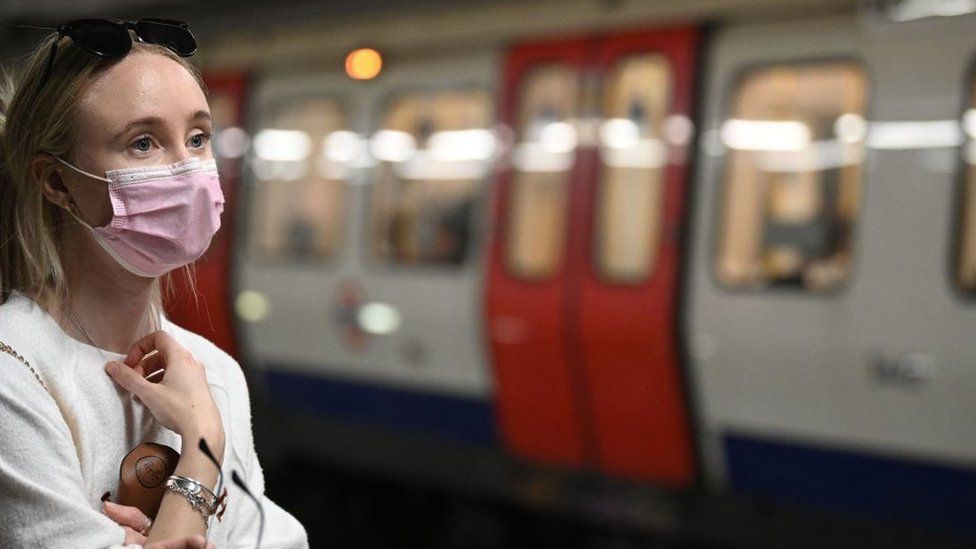
Face coverings must be worn on London's transport network despite restrictions easing on Monday, London's mayor says.

England is to move to level zero of Covid restrictions on 19 July, but mandatory use of face coverings is to remain in place on Transport for London (TfL) services, unless exempt.

This includes the Tube, bus, tram, DLR, Overground and TfL Rail.

TfL staff and bus drivers will continue to remind passengers that masks are a requirement, Sadiq Khan said.

It is the first English city to insist on face coverings after Covid restrictions ease.

But the Mayor of Greater Manchester Andy Burnham has said he will not '"rule out" mandating face masks on public transport.

Mr Burnham told the BBC he hadn't yet taken the decision to mandate masks on trams in Manchester and wanted to avoid adding to people's confusion.

And in Scotland the mandatory use of face coverings will remain in place for "some time", First Minister Nicola Sturgeon has said, even after the country eases most of its other restrictions on 19 July. The rules for masks apply in shops and public transport - as well as pubs and restaurants when not seated.

Mr Khan said: "I'm not prepared to stand by and put Londoners, and our city's recovery, at risk. This is why, after careful consideration, I have decided to ask TfL to retain the requirement for passengers to wear a face covering on all TfL services when the national regulations change."


Transport for London is the first operator to say that it will make wearing a mask a condition of carriage, unless you're exempt. This is far stronger than just guidance or a suggestion - those without will be denied travel.

The London Mayor has said that as well as suppressing the virus this is also about giving passengers confidence.

Other operators don't feel the same way - many are worried that requiring face masks will make passengers think that public transport is less safe than other indoor settings like pubs and restaurants at a time when they desperately need the numbers on board to go up.
Boris Johnson said the government "expects and recommends" face coverings are worn in crowded and enclosed spaces

The legal requirement to wear a face covering in shops, public transport and other enclosed public spaces will end on 19 July. It will be replaced with government guidance.

Prime Minister Boris Johnson said the government "expects and recommends" that face coverings are worn in crowded and enclosed spaces.

Labour has said it is "irresponsible" to drop the legal requirement to wear masks.

The move has been welcomed by the RMT union, which represents rail workers. It said the approach was consistent with the rules that are currently in place in Scotland, Wales and on Eurostar services to the continent.

However, it said: "We now have the ludicrous position where a passenger travelling through London will have different rules on the Tube and the mainline services."

From 2 May to 29 May 2021, 86% of TfL customers said they were wearing face coverings at all times on public transport.

Of the 14% not wearing a face covering at all times or not at all, almost three-quarters (74%) claim to have an exemption or good reason under the current regulations for not doing so, TfL research shows.

Andy Byford, London's Transport Commissioner, said: "The transport network is cleaner than ever, with an enhanced cleaning regime, hospital grade cleaning products, widely-available hand sanitizer and UV light fittings on escalator handrails to kill viruses.

"It is great news that regular independent testing for the virus by Imperial College has found no trace on our services, and we are now ready to safely welcome back more and more customers from 19 July as people head out to enjoy all that the capital has to offer."


Newsletter

Related Articles

0:00
0:00
Close
Long-Term Economic and Political Effects of Brexit Continue to Shape UK Policymaking
Digital Disinformation Emerges as a Growing National Security Challenge in the United Kingdom
Britain's Dependence on Global Energy Routes Drives Push for More Resilient Supply Chains
Rising Energy Costs Continue to Threaten Britain's Cost-of-Living Recovery
Concerns Grow Over Far-Right Organizing and AI-Driven Online Radicalization in Britain
UK-Led Global Partnerships Conference Calls for Reform of International Development Finance
Middle East Tensions Continue to Weigh on UK Business Confidence
Reports of Middle East Peace Deal Ease Pressure on UK Energy Prices
UK Warns Middle East Conflict Could Worsen Global Food Insecurity
UK Economy Loses Momentum After Strong Start to 2026
Bank of England Holds Interest Rates at 3.75% Despite Easing Inflation
Brexit's Legacy Remains Deeply Divisive Ten Years After the UK Voted to Leave the European Union
International Anti-War Conference Opens in London as Debate Over European Rearmament Intensifies
UK Health Authorities Introduce Drug Price Concessions Amid Record NHS Medicine Shortages
Sir David Attenborough Supports Sherwood Forest Conservation Efforts After Loss of Major Oak
Aardman Animations Marks 50 Years With Major Exhibition in Bristol
Drax Cleared After Investigation Into Wood Pellet Sourcing Practices
Jaguar Land Rover Shifts Toward Hybrid Vehicle Production for US Export Strategy
UK Police Arrest Liberal Democrat MP Cameron Thomas on Suspicion of Assault
Health Concerns Grow Over Elevated Kidney Cancer Rates Near Lancashire PFAS Factory
Royal Navy F-35 Jets Conduct First NATO Air Warfare Exercise from Finnish Airspace
UK NHS Issues Price Concessions for Medicines Amid Severe Drug Shortages
Heathrow Third Runway Project Faces Sharp Downward Revision in Expected Economic Benefits
Amber Heat Warning Issued Across Parts of England and Wales as Temperatures Rise
Train Collision Near Bedford Disrupts UK Rail Network and Leaves Multiple Injured
Bank of England Data Suggests Brexit Has Reduced UK Economic Output by Around Six Percent
UK Borrowing Costs Hold Near 4.8 Percent as Political Uncertainty Fuels Market Pressure
Andy Burnham Emerges as Front-Runner to Succeed Keir Starmer After Landslide Makerfield Victory
Prime Minister Keir Starmer Faces Mounting Pressure to Resign After Labour By-Election Defeat in Makerfield
Payment Fraud Losses Reach £1.28 Billion and Raise National Security Concerns
Lending to Small Businesses Climbs to Highest Level Since Late 2024
Middle East Conflict Clouds UK Economic Recovery Despite Strong First-Quarter Growth
Bank of England Moves to Simplify Capital Rules for Smaller Lenders
UK Government Fast-Tracks National Security and Cyber Resilience Legislation
Ofcom Investigates Telegram Over Alleged Role in Organising Arson Attacks
MPs Press Fujitsu to Speed Compensation for Post Office Horizon Victims
Bank of England Delays Final Basel III Implementation Changes to Support UK Banking Competitiveness
Pound Falls as Political Uncertainty and Bank of England Signals Weigh on Markets
0Andy Burnham Wins Makerfield By-Election and Emerges as Main Challenger to Keir Starmer
Dorset Council Tests AI Tools to Streamline Local Planning Applications
UK Researchers at Kew Gardens Use AI to Speed Up Identification of Threatened Plant Species
UK Gilt Yields Ease Toward 4.8% as Inflation and Labour Market Data Weigh on Bonds
Bank of England Data Shows Resilient SME Lending Despite Economic Slowdown
UK Finance Reports Weakening Services Activity as Business Confidence Softens
UK Introduces Mandatory Internal Complaints Process Under Data Use and Access Act
Bank of England Governor Andrew Bailey Flags Geopolitical Uncertainty as Key Risk to Inflation Outlook
Bank of England Holds Interest Rates at 3.75% as Policymakers Signal Cautious Stance on Inflation Risks
Cornwall Clergy Raise £40,000 for Church Repairs Through Everest-Themed Charity Challenge
UK Business and Social Landscape Reflects Strain From Geopolitical and Domestic Pressures
Tensions Grow in UK Over Sikh Kirpan and Religious Symbolism in Public Debate
×