London Daily

Focus on the big picture.
Tuesday, Jul 14, 2026

Covid in Scotland: Infection rate jumps to record one in 45

Covid in Scotland: Infection rate jumps to record one in 45

The Covid infection rate in Scotland has again risen to its highest level since estimates began, with about one in 45 thought to have had it last week.

The latest Office for National Statistics (ONS) infection survey estimated 117,300 people had Covid in the week ending 3 September.

It was the highest rate of any of the UK nations and the most ever recorded.

England was estimated to be one in 70, Wales was one in 65 and Northern Ireland was one in 60, the ONS said.

The figure for Scotland was a large increase on the previous week when it was one in 75.

Sarah Crofts, head of analytical outputs for the Covid-19 infection survey, said: "Scotland now has the highest rates across the UK countries where infections have continued to increase sharply, reaching a new highest recorded level."

The ONS report also shows a breakdown of the age groups most affected by Covid, with those under 30 accounting for a large majority of the cases.
People under 20 have a consistently high rate of infection.

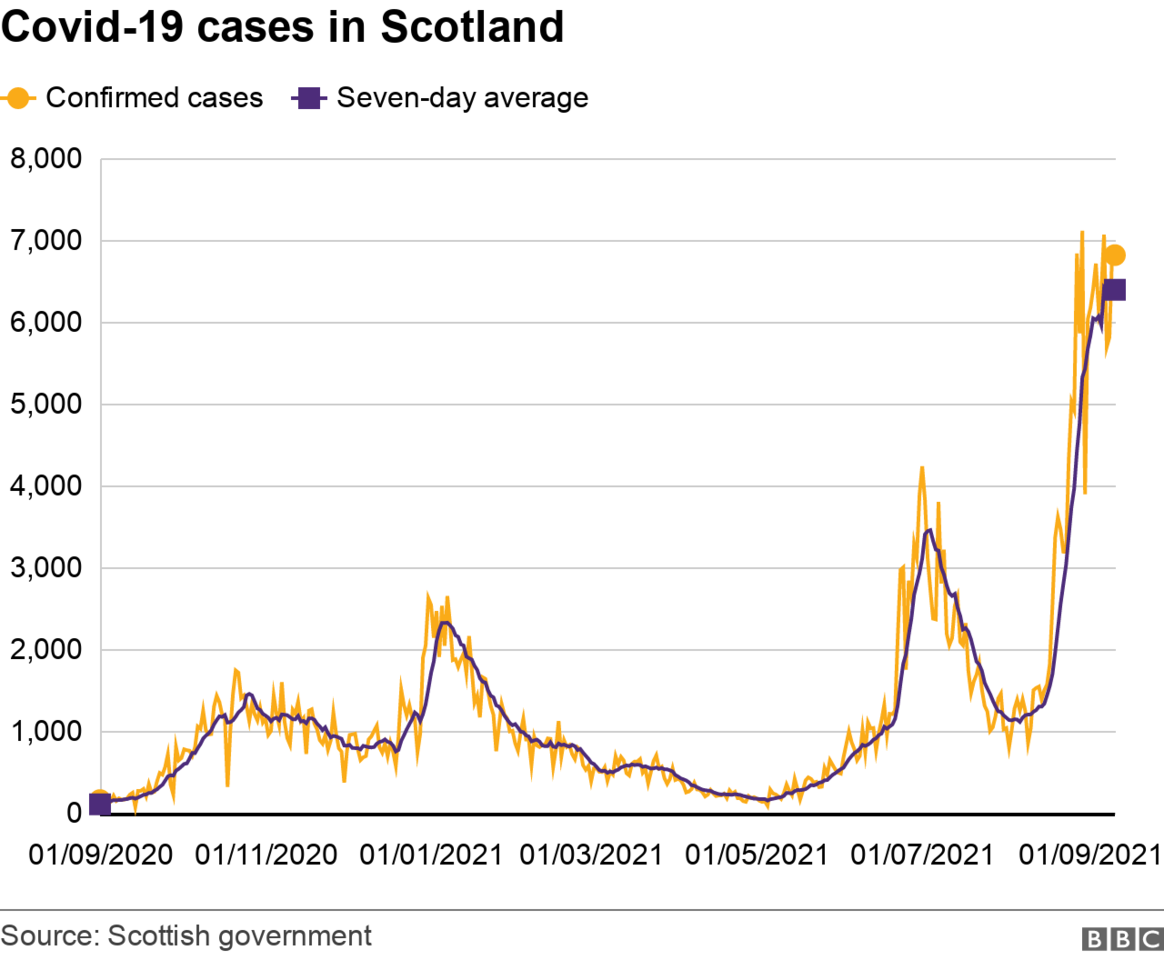
During the week of the latest survey the number of cases reported daily was very high, including a record 7,113 new cases confirmed by tests on 29 August.

Scotland's National Clinical Director Prof Jason Leitch said the ONS survey corresponded to the peak of infection 10 to 14 days ago and it was seen at the time in the daily numbers.

He said: "Our daily numbers are still very concerning. It has been stuck at 6,000 or 7,000 for a couple of weeks now but it has not gone to 14,000 which is where I feared it might."

On Friday, the Scottish government said there were 6,815 new cases and 22 reported deaths of people who had tested positive.

There were 82 people in intensive care and 977 in hospital, more than double the number of a fortnight ago.

Prof Leitch told BBC Scotland's Drivetime programme that almost 1,000 people were in hospital being harmed by the disease and that was a "real concern".

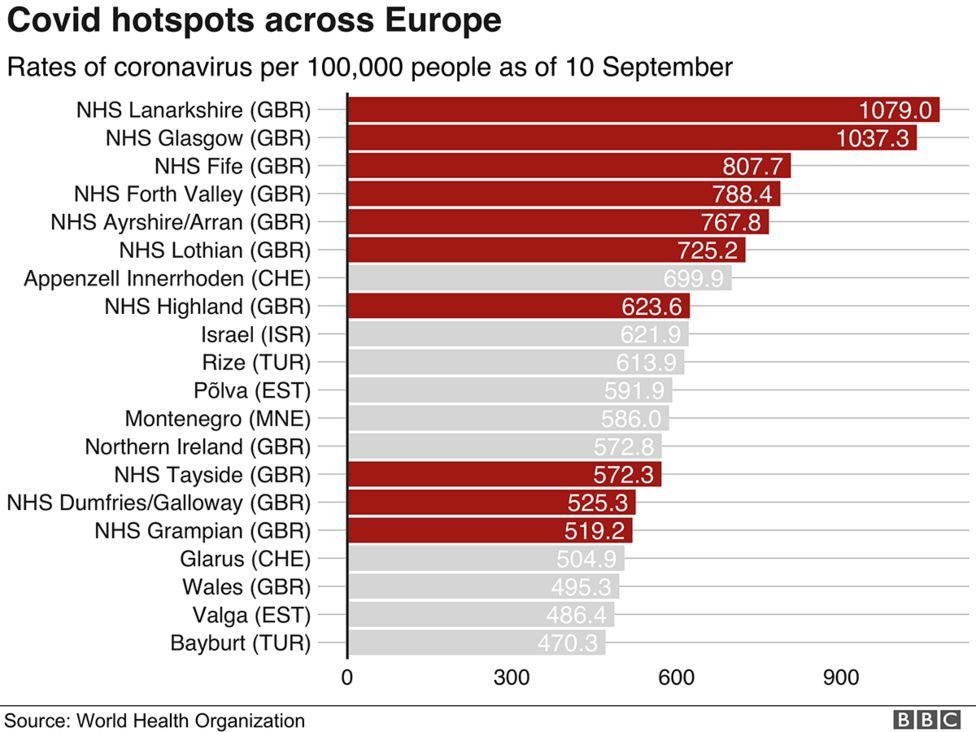
Health boards covering the Highlands, Grampian and Fife are the latest to warn of severe pressure on their services.


There is so little give in the system that most health boards have had to cancel all but emergency and urgent care.

Doctors are having difficult conversations with patients as they have to delay surgery, knowing that something treatable now, might not be in a few months; ambulances are taking too long to get to patients because they are stuck for hours outside emergency departments waiting for a bed to become available; and GPs are unable to cope with the influx of patients who become sicker as they sit on waiting lists.

Even if there are early signs that the growth in infections is starting to slow down, there are no signs the pressure on the NHS is beginning ease.

Meanwhile, the latest Scottish government estimate suggests the average number of contacts people had increased by about 14% in the past two weeks.

It said contacts within a work setting had increased by 63%, while contacts in the home had remained the same.

The report also said the proportion of people using public transport had decreased in the past two weeks - down from 25% to 21%.

And those visiting a pub or restaurant went down from 49% to 46%.

On Thursday the Scottish Parliament formally approved the introduction of vaccine passport measures for nightclubs and many large events from 1 October.

The SNP and Greens voted in favour while the proposals were opposed by the Conservatives, Labour and Liberal Democrats.

Newsletter

Related Articles

0:00
0:00
Close
UK Prime Minister Keir Starmer Offers Condolences Following Death of Qatar’s Father Amir
UK Regional Innovation Policy Focuses on Research Clusters Across Scotland, Wales, and Northern England
UK Corporate Transparency Rules Set to Become More Strict Under Modern Slavery Reform Plans
UK Civil Service Estate Strategy Shifts Government Activity Away From London
UK Strengthens National Security Powers Through New Threat Designations
Greater Manchester Police Conduct Drink and Drug Driving Operations After Football Events
UK Government Advances Darlington Economic Campus With Construction Milestone
UK Authorities Increase Football-Related Security Operations After Tournament Fixtures
UK Invests Fifty-One Million Pounds in National Cryogenics Facility and Regional Innovation Hubs
UK Moves Toward Tougher Modern Slavery Reporting Rules With Corporate Penalties
UK Government Reports Forty-Three Million Pounds in Savings From Office Estate Reform
UK Government Expands Civil Service Regional Strategy With Manchester and Darlington Campus Projects
UK Designates Iran’s Islamic Revolutionary Guard Corps as National Security Threat
United Kingdom Financial Markets Monitor Business Response to Economic Policy Changes
Scottish Renewable Energy Expansion Highlights Need for Faster Grid Development
Wales and Regions Strengthen Focus on Economic Development Through Tourism and Investment
Retail Industry Warns High Street Businesses Remain Under Pressure
Police Chiefs Highlight Growing Challenges Managing Protests and Public Order
Agriculture Leaders Seek Clarity on Post-Brexit Farming Support and Environmental Rules
Transport Unions Warn of Further Industrial Action Over Pay and Working Conditions
Welsh Tourism Sector Reports Strong Growth Driven by Domestic and International Visitors
National Infrastructure Review Gains Support as Leaders Seek Faster Project Delivery
Financial Markets Assess Impact of United Kingdom Corporate Tax Policy Changes
Northern Ireland Assembly Debates Cross-Border Trade and Infrastructure Cooperation Plans
Government Opens Consultations on Housing Reform and Planning System Changes
Scottish Government Faces Pressure to Accelerate Offshore Wind and Grid Expansion
National Energy System Operator Warns Grid Investment Is Needed for Future Electricity Demand Growth
United Kingdom Research Council Invests in Artificial Intelligence and Biotechnology Innovation Hubs
United Kingdom Expands Oversight of Skilled Worker Visa Sponsors Amid Migration Debate
Cross-Party MPs Call for National Infrastructure Strategy Review to Accelerate Economic Growth
Prime Minister Announces One Billion Pound NHS Funding Package Ahead of Winter Pressures
Bank of England Signals Cautious Approach to Interest Rates as Inflation Remains Above Forecasts
World Cup Visitors Turn American Big-Box Stores Into Souvenir Stops
Netflix Weighs Always-On Channels, Bundles and Short-Form Video
Passenger Is Pulled Partly Outside Ryanair Jet After Window Fails Mid-Flight
Innovation-led growth strategy
Public service reform pressure
Defence and industrial security
Labour leadership transition and economic reset
Northern England Pushes for Greater Influence in Britain’s Future Economic Model
UK Technology Strategy Focuses on Life Sciences, Digital Innovation and Research Investment
Britain and United States Maintain Focus on Pharmaceuticals Cooperation and Industrial Growth
UK Public Services Face Continued Pressure as Government Promises Visible Improvements
Regional Economic Power Becomes Key Theme in Britain’s Next Political Phase
Britain Expands Support for Small Businesses as Firms Seek Better Access to Finance
UK Economy Remains Central Political Challenge as Cost of Living and Growth Concerns Persist
National Health Service Introduces New Workplace Reviews to Improve Conditions for Healthcare Staff
UK Life Sciences Sector Secures More Than Three Billion Pounds in Investment to Support Innovation
Britain Strengthens Defence Strategy as Security Concerns Reshape Military and Industrial Policy
Andy Burnham Promises Stronger UK Defence Industry and Expanded Domestic Production
×