London Daily

Focus on the big picture.
Friday, Jun 19, 2026

Covid-19: False test results 'ruining' return to school

Covid-19: False test results 'ruining' return to school

Children in England are being unfairly punished by the insistence they must abide by "incorrect" positive results from rapid Covid tests, experts say.

Reports have emerged of pupils having to isolate after testing positive at school using the on-the-spot checks - only for a more reliable follow-up lab-based PCR test to find them negative.

Parents said it was "ruining" the return to school.

Rapid tests at home or in workplaces can be overruled by a lab test.

But the government has insisted this cannot happen for tests done in school - although it has been unable to explain why.
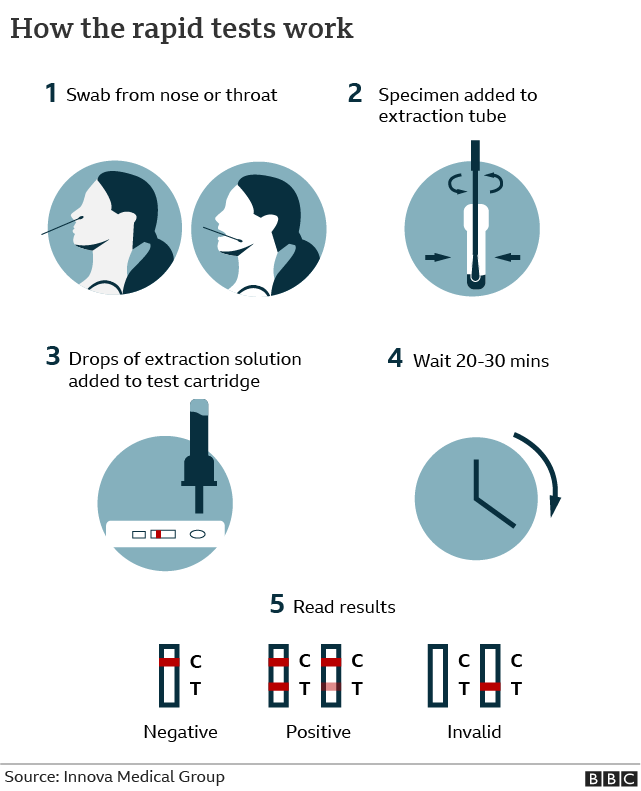

Pupils at secondary schools - of which there are around four million - are being offered three lateral-flow tests following their return to school.

But because infection rates are so low, the Royal Statistical Society believes more of the positive results produced this week could be wrong than right.

'It is incredibly frustrating and upsetting'


The children of Rachael Stewart, from Oxfordshire, have fallen foul of the policy. Her 16-year-old son tested positive via the rapid test done at school and he and his two younger sisters are having to isolate.

"We immediately got a PCR test done - I use these rapid tests for work and that is what we do. It came back negative, but we were told they still had to isolate. It is so upsetting for them.

"They have already been out of school for two months and now to miss more when there is no reason for it is incredibly frustrating and upsetting. It has ruined the return to school.

"I support the idea of testing but I have withdrawn consent for any more testing at school."

Dr Rachel Clarke, an NHS doctor, is another person who has been affected.

She said her son and 30 other pupils are out of school after one tested positive with a lateral-flow test, despite a PCR test later confirming the individual was negative.

"You really, really couldn't make this up," she said in a tweet.

"The idea of entire classes of children being kept out of school for 10 days due to one false positive test is awful."

'Children are being put last'


Their concerns are being echoed by experts in the field.

Sunil Bhopal, an expert in child health at Newcastle University, said the policy was wrong, suggesting it smacked of a government that was not prioritising children enough.

He said: "It is so painful what happens when children are put last. It is a recurring theme of the pandemic response."
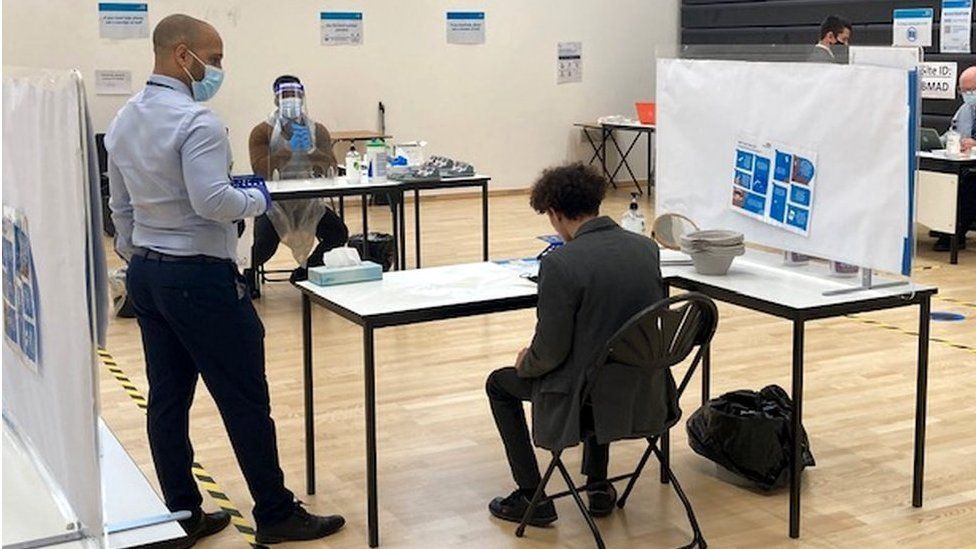
Testing has already been operating in schools open for key workers and vulnerable children

The false-positive rate for the rapid tests is low - estimates have put it around 0.1% - but given the large numbers being offered the test, thousands of pupils could be incorrectly told they are infected this week and next.

But even if a follow-up PCR test finds they are negative it cannot override the results of the rapid test, meaning those pupils, their families and any close contacts they have will need to isolate at home.

It is unclear why the government has adopted different policies for tests done at home and at school.

In a statement, Health Secretary Matt Hancock said the approach being taken would "help detect asymptomatic cases quickly" preventing the virus from entering schools and colleges.

Newsletter

Related Articles

0:00
0:00
Close
Dorset Council Tests AI Tools to Streamline Local Planning Applications
UK Researchers at Kew Gardens Use AI to Speed Up Identification of Threatened Plant Species
UK Gilt Yields Ease Toward 4.8% as Inflation and Labour Market Data Weigh on Bonds
Bank of England Data Shows Resilient SME Lending Despite Economic Slowdown
UK Finance Reports Weakening Services Activity as Business Confidence Softens
UK Introduces Mandatory Internal Complaints Process Under Data Use and Access Act
Bank of England Governor Andrew Bailey Flags Geopolitical Uncertainty as Key Risk to Inflation Outlook
Bank of England Holds Interest Rates at 3.75% as Policymakers Signal Cautious Stance on Inflation Risks
Cornwall Clergy Raise £40,000 for Church Repairs Through Everest-Themed Charity Challenge
UK Business and Social Landscape Reflects Strain From Geopolitical and Domestic Pressures
Tensions Grow in UK Over Sikh Kirpan and Religious Symbolism in Public Debate
Energy Price Cap Increase Set to Lift UK Household Bills by 13 Percent
University of Reading Ranked 196th in QS World University Rankings
UK Maritime Archaeologists Identify 17th-Century Dutch Shipwreck Off Devon Coast
Oxford Union Islam Debate Sparks Protest From Faith Leaders in UK
UK Social Cohesion Debate Intensifies After Religious Prejudice Survey Findings
UK SME Lending Rises Despite Geopolitical Uncertainty and Cautious Outlook
Foreign Demand for UK Gilts Remains Sensitive to Global Inflation Trends
Labour Party Faces Leadership Pressure After Weak Local Election Results in UK
Transport Costs Drive Inflation Pressure as Petrol Prices Push Up UK CPI
British Chambers of Commerce Cuts Growth Forecast as Middle East Conflict Weighs on Investment
UK Economy Grows 0.6 Percent in First Quarter but Outlook Remains Weak
Bank of England Holds Interest Rates at 3.75 Percent as Inflation Risks Persist
Energy Price Cap Rise Expected to Keep UK Inflation Above Target Through 2026
Health Authorities Warn of Rising Cases of Seasonal Respiratory Illnesses
BAE Systems and Rolls-Royce Advance Multi-Nation Fighter Aircraft Programme
National Archives Publish Declassified Documents on Cold War Energy Security Planning
British Retail Spending Rises Despite Continuing Cost-of-Living Pressures
Wales Launches Social Housing Pilot to Address Affordability Pressures
British Energy Companies Commit £5 Billion to Geothermal and Hydrogen Projects
Northern Ireland Debates Cross-Border Healthcare Partnership With the Republic of Ireland
UK Establishes National Artificial Intelligence Safety Centre With Leading Universities
UK Reports Decline in Small Boat Crossings After Expanding Intelligence Cooperation With France
Scottish Parliament Launches Inquiry Into Delays to Renewable Energy Projects
National Crime Agency Dismantles Alleged Multi-Million-Pound Money Laundering Network in London
Transport Strikes Disrupt Rail and Bus Services Across Northern England
United Kingdom and European Union Open New Security Dialogue on Defense and Border Cooperation
Bank of England Holds Interest Rates at 5% as Services Inflation Remains Elevated
UK Government Unveils Major National Health Service Reform Focused on Decentralization and Performance Funding
Government Advances New Airport Slot Rules to Ease Airline Operating Constraints
BBC Opens Flagship Science-Fiction Franchise to Competitive Production Bids
Chancellor Meets City Leaders Amid Concerns Over Gilt Market Liquidity
Rathbones Shares Fall Seventeen Percent After Regulatory Review Reveals Compliance Failings
United Kingdom Joins Group of Seven Initiative Using Artificial Intelligence and Quantum Computing for Cancer Research
Parliament Debates Doubling Tax Allowance for Pensioners After Major Public Petition
Measles Cases Exceed Seven Hundred in London and the West Midlands
British Military Leadership Faces Parliamentary Scrutiny After Defence Secretary's Sudden Resignation
House of Lords Begins Debate on Steel Industry Nationalisation Legislation
Parliament Advances Bill to Abolish NHS England and Create Single Patient Records
Parliament Fast-Tracks National Security Bill to Expand Powers Against Foreign Threats
×