London Daily

Focus on the big picture.
Monday, Jul 06, 2026

Cost of living: Royal Mail signals price hikes ahead as it cuts costs to cope with soaring inflation

Cost of living: Royal Mail signals price hikes ahead as it cuts costs to cope with soaring inflation

Royal Mail is the latest listed company to admit it is not immune from rising costs but it faces stiff union opposition to its modernisation plans and is yet to agree a pay deal with workers.

Royal Mail has signalled it will raise prices as it takes more aggressive action on costs in the face of soaring inflation.

The company warned that it sees "significant headwinds" from rising costs including wages, energy and fuel and it would look to mitigate these "through price increases and growth initiatives".

Royal Mail revealed that it aimed to make cost savings of £350m over the course of its current financial year - up from a previously planned £290m - in an attempt to bolster its position.

It later confirmed the plan would not involve further job cuts beyond the 700 managerial roles it axed earlier this year.

Shares fell by 12% amid an inflation-focused sell-off globally as investors eyed a series of challenges for the business, including a union battle over pay and modernisation which Royal Mail described as a "key uncertainty".

Inflation is on the march across the UK economy.

The consumer price index hit its highest level in 40 years in April, it was announced on Wednesday, as the cost of living crisis deteriorated.

Royal Mail has already hiked the cost of posting letters by an average of around 7%, and parcel prices by an average of about 4%.

The increases took the cost of a first-class stamp to 95p and a second-class stamp to 68p.

But it sees numerous threats from rising costs ahead, including the failure to agree a pay deal with the Communication Workers Union (CWU) which is opposing measures the company wants to implement as part of its transformation programme towards a parcel-focused business.

Royal Mail says the package it has offered is worth up to 5.5% this year.

But the union is demanding a "no strings attached pay rise" for Royal Mail staff on the grounds the company could afford it after posting adjusted operating profits of £758m for the year to 27 March.
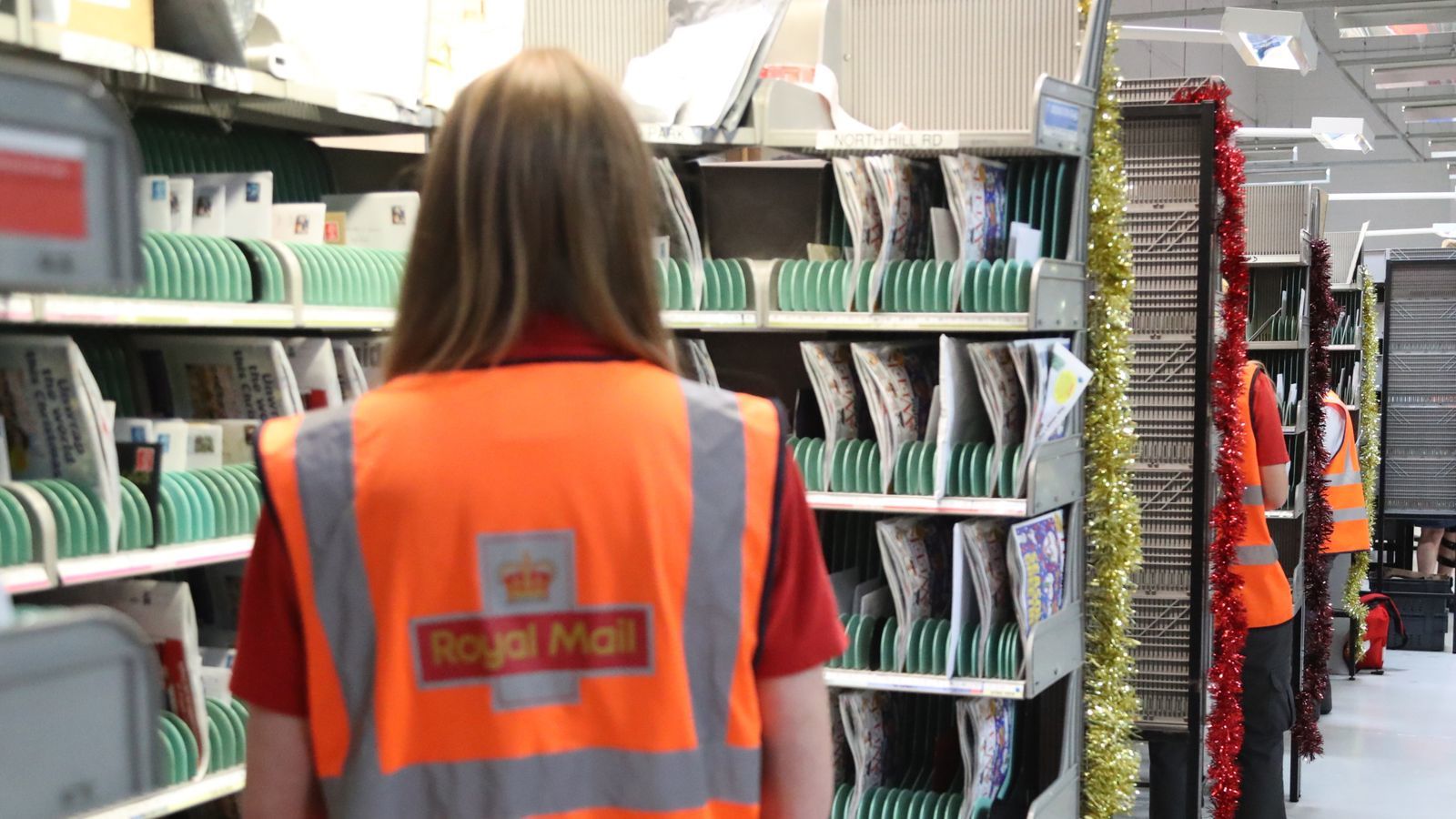
Risks for Royal Mail include a continuing union dispute over pay and its transformation programme


Royal Mail said in its results statement: "We are now at a crossroads. We need to deliver the benefits from change more quickly to deliver sustainable growth.

"We have made significant operational change already, but this needs to translate into real efficiency savings which deliver a financial benefit next year and beyond.

"Delivery of our existing agreements and the successful transition into the next agreements, as part of the current negotiations with the CWU, will be key to future profitable growth.

"We have made a substantial pay offer to our people which will enable the change we need to remain competitive, grow and secure their jobs for the future. Our market is changing quickly, and agility in our response is key."

'We have no time to waste'


Simon Thompson, Royal Mail's chief executive, added: "As we emerge from the pandemic, the need to accelerate the transformation of our business, particularly in delivery, has become more urgent.

"Our future is as a parcels business, so we need to adapt old ways of working designed for letters and do it much more quickly to a world increasingly dominated by parcels."

He added: "Our focus now is to work at pace with our people and our trade unions to reinvent this British icon for the next generations, so that we can give our customers what they want, grow our business sustainably and deliver long-term job security for our great team.

"We have no time to waste."

Newsletter

Related Articles

0:00
0:00
Close
Microsoft Lays Off 4,800 Employees and Xbox Suffers the Hardest Blow
Deep Purple Has Released Its Best Album in Decades
Office for National Statistics Updates Historical Investment Data Review to Improve Accuracy
Department for Science, Innovation and Technology Highlights Economic Gains From Digital Inclusion
Debate Intensifies Over UK Defence Strategy and Domestic Security Priorities
Report Warns Full Transport Accessibility Could Add £176 Billion to UK Economy Annually
Medicines Regulator Approves First Targeted Treatment for Advanced Merkel Cell Skin Cancer
Government Commits £22 Million to Brighton Seafront Infrastructure Renewal and Transport Safety
National Security Bill Returns to House of Commons Amid Calls to Protect Humanitarian Work
Government Tightens Overseas Political Donation Rules to Strengthen Safeguards Against Foreign Influence
NHS Maternity Reform Expands Central Oversight After Critical National Review
Dover Border Warnings Highlight Post-Brexit Pressure on Cross-Channel Trade
Private Nuclear Consortium Advances £35 Billion Small Reactor Strategy in UK
UK Labour Leadership Signals Shift Toward Reindustrialisation and Regional Power
House of Lords Debates Rail Nationalisation Bill to Create Great British Railways
Scottish Affairs Committee Expands Inquiry Into SNP Financial Conduct
Evri Launches £1.2 Million Defamation Case Against BBC Over Panorama Investigation
Port of Dover Warns of Border Delays as EU Entry-Exit System Looms
Nigel Farage Referred to Standards Watchdog Over Alleged Undeclared Benefits
UK Government Faces Scrutiny Over Claimed AI Datacentre Investment After FOI Findings
UK and India Finalise Trade Agreement Rules Ahead of Mid-July Implementation
UK Government Establishes National Maternity Commissioner After Major Review of NHS Care Failures
Private Consortium Plans £35 Billion UK Nuclear Programme Targeting Small Modular Reactor Rollout
Andy Burnham Sets Out Ten-Year Reindustrialisation and Devolution Plan as Leadership Transition to UK Premiership Advances
Morocco and France Advance as 2026 FIFA World Cup Enters Quarterfinals.
Historic 2026 Tour de France Opens in Barcelona With Revamped Team Time Trial.
Global Mergers and Acquisitions Approach $4 Trillion Defying Geopolitical Tumult.
Negotiators Advance 20-Point Framework for Gaza Ceasefire and Demilitarization.
OECD Warns Middle East Conflict Will Depress Global Economic Growth.
Ukrainian Drones Strike Major Oil Terminal in St. Petersburg.
World Meteorological Organization Issues Urgent Alert Over Rapidly Intensifying El Niño.
United States Commemorates 250th Anniversary With Diplomatic Summits and Global Flotilla.
Iran Begins Days-Long Funeral for Supreme Leader Khamenei Amid Strait of Hormuz Standoff.
Technology giant reports surging carbon emissions driven by artificial intelligence infrastructure demands.
Artificial intelligence adoption accelerates workforce reductions across the technology and financial sectors.
Global technology and financial conglomerates collaborate to launch a new stablecoin standard.
United States regulators lift export restrictions on a major frontier artificial intelligence model.
Royal Society Exhibition Highlights Growing Focus on Public Trust in Science
Energy Costs and Supply Chain Risks Continue to Shape UK Business Strategy
Rapid Rise in Artificial Intelligence Adoption Reshapes UK Corporate Operations, ONS Says
UK Businesses Turn Defensive as Economic Outlook Weakens, Institute of Directors Data Shows
UK Government Faces Criticism Over Late Extension of Pub Hours for England Match
Inquest Continues Into Death of Noah Donohoe as Jury Deliberates Findings
Calls for Stronger Wildlife Attraction Safety Rules After Crocodile Enclosure Injury
City Fire Under Control After Major Blaze Sends Smoke Across Urban Area
Police Investigation Continues After Officer Killed During Road Closure Duties
Blackpool Hotel Fined £120,000 After Electric Shock Incident Involving Child
Whistleblowers Allege Delays in UK Special Educational Needs Support Services
Calls Grow for Improved Support for UK Armed Forces Personnel Facing Health Conditions
Rising UK Energy Price Cap Increase Prompts Wider Concerns Over Household Pressures
×
