London Daily

Focus on the big picture.
Monday, Jul 27, 2026

Coronavirus vaccines: Boost for Africa in race for jabs

Coronavirus vaccines: Boost for Africa in race for jabs

The African Union (AU) has secured an additional 400 million doses of coronavirus vaccines for the continent.

Together with doses the AU has already reserved and those to be made available via the World Health Organization-backed Covax scheme, this brings the total for Africa to 1.27 billion.

Africa needs about 1.5 billion doses to immunise 60% of inhabitants, the threshold for herd immunity.

Most nations have not started vaccinating, lacking funds to do so.

Initiatives to help them have struggled to put in orders as wealthier countries are accused of bulk-buying vaccines.

Earlier this week, South Africa's leading coronavirus expert Salim Abdool Karim told the BBC that such behaviour was "unconscionable", warning "no-one is safe until everyone is safe".

The rollout of mass vaccination programmes across Africa may now begin in March, though not all supplies will be available by then.

The bulk would arrive later this year and next year, John Nkengasong, head of the Africa Centres for Disease Control and Prevention (Africa CDC), said.

"I think we're beginning to make very good progress," Dr Nkengasong said.

Vaccines secured for Africa:


*  AU's African Vaccine Acquisition Task Team (AVATT): 670 million (this includes the latest 400 million)

*  WHO-backed Covax scheme: 600 million

The latest announcement of 400 million doses are of the Oxford-AstraZeneca vaccine from the Serum Institute of India - no details were given about costs.

Some African countries are also doing direct deals with vaccine manufacturers or have received separate donations.
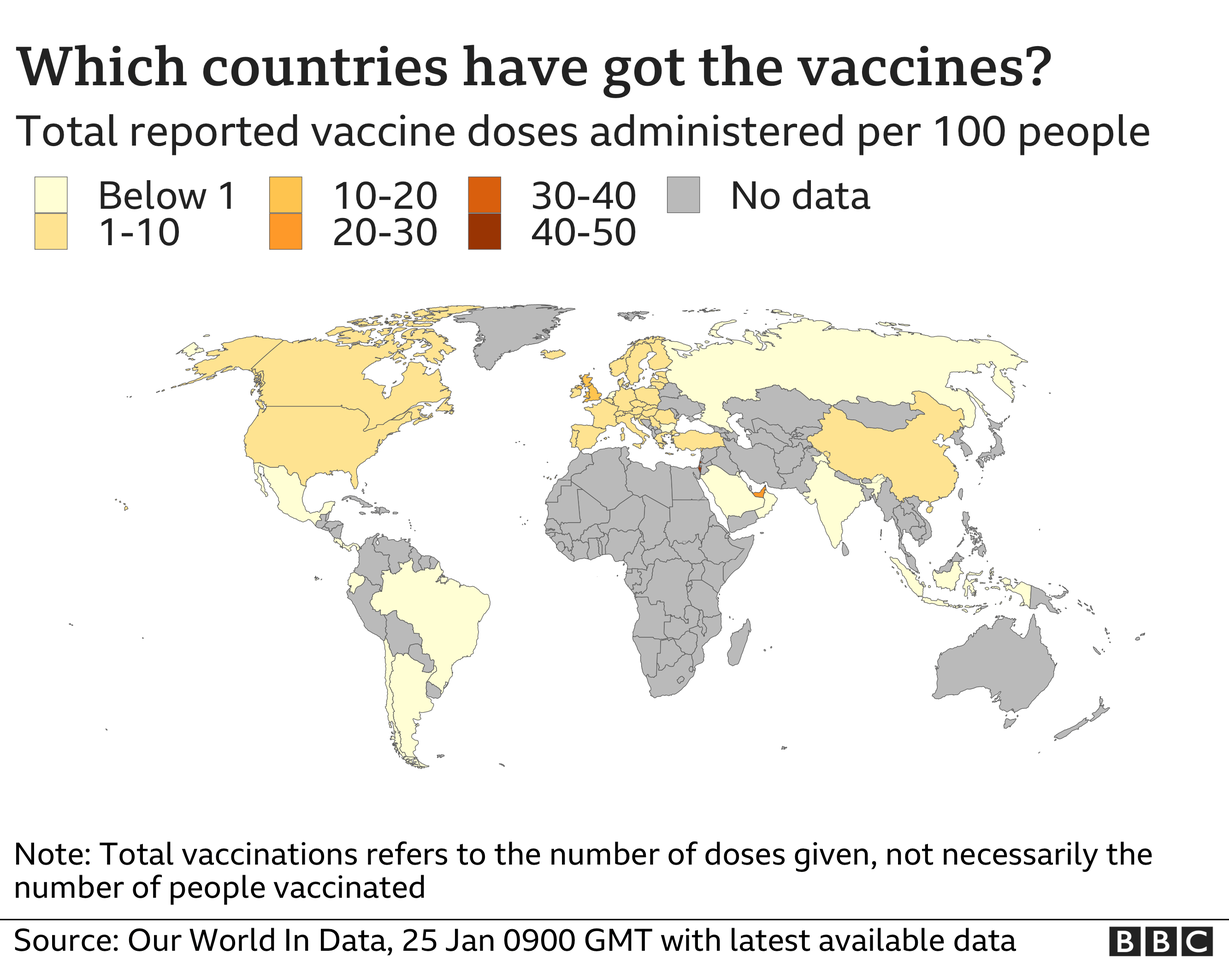


Which African countries are doing their own deals?


South Africa, the country on the continent worst-hit by the pandemic and battling a highly infectious new variant, is expecting a shipment of one million AstraZeneca vaccines from the Serum Institute of India to arrive next week so it can start vaccinating health workers.

Morocco, having bought two million doses of the AstraZeneca vaccine and 500,000 doses China's Sinopharm vaccine, is to start its vaccination campaign this week.

Seychelles, a popular tourist destination before the pandemic with a population of 94,000, has already started a free vaccination programme - thanks to a donation of 50,000 doses of the Sinopharm from Abu Dhabi. It says the Indian government has also offered the island 100,000 doses of the Oxford Astra-Zeneca vaccine.

Mauritius, another Indian Ocean island nation dependent on tourism, started vaccinations this week after 100,000 doses of the vaccines were donated by India.

Egypt - with a population of 100 million citizens - began its rollout on Sunday, starting with doctors and nurses receiving the Sinopharm jab. The government says it has reserved more than 100 million doses from different providers.

Anti-parasite drug warning


Earlier in the week, Dr Nkengasong urged African nations to be cautious about using the anti-parasite drug Ivermectin as a treatment for Covid-19.

It is being hailed in some quarters as a wonder drug in fighting the virus. Some doctors, including those in Nigeria and South Africa, say it is cheap and effective in alleviating the suffering of patients - and supplies are running low.

But Dr Nkengasong told the BBC's Focus on Africa radio programme that doctors should wait until clinical trials to see if it was truly effective.

"Ivermectin is safe when used at appropriate dose in treating the parasitic diseases that the drug was designed for; but we have to be careful that we do not use it without evidence that it is safe and effective against Covid-19," he said.


WHO: "Younger, healthier people could wait for the vaccine"


Newsletter

Related Articles

0:00
0:00
Close
Fresh Heatwave Threatens to Rekindle France’s Historic Wildfire Crisis
Burnham Puts School-to-Work Reform at Centre of Welfare Strategy
The Burnham government is seeking to establish its credibility through ambitious social care reform while maintaining fiscal discipline and public confidence in the National Health Service. Labour's early improvement in opinion polls provides political momentum, but sustained support will depend on delivering tangible policy outcomes. Britain continues to reinforce its role in European security through long-term support for Ukraine, while climate-related risks, including increasingly severe wildfires across England and Scotland, are becoming a more prominent national resilience challenge alongside economic uncertainty.
United Kingdom Economy Remains Exposed to Global Energy Risks
Prime Minister Dismisses Calls for an Early General Election
Scottish Wildfires Continue to Stretch Emergency Services
United Kingdom Faces Rising Wildfire Risk as Heatwave Continues
Lower Oil Prices Ease Inflation Concerns and Support Financial Markets
Financial Conduct Authority Launches Consumer Campaign on Car Finance Compensation
Government Prioritises Employment Over Benefit Cuts in Welfare Reform Plans
Prime Minister Rules Out Sweeping Property Tax Changes Before Autumn Budget
AstraZeneca Beats Expectations as Cancer Medicines Drive Strong Profit Growth
Labour Regains Narrow Polling Lead After Burnham's First Week in Office
United Kingdom Reaffirms Long-Term Commitment to Ukraine Under Burnham Government
Prime Minister Andy Burnham Makes Social Care Reform the First Major Test of His Government
Following OpenAI's Cyberattack: 'Most Companies Still Do Not Understand What Is Coming'
Autopsy Finds No Violence in Death of Epstein-Linked Model Scout
Indian Education Minister Resigns After Cockroach Youth Protests
California Desert Data-Centre Plan Stalls as Water and Power Disputes Mount
Northern Ireland Border Security Tightened After Military-Grade Explosive Interception
British Hospitality Sector Targets Summer Visitors Through Regional Promotions
England River Access Debate Intensifies After New Data Shows Limited Public Access
Royal Navy Strengthens Maritime Vigilance Amid Rising Security Concerns
UK Education Department Expands Mental Health Support for Young People Entering Work
UK Tourism Industry Launches Summer Campaigns to Boost Domestic Travel
North England Transport Plans Advance to Support Industrial Growth
Financial Markets Watch New Government’s Economic Strategy as Investors Assess Fiscal Risks
Royal Navy Continues Monitoring Russian Naval Activity Near UK Waters
UK Care Workers May Receive Immigration Exemptions Under Proposed Visa Changes
Health Secretary Yvette Cooper Begins Emergency Talks to Address NHS Staffing Shortages
UK Banks Launch High-Interest Savings Offers to Attract Household Deposits
North Sea Oil Drilling Projects Face Delays After Offshore Equipment Accident
Cairngorms Wildfire Highlights Growing Pressure on UK Emergency Services
UK Government Borrowing Plans Put Pressure on Ten-Year Gilt Markets
Royal Navy Aircraft Carrier HMS Prince of Wales Returns After NATO Northern Flank Mission
Metropolitan Police Opens Criminal Investigation Into Reform UK Political Donations
Scottish Government Requests Military Support as Cairngorms Wildfire Forces Emergency Response
Andy Burnham Takes Office as UK Prime Minister and Unveils New Cabinet Team
War, Youth Revolt and the Global Struggle for Control
War, Power and the Rising Price of Political Decisions
High Street Sales Suffer Sharpest Summer Decline in Five Years
Wales Approves Higher Taxes on Second Homes and Long-Term Empty Properties
Environment Agency Imposes Record £150 Million Penalty on Water Companies
UK Competition Watchdog Blocks U.S. Takeover of Cambridge Chip Designer
Scotland Unveils Land Reform Bill to Expand Renewable Energy Projects
Northern Ireland Secures £500 Million Technology Investment for Belfast Cybersecurity Hub
NHS Rolls Out AI Triage System Across Major Hospitals in England
UK Strengthens North Sea Naval Cooperation With European Allies
UK Chancellor Commits £7 Billion to Accelerate Manchester-Leeds Rail Link
Bank of England Signals Interest Rate Cuts After Inflation Falls Below Target
×