

Coronavirus: Vaccine rollout 'marathon not a sprint' - Powis
But the NHS England medical director warned the distribution of the Pfizer/BioNTech vaccine would be a "marathon not a sprint".
It will take "many months" to vaccinate everybody who needs it, he said.
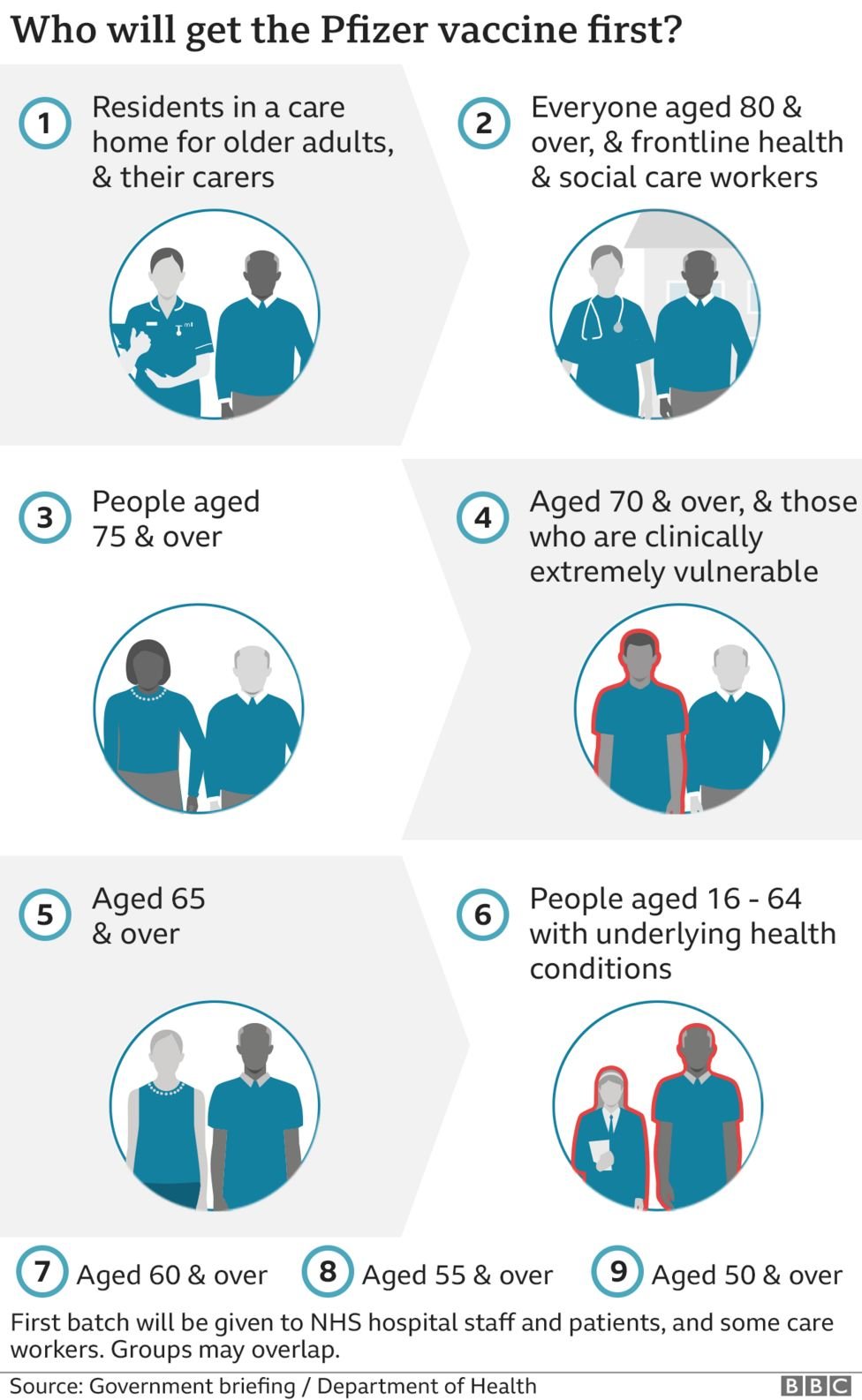
Frontline health staff, those over 80, and care home workers will be first to get the Covid-19 vaccine.
In England, 50 hospitals have been initially chosen to serve as hubs for administering the vaccine.
Scotland, Wales, and Northern Ireland will also begin their vaccination programmes from hospitals on Tuesday.
Prof Powis was speaking outside Croydon University Hospital in south London, which became one of the first hospitals in the UK to take delivery of the vaccine on Sunday.
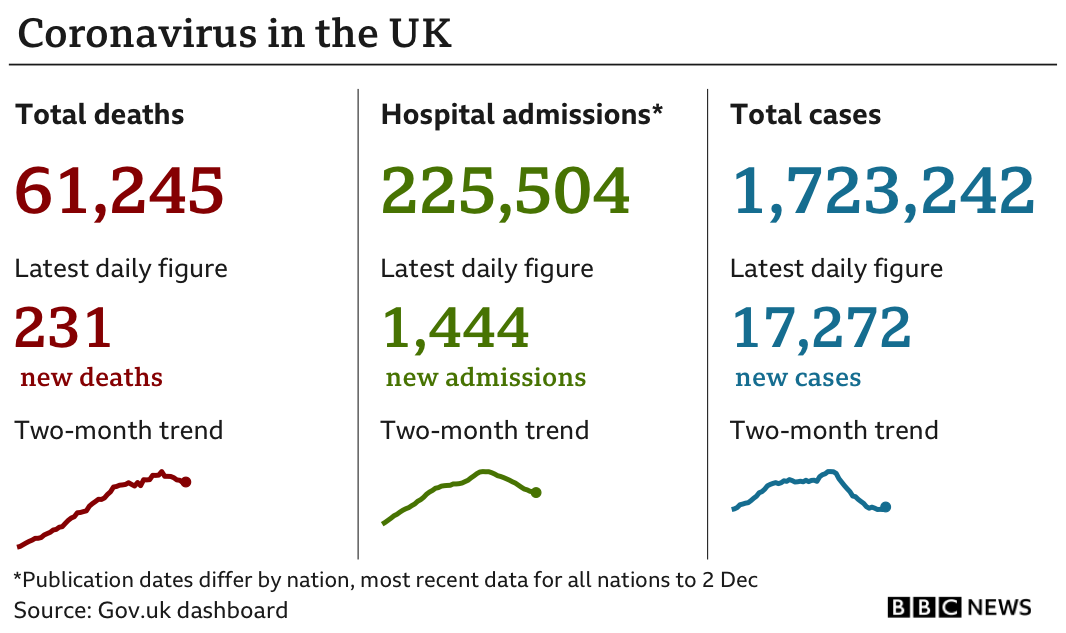
It comes as a further 231 deaths within 28 days of a positive test were reported in the latest UK government figures, and a further 17,272 cases.
Health Secretary Matt Hancock described the start of the vaccination scheme as "a historic moment".
"I urge everybody to play their part to suppress this virus and follow the local restrictions to protect the NHS while they carry out this crucial work," he said.
Refrigerated containers holding the vaccine doses have been arriving in the UK from Belgium, and are being prepared to be moved from secure locations to the hospitals.
Prof Powis said despite "huge complexities", the first doses would arrive at hospitals on Monday, to be ready to administer from Tuesday.
"As a doctor this is a really exciting moment," he said.
"NHS staff around the country at vaccination hubs have been working tirelessly to make sure that we are prepared to commence vaccination on Tuesday."
He added: "The NHS has a strong record of delivering large scale vaccination programmes - from the flu jab, HPV vaccine and lifesaving MMR jabs."
About 800,000 doses of the vaccine are expected to be available in the UK from next week.
So far the government has ordered a total of 40 million doses - enough to vaccinate 20 million people, with two shots each, 21 days apart.
With limited quantities initially available, elderly people who are already attending hospital as an outpatient, as well as those who are being discharged home after a hospital stay, will be among the first to receive the jab.
Others over the age of 80 will be invited to attend the hospital to receive a jab, and care home providers will be able to book their staff into vaccination clinics.
Any appointments not used for these groups will be used for healthcare workers who are at highest risk of serious illness from the virus.
Dr June Raine, chief executive of the Medicines and Healthcare products Regulatory Agency (MHRA), said people could have "real confidence" in the vaccine, adding: "The highest standards of scrutiny, of safety and of effectiveness and quality have been met, international standards."
She also said the MHRA would also be "following up all the safety issues after rollout incredibly carefully. Our job doesn't end when rollout starts."
Speaking on the BBC's Andrew Marr Show, Dr Raine vowed the vaccine will reach everyone in the UK who needs it - whatever the outcome of post-Brexit trade talks, saying officials were "fully prepared".
Because the Pfizer vaccine needs to stored and moved carefully each container is being inspected to ensure the vaccine vials have reached the UK in perfect condition.
Tracking data covering every box's journey from Belgium is being downloaded to check that the vials have been kept well below freezing.
The boxes each contain five packs of 975 doses, and will be split into smaller packs to be distributed around the country and defrosted.

Although care home residents and staff are top of the priority list agreed by the Joint Committee on Vaccination and Immunisation (JCVI), they may not get the vaccine first "for operational reasons".
Prof Anthony Harnden - deputy chair of the JCVI - told the BBC on Friday said the committee would "closely monitor" delivery and stressed he still expected care home residents "to be prioritised".
Mr Hancock said the government was doing everything it could to overcome "significant challenges" to ensure care home residents were vaccinated as soon as possible.
Speaking to the Sunday Telegraph, the health secretary said fast-track approval of the Covid jab meant restrictions might be relaxed before the end of March next year.
As well as the challenge of delivering the vaccine, health experts are also conscious that the public needs to be educated and persuaded to support the vaccination programme.
A host of famous faces including chat show host Sir Michael Parkinson and the singer Lulu, have told the Sunday Mirror that they will take the coronavirus vaccine without hesitation.
It follows concerns that online misinformation about vaccines could turn some people against being vaccinated.
The Mail on Sunday reports that the Queen is expected to receive the vaccine "within weeks" before revealing she has had it to boost public take-up of the jab.
The paper quotes senior sources who say the 94-year-old monarch and her husband, the Duke of Edinburgh, 99, will not get "preferential treatment" and will "wait in line" during the first wave of jabs reserved for the over-80s and care home residents.