

Coronavirus doctor's diary: Don't ask me which vaccine is best, please
The dash for vaccines has thrown up a rather peculiar situation. With so many pharmaceutical companies competing in this greatest of scientific races, we now have a variety of vaccines, and people are starting to ask me, "Do I get a choice?" And "Which vaccine would you recommend?"
The concept of consumer choice when it comes to immunisation, or even medications, is alien. No-one asks about the brand of their annual flu jab, or which company produces the MMR vaccine that will protect their precious children. But the intense global relief that greeted the Pfizer covid vaccine, and then Moderna, AstraZeneca and most recently Novavax and Janssen vaccines (though the last two are still awaiting regulatory approval) has created brand awareness in a population that has had a crash course in epidemiology and infectious diseases.

My answer is a simple one: we take whatever vaccine we are given and thank the lucky Northern stars that we live in a developed country. The idea of choice seems so wrong, when there is such an acute shortage of vaccines across the world.
In Italy, however, it's reported that police unions are refusing the AstraZeneca vaccine in the belief that the Pfizer and Moderna vaccines are more effective, and some Italian doctors are said to be rejecting it on the grounds that it takes longer to provide immunity. It is still too early to make such claims: as evidence accumulates from the continuation of vaccine trials and real-world evidence we will get a clearer picture.
Comparing vaccines is not as simple as comparing cola drinks or cars. The clinical trials that have reported very early results will continue for their full 12-month duration and the results will become more reliable with time. We have yet to start vaccine trials that can make head-to-head comparisons between different vaccines, so it may be that early results reflect different populations, or dosing regimes.
Side-effects after the vaccines will also vary - some may cause localised problems such as sore arms, others systemic effects such as flu-like symptoms. Again, as vaccine roll-out continues we will get a better picture of these profiles.
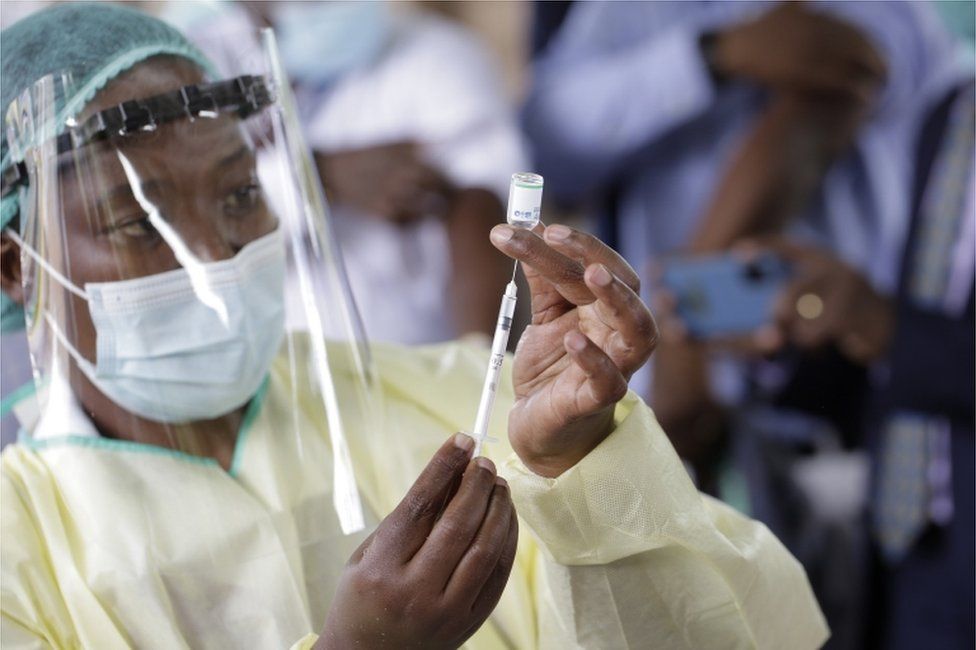
In my very unscientific straw-polling of preferences I find my medical colleagues have a slight preference for the Pfizer vaccine - they tend to be more comfortable than non-medics with new mRNA technologies and preliminary trial data suggested better clinical effectiveness, which is a key part of all our clinical decision-making.
However when Pfizer's summary trial data was recently released by the US Food and Drug Administration it turned out that over 3,000 suspected but not confirmed cases of Covid were not included in the heavily publicised press releases, so the vaccine may well be less effective than the original 95% claim.
Front-line diary

Prof John Wright, a doctor and epidemiologist, is head of the Bradford Institute for Health Research, and a veteran of cholera, HIV and Ebola epidemics in sub-Saharan Africa. He is writing this diary for BBC News and recording from the hospital wards for BBC Radio.
In my patients and non-medical colleagues there seems to be a greater preference for the AZ vaccine. People are comforted by its made-in-Britain roots, and its more traditional, tried-and-tested viral vector platform, using a harmless virus to deliver the gene for the SARS-CoV-2 spike protein into the patient's body. The Johnson and Johnson vaccine (made by its subsidiary Janssen), takes the same approach.
The Novavax vaccine uses a novel nanoparticle technique - it consists of a laboratory-made SARS-CoV-2 spike protein together with an adjuvant, an agent that signals to the immune system that it must take defensive action. The UK has ordered 60 million doses, so Novavax is likely to be widely used as the roll-out continues.
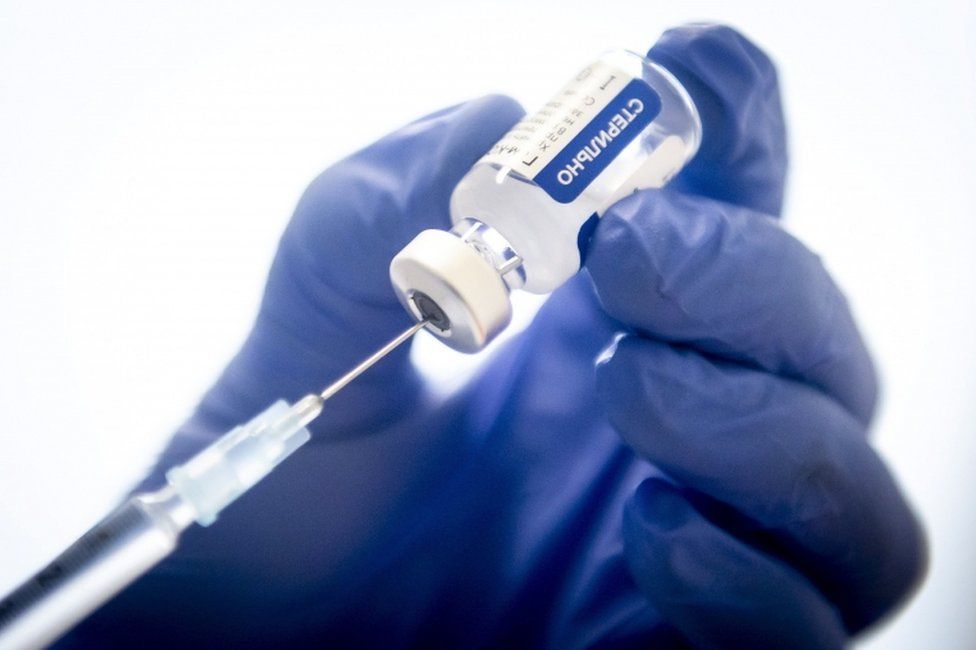
There is a dismissive scepticism about Russian or Chinese alternatives both among doctors and members of the public, although the effectiveness of the rather scarily named Sputnik V looks pretty good and as yet unpublished results for Sinovac's CoronaVac, which have been circulating in the medical community, also look promising.
I was due to have my hospital (Pfizer) vaccine just before Christmas, but the SARS-CoV-2 virus nipped in just beforehand and gave me a dose of the real thing. I have held out for a couple of months before re-joining the queue. It is likely that I will maintain a good immune response for the first two or three months, and I feel that while the vaccine is so precious, someone else will benefit more than me, so I would rather give up my dose to those in greater need. However having had possible reinfection already I don't want to push my luck by leaving it too long.
While being choosy about vaccines seems inappropriate to me, the reality is that some older health workers already have a choice and I will soon be in this position myself. My hospital is providing the Pfizer vaccine to all our staff. It will not be so long before my GP offers me the AZ vaccine or possibly the Novavax vaccine that I have been helping to trial, assuming it is licensed by then.
I would of course take any of these vaccines: they have all turned out to work much better than we could have imagined. If I had a choice then it would be an ethical decision. Which vaccine manufacturer reflects the zeitgeist of our collective humanity during the pandemic - the kindness and compassion, the sharing and donating?
I'm impressed by the companies that have offered to make doses available on a not-for-profit basis to low and middle-income countries. Others may have different ways to assess a company's ethics, but this is surely a time when we should encourage the pharmaceutical industry to show us what corporate social responsibility truly means.

