

Coronavirus: £3bn for NHS but Sunak warns of 'economic shock' to come
The one-year funding will be pledged in the Spending Review on Wednesday.
But Mr Sunak said Covid's impact on the economy must be paid for - and high levels of borrowing could not go on indefinitely.
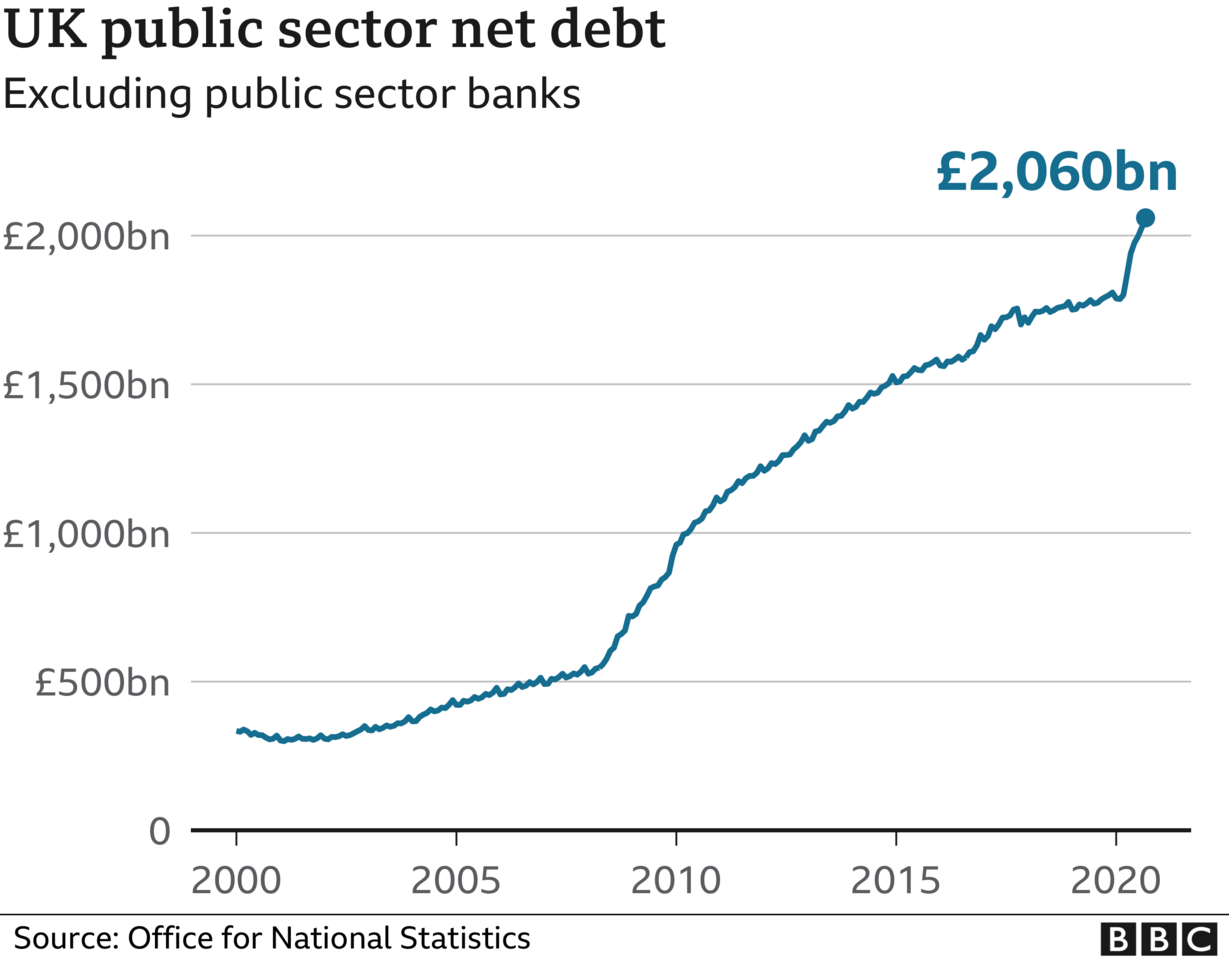
Borrowing in October hit £22.3bn, with public sector debt over £2 trillion.
The NHS usually gets extra money to tide it through the winter months but on a much more modest scale, with £700m in 2014/15 the highest payout of the last 10 years.
The Treasury said the £3bn package for the NHS would help tackle backlogs in the health service, with thousands of treatments and operations delayed because of the pandemic.
The number of people waiting a year for treatment has risen from about 1,500 in February to 140,000 in September.
The extra funding only applies to England but Scotland, Wales and Northern Ireland will receive equivalent funding.
NHS chief executive Sir Simon Stevens said the extra cash would take the weight off the NHS, allowing "one million extra checks, scans and additional operations" to be carried out.
"And because Covid takes a mental as well as physical toll, it's particularly important that we will be able to continue to expand mental health services too," he said.
Where will the £3bn go?
* £500m will support mental health services in England
* £1bn will go towards reducing NHS backlogs, with up to one million extra checks, scans and operations paid for
* £1.5bn will be used to ease existing pressures in the health service
However, the chancellor warned of hard times ahead.
Speaking to the BBC's Andrew Marr show, he said: "We know that three quarters of a million people have tragically already lost their jobs, with forecasts of more to come. Borrowing is at record peacetime levels already.
"It is not just numbers on a chart, it is people's lives and livelihoods, it's their security being impacted. And it is something that we are going to grapple with for a while to come, sadly."
Earlier, he told the Sunday Times people would soon see "the scale of the economic shock laid bare" , indicating taxes might have to start rising next year and there could be spending cuts.

Bailouts for the NHS during winter are not unusual, but this is, unsurprisingly, a large one by recent standards.
The funding boost represents between 2 to 3% of the frontline budget. Making sure it has an immediate impact will, however, be tricky.
Charities will play a crucial role in helping relieve the growing burden on mental health services from the pandemic. But the need for social distancing and infection control has reduced the amount of activity NHS hospitals can do and the health service is already purchasing a significant amount of services from the private sector.
There is a particular bottleneck in waits for tests and scans. There is also a finite amount of the most precious resource - staff.
The use of overtime and agency staff can help but, like the rest of the nation, significant numbers are also being asked to isolate because of exposure to the virus.
It means the NHS is ruthlessly having to prioritise - and that means Covid, cancer, emergency work and children.
Non-urgent treatments like knee and hip operations are the ones that are being hit the most. This money helps, but it certainly does not solve the problem.
The Office for National Statistics said government borrowing last month reached the highest October figure since monthly records began in 1993 - underlining the "substantial effect" the pandemic is having on public finances.
Government borrowing has reached £214.9bn - £169.1bn more than a year ago. The Office for Budget Responsibility has estimated it could reach £372.2bn by the end of the financial year in March.
Paul Johnson, head of the Institute for Fiscal Studies, told the BBC the government was right to keep spending as it tried to get the crisis under control.
But he said tax rises would be inevitable to stop the country's rising debt pile becoming "unsustainable".
Mr Sunak is facing criticism following reports he might announce a pay freeze for millions of public sector workers at Wednesday's Spending Review.
Frontline NHS staff would likely be excluded but those affected could include police, teachers, armed forces and civil servants.
Meanwhile, the government has said it plans to remove a longstanding bias that has affected funding for northern England and other regions outside the South East and London.
Speaking to Sky News' Sophy Ridge Programme, Mr Sunak denied the Spending Review would herald the return of austerity, saying: "What you will see is an increase in the government's spending on day-to-day public services, quite a significant one, coming on the increase we had last year."
He declined to comment on his plans for public sector pay, but said fairness was his priority "in the context of the wider economic climate" .
But Anneliese Dodds, Labour's shadow chancellor, told the BBC's Andrew Marr any freeze on public sector pay would stunt the recovery.
"What this measure would do is say to a firefighter, hospital porter, teaching assistants, that they will have less spending power in the future.
"That means they won't be spending in our high streets, they wont be spending in our small businesses, and that is a very good way of knocking confidence out of our economy at a time when the UK's economic downturn has been deeper than that of the rest of the G7."
What is the Spending Review?
A Spending Review is a chance to take a long-term view of the government's spending plans.
It sets out how much money will be allocated to different government departments and how taxpayers' money will be spent.
This year the government decided to abandon its long-term Comprehensive Spending Review amid the economic uncertainty of the Covid-19 pandemic and instead next week's review will cover just one financial year.
It is expected to focus on supporting jobs and public services through the Covid crisis as well as investing in infrastructure to deliver on the government's pledge to "level up" the country.