London Daily

Focus on the big picture.
Tuesday, Jul 14, 2026

Climate change: EU moves to label nuclear and gas as sustainable despite internal row

Climate change: EU moves to label nuclear and gas as sustainable despite internal row

Nuclear and natural gas energy plants could be counted as "green energy" under controversial EU plans just unveiled.

The European Commission says it has decided that both types of energy can classify as "sustainable investment" if they meet certain targets.

But the move has divided the EU, and been fiercely opposed by some members.

Austria's chancellor responded to the news by saying "nuclear power is neither green nor sustainable".

"I cannot understand the decision of the EU," Karl Nehammer said.

He said he would back his environment minister, Leonore Gewessler, in pursuing legal action at the European Court of Justice if the plans go ahead.

"This decision is wrong," Ms Gewessler said. "The EU Commission today agreed its greenwashing programme for nuclear energy and [the fossil fuel] natural gas."

Luxembourg has also said it will join in legal action.

The EU has set itself a goal of becoming climate neutral by 2050 and the Commission argues that to get there, a great deal of private investment is needed. Its proposals are meant to guide investors.


Spain, too, has strongly objected to the idea which was debated for months before being formally proposed on Wednesday.

But those objections are balanced by support from nuclear-using nations such as France. Nuclear energy involves fewer carbon emissions but has different safety concerns and requires disposal of dangerous waste.

Classifying natural gas as "sustainable" also has supporters who argue that some countries which still rely on coal for energy - such as Poland - would benefit from incentives to move to a relatively cleaner supply.

Germany, a powerful country in EU politics, relies heavily on gas in its own energy mix though its environment minister, Steffi Lemke, has criticised the plans.

Battle ahead


EU officials were keen to stress that the change was not a requirement for any state or company to invest in gas or nuclear.

It is instead a highly technical set of rules, called the "EU Taxonomy", about what classifies as "sustainable" so that private investors can decide where to put funds, the commission says.

It also regulates what can be said to be environmentally friendly, so that climate-conscious investors can make informed decisions.

The list is supposed to recognise green projects that make a "substantial" contribution to at least one of the EU's environmental goals, "while not significantly harming any" of them.

Commission officials point to the strict limits on what qualifies. For example, natural gas generation is under a strict CO2 emissions limit, and a requirement to switch to low-carbon gas by 2035. Nuclear power, meanwhile, must be in countries with clear plans and funding for dealing with nuclear waste.

Critics, however, have accused the EU of so-called "greenwashing" - precisely what it says its classification system is supposed to avoid.

But the decision to label both controversial industries as "green" is not yet final.

In addition to the threat of legal action from Austria and Luxembourg, the European Parliament and the council of heads of state have four months to consider the suggestion and object to it.
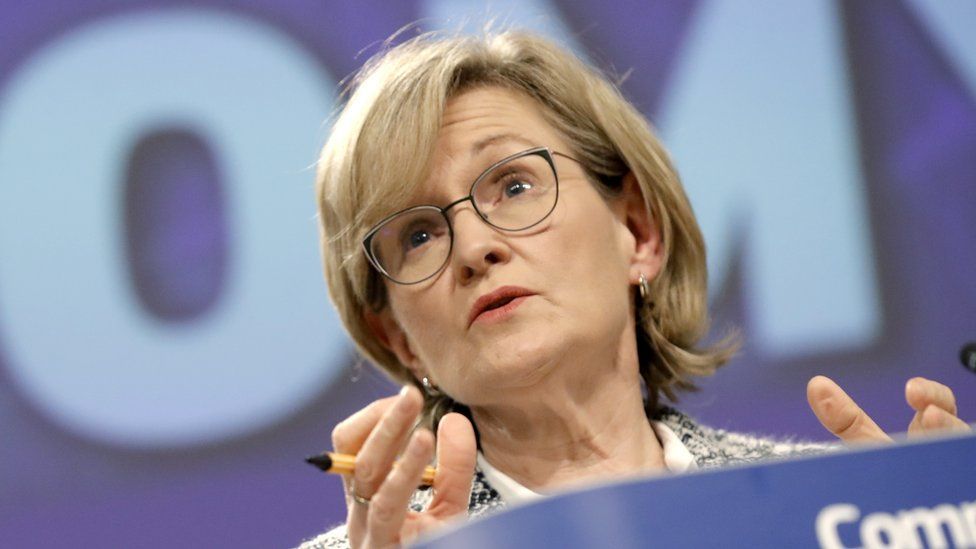
Commissioner Mairead McGuinness argues that every tool to reach climate targets must be used


The bar is, however, relatively high. In order to block the commission's proposed plans, either a majority of parliament members or at least 20 of the 27 national leaders are needed.

Green parties, which together with independents and others form one of the main power blocs in the European Parliament, are fiercely campaigning against the plan.

But European Commissioner Mairead McGuinness said "we need to use all the tools at our disposal" to reach the climate-neutral target.

Private investment was "key", she said, and the proposals were "setting out strict conditions to help mobilise finance to support this transition, away from more harmful energy sources like coal".


What is climate change?


Newsletter

Related Articles

0:00
0:00
Close
UK Prime Minister Keir Starmer Offers Condolences Following Death of Qatar’s Father Amir
UK Regional Innovation Policy Focuses on Research Clusters Across Scotland, Wales, and Northern England
UK Corporate Transparency Rules Set to Become More Strict Under Modern Slavery Reform Plans
UK Civil Service Estate Strategy Shifts Government Activity Away From London
UK Strengthens National Security Powers Through New Threat Designations
Greater Manchester Police Conduct Drink and Drug Driving Operations After Football Events
UK Government Advances Darlington Economic Campus With Construction Milestone
UK Authorities Increase Football-Related Security Operations After Tournament Fixtures
UK Invests Fifty-One Million Pounds in National Cryogenics Facility and Regional Innovation Hubs
UK Moves Toward Tougher Modern Slavery Reporting Rules With Corporate Penalties
UK Government Reports Forty-Three Million Pounds in Savings From Office Estate Reform
UK Government Expands Civil Service Regional Strategy With Manchester and Darlington Campus Projects
UK Designates Iran’s Islamic Revolutionary Guard Corps as National Security Threat
United Kingdom Financial Markets Monitor Business Response to Economic Policy Changes
Scottish Renewable Energy Expansion Highlights Need for Faster Grid Development
Wales and Regions Strengthen Focus on Economic Development Through Tourism and Investment
Retail Industry Warns High Street Businesses Remain Under Pressure
Police Chiefs Highlight Growing Challenges Managing Protests and Public Order
Agriculture Leaders Seek Clarity on Post-Brexit Farming Support and Environmental Rules
Transport Unions Warn of Further Industrial Action Over Pay and Working Conditions
Welsh Tourism Sector Reports Strong Growth Driven by Domestic and International Visitors
National Infrastructure Review Gains Support as Leaders Seek Faster Project Delivery
Financial Markets Assess Impact of United Kingdom Corporate Tax Policy Changes
Northern Ireland Assembly Debates Cross-Border Trade and Infrastructure Cooperation Plans
Government Opens Consultations on Housing Reform and Planning System Changes
Scottish Government Faces Pressure to Accelerate Offshore Wind and Grid Expansion
National Energy System Operator Warns Grid Investment Is Needed for Future Electricity Demand Growth
United Kingdom Research Council Invests in Artificial Intelligence and Biotechnology Innovation Hubs
United Kingdom Expands Oversight of Skilled Worker Visa Sponsors Amid Migration Debate
Cross-Party MPs Call for National Infrastructure Strategy Review to Accelerate Economic Growth
Prime Minister Announces One Billion Pound NHS Funding Package Ahead of Winter Pressures
Bank of England Signals Cautious Approach to Interest Rates as Inflation Remains Above Forecasts
World Cup Visitors Turn American Big-Box Stores Into Souvenir Stops
Netflix Weighs Always-On Channels, Bundles and Short-Form Video
Passenger Is Pulled Partly Outside Ryanair Jet After Window Fails Mid-Flight
Innovation-led growth strategy
Public service reform pressure
Defence and industrial security
Labour leadership transition and economic reset
Northern England Pushes for Greater Influence in Britain’s Future Economic Model
UK Technology Strategy Focuses on Life Sciences, Digital Innovation and Research Investment
Britain and United States Maintain Focus on Pharmaceuticals Cooperation and Industrial Growth
UK Public Services Face Continued Pressure as Government Promises Visible Improvements
Regional Economic Power Becomes Key Theme in Britain’s Next Political Phase
Britain Expands Support for Small Businesses as Firms Seek Better Access to Finance
UK Economy Remains Central Political Challenge as Cost of Living and Growth Concerns Persist
National Health Service Introduces New Workplace Reviews to Improve Conditions for Healthcare Staff
UK Life Sciences Sector Secures More Than Three Billion Pounds in Investment to Support Innovation
Britain Strengthens Defence Strategy as Security Concerns Reshape Military and Industrial Policy
Andy Burnham Promises Stronger UK Defence Industry and Expanded Domestic Production
×