London Daily

Focus on the big picture.
Friday, Jun 19, 2026

China’s 5G network is causing its carbon emissions to skyrocket

China’s 5G network is causing its carbon emissions to skyrocket

China’s digital sector is going to use 3 times as much energy because of 5G. That’s just the start of the problem.

China's digital sector is on track to almost triple its energy consumption by 2035, according to a new report released on Friday by environmental charity Greenpeace.

Electricity demand from China's internet infrastructure is expected to rise 289 per cent by the middle of the next decade, putting pressure on the country's pledge to go carbon neutral by 2060.

China is currently the world's biggest producer of CO2 emissions.

5G is one of the main drivers of the increase, the report said. Annual power consumption from the next-generation technology is forecast to increase by 488 per cent by 2035 to roughly 296.5 billion kilowatt-hours, similar to the total amount Spain currently uses in a year.

According to Greenpeace, emissions from China's digital sector are expected to rise through 2035. By contrast, traditional big polluters like the steel and concrete industry are expected to hit peak carbon in 2025.

"Explosive growth in digital infrastructure does not need to mean growth in emissions,” said Greenpeace East Asia climate and energy campaigner Ye Ruiqi.

“Technology companies have the potential to catalyze real emissions reductions via investment in distributed renewables projects and direct purchase of wind and solar energy, among other strategies".

Renewables getting cheaper


However, few of China's internet giants have committed to going carbon neutral. According to Greenpeace, only two major Chinese data centre operators – Chindata and AtHub – have committed to using 100 per cent renewable energy by 2030.

It's not all bad news though.
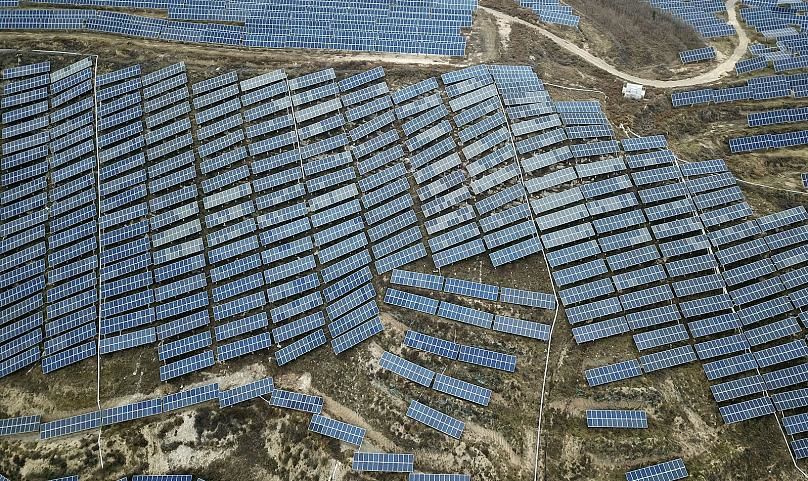
A solar panel installation is seen in Ruicheng County in central China's Shanxi Province.


The report notes that in many parts of China, solar and wind power have reached "grid parity," meaning they generate power at a cost that's the same or less than traditional fossil fuels.

The cost of renewables is forecast to keep going down, meaning China's digital sector – as well as those in other parts of the world – won't find the transition to renewables prohibitively expensive.

Can you upgrade to 5G without boosting energy use?


A report published by Swedish telecoms company Ericsson in March last year warned that the switch to 5G would "dramatically" increase energy consumption if it were done in the same way that the rollouts of 3G and 4G were.

"Some communications service providers have even estimated a doubling of their energy consumption to meet increasing traffic demands while improving their network and rolling out 5G. This is not sustainable from a cost or environmental perspective," wrote Erik Ekudden, head of group function technology at the company.

A crucial step would be "breaking the energy curve," Ericsson said, severing the link between more data and more electricity.

So, how do you break the curve?

According to the 2020 Ericsson report, 5G operators should prepare by upgrading network hardware, use software with energy-saving features, build networks more precisely to minimise duplication, and use AI to allow their infrastructure to respond proactively to demand.

Newsletter

Related Articles

0:00
0:00
Close
Dorset Council Tests AI Tools to Streamline Local Planning Applications
UK Researchers at Kew Gardens Use AI to Speed Up Identification of Threatened Plant Species
UK Gilt Yields Ease Toward 4.8% as Inflation and Labour Market Data Weigh on Bonds
Bank of England Data Shows Resilient SME Lending Despite Economic Slowdown
UK Finance Reports Weakening Services Activity as Business Confidence Softens
UK Introduces Mandatory Internal Complaints Process Under Data Use and Access Act
Bank of England Governor Andrew Bailey Flags Geopolitical Uncertainty as Key Risk to Inflation Outlook
Bank of England Holds Interest Rates at 3.75% as Policymakers Signal Cautious Stance on Inflation Risks
Cornwall Clergy Raise £40,000 for Church Repairs Through Everest-Themed Charity Challenge
UK Business and Social Landscape Reflects Strain From Geopolitical and Domestic Pressures
Tensions Grow in UK Over Sikh Kirpan and Religious Symbolism in Public Debate
Energy Price Cap Increase Set to Lift UK Household Bills by 13 Percent
University of Reading Ranked 196th in QS World University Rankings
UK Maritime Archaeologists Identify 17th-Century Dutch Shipwreck Off Devon Coast
Oxford Union Islam Debate Sparks Protest From Faith Leaders in UK
UK Social Cohesion Debate Intensifies After Religious Prejudice Survey Findings
UK SME Lending Rises Despite Geopolitical Uncertainty and Cautious Outlook
Foreign Demand for UK Gilts Remains Sensitive to Global Inflation Trends
Labour Party Faces Leadership Pressure After Weak Local Election Results in UK
Transport Costs Drive Inflation Pressure as Petrol Prices Push Up UK CPI
British Chambers of Commerce Cuts Growth Forecast as Middle East Conflict Weighs on Investment
UK Economy Grows 0.6 Percent in First Quarter but Outlook Remains Weak
Bank of England Holds Interest Rates at 3.75 Percent as Inflation Risks Persist
Energy Price Cap Rise Expected to Keep UK Inflation Above Target Through 2026
Health Authorities Warn of Rising Cases of Seasonal Respiratory Illnesses
BAE Systems and Rolls-Royce Advance Multi-Nation Fighter Aircraft Programme
National Archives Publish Declassified Documents on Cold War Energy Security Planning
British Retail Spending Rises Despite Continuing Cost-of-Living Pressures
Wales Launches Social Housing Pilot to Address Affordability Pressures
British Energy Companies Commit £5 Billion to Geothermal and Hydrogen Projects
Northern Ireland Debates Cross-Border Healthcare Partnership With the Republic of Ireland
UK Establishes National Artificial Intelligence Safety Centre With Leading Universities
UK Reports Decline in Small Boat Crossings After Expanding Intelligence Cooperation With France
Scottish Parliament Launches Inquiry Into Delays to Renewable Energy Projects
National Crime Agency Dismantles Alleged Multi-Million-Pound Money Laundering Network in London
Transport Strikes Disrupt Rail and Bus Services Across Northern England
United Kingdom and European Union Open New Security Dialogue on Defense and Border Cooperation
Bank of England Holds Interest Rates at 5% as Services Inflation Remains Elevated
UK Government Unveils Major National Health Service Reform Focused on Decentralization and Performance Funding
Government Advances New Airport Slot Rules to Ease Airline Operating Constraints
BBC Opens Flagship Science-Fiction Franchise to Competitive Production Bids
Chancellor Meets City Leaders Amid Concerns Over Gilt Market Liquidity
Rathbones Shares Fall Seventeen Percent After Regulatory Review Reveals Compliance Failings
United Kingdom Joins Group of Seven Initiative Using Artificial Intelligence and Quantum Computing for Cancer Research
Parliament Debates Doubling Tax Allowance for Pensioners After Major Public Petition
Measles Cases Exceed Seven Hundred in London and the West Midlands
British Military Leadership Faces Parliamentary Scrutiny After Defence Secretary's Sudden Resignation
House of Lords Begins Debate on Steel Industry Nationalisation Legislation
Parliament Advances Bill to Abolish NHS England and Create Single Patient Records
Parliament Fast-Tracks National Security Bill to Expand Powers Against Foreign Threats
×