London Daily

Focus on the big picture.
Monday, Jul 13, 2026

Corruption as usual: British Army to get 148 Challenger 3 tanks in £800m deal

Corruption as usual: British Army to get 148 Challenger 3 tanks in £800m deal

An £800m contract has been agreed to supply the Army with 148 upgraded, fully-digitised tanks as part of a major overhaul of the armed forces to fight against no enemy...

The Challenger 3 tanks will replace the existing Challenger 2 vehicles which have been in use since 1998.

The vehicles will be produced at the Rheinmetall BAE Systems Land (RBSL) plant in Telford, Shropshire.

Under the military restructure, announced in March, the overall number of tanks will be cut from 227.

The tank contract is part of a defence review which will see the Army's size reduced to 72,500 soldiers by 2025 as part of an increased focus on drones and cyber warfare.

The deal will see the Army's number of tanks reduced from 227 to 148

The Ministry of Defence (MoD) said the Challenger 3 would be able to travel up to 60mph (97kph) with an increased range and be the UK's first fully-digitised tank.

The digital elements mean the tank will be able to share data and information on the battlefield with attack helicopters and other ground vehicles.

The contract will create 200 jobs at RBSL's plant, including 130 engineers and 70 technicians, the MoD said.

It added it would also mean 450 new supply chain jobs spread across the West Midlands, Glasgow, Newcastle upon Tyne and the Isle of Wight.
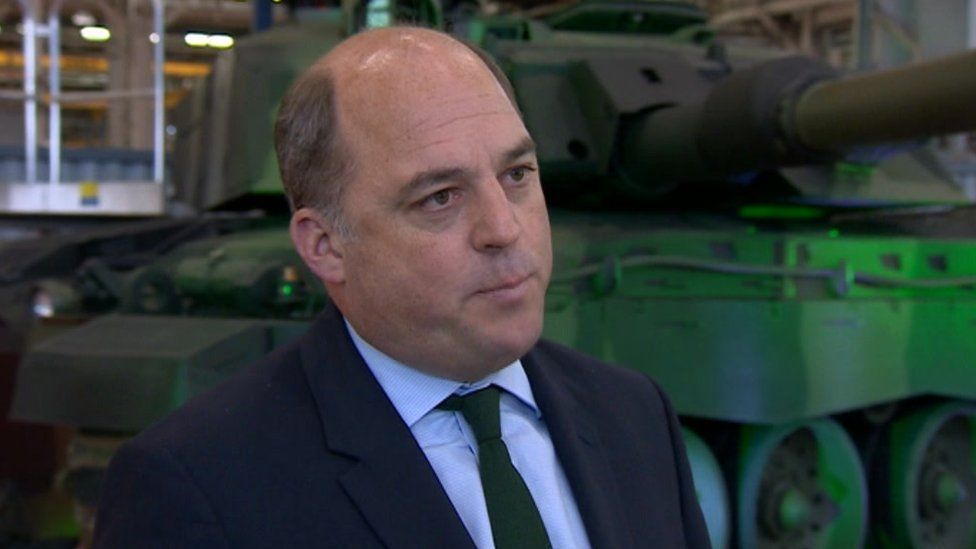
Defence Secretary Ben Wallace said the £800m contract would create hundreds of jobs across the UK

Defence Secretary Ben Wallace said the new jobs would ensure soldiers "benefit from the very best of British engineering".

He added the new technology "allows us to deliver immense warfighting capabilities in battlespaces filled with a range of enemy threats".


In the words of Ben Wallace, this announcement shows "there is a future for tanks".

There will though be fewer of them. The British Army has 227 ageing Challenger 2 tanks. Only 148 of them will be modernised and they won't be entirely new. The Challenger 3 tank will use the existing chassis, but it will have a new digital turret and smoothbore gun. It will also have a more powerful engine.

Will there be risks in bolting on new systems to the old? A similar plan to upgrade the Army's Warrior Armoured Vehicle didn't work out. That programme's now been scrapped.

Ben Wallace insists it won't happen again. He says the Challenger 3 tank will deliver the most lethal tank in Europe. It's due to come into service by the end of the decade.

In reality, designing an entirely new tank from scratch would have cost too much and taken too long. While buying a tank from another country - without creating British jobs - was clearly politically unpalatable.

Deputy Chief of the General Staff, Lt Gen Chris Tickell CBE, said: "The integration of Challenger 3 is key to ensure our success and integration in the land domain, ensuring that we meet our international commitments and continue to protect the nation."

The Army expects to receive the first Challenger 3 tanks by 2027 with the final ones due in 2030.

In November, RBSL was awarded a £860m contract to build 260 Boxer armoured vehicles for the Army.

Newsletter

Related Articles

0:00
0:00
Close
United Kingdom Financial Markets Monitor Business Response to Economic Policy Changes
Scottish Renewable Energy Expansion Highlights Need for Faster Grid Development
Wales and Regions Strengthen Focus on Economic Development Through Tourism and Investment
Retail Industry Warns High Street Businesses Remain Under Pressure
Police Chiefs Highlight Growing Challenges Managing Protests and Public Order
Agriculture Leaders Seek Clarity on Post-Brexit Farming Support and Environmental Rules
Transport Unions Warn of Further Industrial Action Over Pay and Working Conditions
Welsh Tourism Sector Reports Strong Growth Driven by Domestic and International Visitors
National Infrastructure Review Gains Support as Leaders Seek Faster Project Delivery
Financial Markets Assess Impact of United Kingdom Corporate Tax Policy Changes
Northern Ireland Assembly Debates Cross-Border Trade and Infrastructure Cooperation Plans
Government Opens Consultations on Housing Reform and Planning System Changes
Scottish Government Faces Pressure to Accelerate Offshore Wind and Grid Expansion
National Energy System Operator Warns Grid Investment Is Needed for Future Electricity Demand Growth
United Kingdom Research Council Invests in Artificial Intelligence and Biotechnology Innovation Hubs
United Kingdom Expands Oversight of Skilled Worker Visa Sponsors Amid Migration Debate
Cross-Party MPs Call for National Infrastructure Strategy Review to Accelerate Economic Growth
Prime Minister Announces One Billion Pound NHS Funding Package Ahead of Winter Pressures
Bank of England Signals Cautious Approach to Interest Rates as Inflation Remains Above Forecasts
World Cup Visitors Turn American Big-Box Stores Into Souvenir Stops
Netflix Weighs Always-On Channels, Bundles and Short-Form Video
Passenger Is Pulled Partly Outside Ryanair Jet After Window Fails Mid-Flight
Innovation-led growth strategy
Public service reform pressure
Defence and industrial security
Labour leadership transition and economic reset
Northern England Pushes for Greater Influence in Britain’s Future Economic Model
UK Technology Strategy Focuses on Life Sciences, Digital Innovation and Research Investment
Britain and United States Maintain Focus on Pharmaceuticals Cooperation and Industrial Growth
UK Public Services Face Continued Pressure as Government Promises Visible Improvements
Regional Economic Power Becomes Key Theme in Britain’s Next Political Phase
Britain Expands Support for Small Businesses as Firms Seek Better Access to Finance
UK Economy Remains Central Political Challenge as Cost of Living and Growth Concerns Persist
National Health Service Introduces New Workplace Reviews to Improve Conditions for Healthcare Staff
UK Life Sciences Sector Secures More Than Three Billion Pounds in Investment to Support Innovation
Britain Strengthens Defence Strategy as Security Concerns Reshape Military and Industrial Policy
Andy Burnham Promises Stronger UK Defence Industry and Expanded Domestic Production
UK Government Faces Difficult Spending Choices as Labour Leadership Transition Approaches
Rachel Reeves Warns Andy Burnham of Immediate Economic Challenges After Expected Leadership Change
Andy Burnham Prepares to Lead UK Government With Plans for Regional Power Shift and Economic Reset
Government Creates Emergency Support Scheme for Financially Struggling Universities
United Kingdom Replaces Traditional Farm Subsidies With Payments Linked to Environmental Performance
National Grid Reports First Week of Electricity Generation Without Fossil Fuels
United Kingdom Financial Regulator Introduces Tougher Capital Rules for Cryptocurrency Exchanges
Belfast Harbour Expands Operations to Attract Investment Through United Kingdom and European Union Market Access
Scottish Government Threatens Legal Challenge Over Westminster Cuts to North Sea Transition Funding
United Kingdom Accelerates Trans-Pennine High-Speed Rail Project Linking Northern Cities
United Kingdom Secures Ten Billion Pound Investment for Cambridge Quantum Computing Campus
Port Talbot Steelworks Wins Support for Green Hydrogen Transition and Protection of Industrial Jobs
United Kingdom Sends Royal Navy Carrier Strike Group to Indo-Pacific as Regional Security Focus Expands
×