London Daily

Focus on the big picture.
Monday, Jul 13, 2026

Bank of England rate-setter urges people to accept they are poorer in fight against inflation

Bank of England rate-setter urges people to accept they are poorer in fight against inflation

Huw Pill said people and businesses have responded to higher bills by asking for higher wages or charging their customers more money - and has warned both risk stoking inflation further.

The Bank of England's chief economist has urged people to accept they are poorer, warning that inflation risks remaining stubbornly high.

Huw Pill told a podcast that people and businesses have responded to higher bills and costs by asking for higher wages or charging their customers more money.

His remarks echoed warnings from Bank governor Andrew Bailey that large wage and further cost increases damage the Bank's efforts to cool inflation.

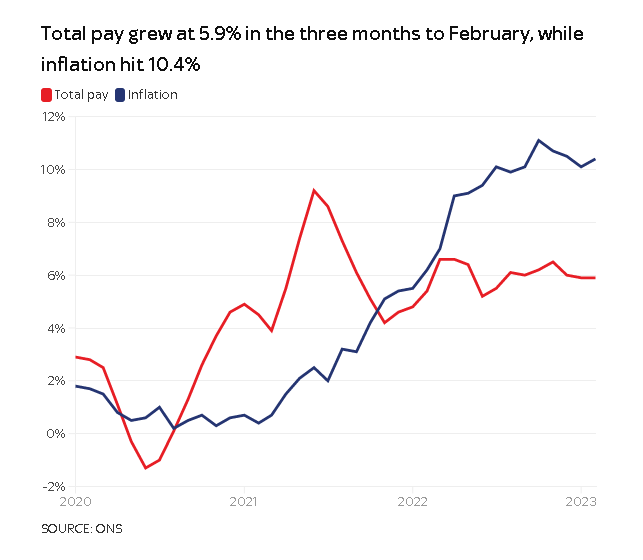
The headline measure, the consumer prices index, remains above 10% despite consecutive interest rate increases since December 2021 to help cool demand, and therefore the pace of price growth in the economy.

While much of the inflation can be attributed to factors outside the Bank's control, such as energy and food costs, it is worried about the ability of secondary effects, such as wage increases, making its job more difficult.

Its argument has consistently been dismissed by unions seeking pay deals to help cushion their members from the cost of living crisis.

Inflation is due to ease naturally, and sharply in the coming months, when the effects of the first big energy bill hikes are stripped out of the inflation data.

But the latest official figures showed higher wage increases than expected by economists, causing financial markets to price in that the Bank of England would respond with a further interest rate rise next month.

Mr Pill told the Columbia Law School's Beyond Unprecedented podcast: "The UK, which is a big net importer of natural gas, is facing a situation where the price of what you're buying from the rest of the world has gone up a lot, relative to the price of what you're selling to the rest of the world, which is mainly services in the case of the UK.

"You don't need to be much of an economist to realise that if what you're buying has gone up a lot relative to what you're selling, you're going to be worse off.

"So, somehow in the UK, someone needs to accept that they're worse off and stop trying to maintain their real spending power by bidding up prices whether through higher wages or passing energy costs on to customers etc.

"What we're facing now is that reluctance to accept that, yes, we're all worse off and we all have to take our share; to try and pass that cost onto one of our compatriots and saying, 'we'll be alright, but they will have to take our share too'.

"That pass-the-parcel game that's going on here, that game is one that's generating inflation, and that part of inflation can persist."

Newsletter

Related Articles

0:00
0:00
Close
World Cup Visitors Turn American Big-Box Stores Into Souvenir Stops
Netflix Weighs Always-On Channels, Bundles and Short-Form Video
Passenger Is Pulled Partly Outside Ryanair Jet After Window Fails Mid-Flight
Innovation-led growth strategy
Public service reform pressure
Defence and industrial security
Labour leadership transition and economic reset
Northern England Pushes for Greater Influence in Britain’s Future Economic Model
UK Technology Strategy Focuses on Life Sciences, Digital Innovation and Research Investment
Britain and United States Maintain Focus on Pharmaceuticals Cooperation and Industrial Growth
UK Public Services Face Continued Pressure as Government Promises Visible Improvements
Regional Economic Power Becomes Key Theme in Britain’s Next Political Phase
Britain Expands Support for Small Businesses as Firms Seek Better Access to Finance
UK Economy Remains Central Political Challenge as Cost of Living and Growth Concerns Persist
National Health Service Introduces New Workplace Reviews to Improve Conditions for Healthcare Staff
UK Life Sciences Sector Secures More Than Three Billion Pounds in Investment to Support Innovation
Britain Strengthens Defence Strategy as Security Concerns Reshape Military and Industrial Policy
Andy Burnham Promises Stronger UK Defence Industry and Expanded Domestic Production
UK Government Faces Difficult Spending Choices as Labour Leadership Transition Approaches
Rachel Reeves Warns Andy Burnham of Immediate Economic Challenges After Expected Leadership Change
Andy Burnham Prepares to Lead UK Government With Plans for Regional Power Shift and Economic Reset
Government Creates Emergency Support Scheme for Financially Struggling Universities
United Kingdom Replaces Traditional Farm Subsidies With Payments Linked to Environmental Performance
National Grid Reports First Week of Electricity Generation Without Fossil Fuels
United Kingdom Financial Regulator Introduces Tougher Capital Rules for Cryptocurrency Exchanges
Belfast Harbour Expands Operations to Attract Investment Through United Kingdom and European Union Market Access
Scottish Government Threatens Legal Challenge Over Westminster Cuts to North Sea Transition Funding
United Kingdom Accelerates Trans-Pennine High-Speed Rail Project Linking Northern Cities
United Kingdom Secures Ten Billion Pound Investment for Cambridge Quantum Computing Campus
Port Talbot Steelworks Wins Support for Green Hydrogen Transition and Protection of Industrial Jobs
United Kingdom Sends Royal Navy Carrier Strike Group to Indo-Pacific as Regional Security Focus Expands
National Health Service Expands Artificial Intelligence Diagnostics Across England to Reduce Screening Backlogs
United Kingdom Launches Fifty Billion Pound Infrastructure Fund to Accelerate Housing and Construction
UK Medical Chiefs Update Health Guidance to Promote Everyday Physical Activity
Office of Communications Keeps Wikipedia Under Review Under UK Online Safety Rules
UK Defence Ministry Expands Deep-Strike Capability Through Precision Missile Programme
Russell Group Universities Warn Funding Cuts Could Damage NHS Workforce Training
UK Parliament Calls for National Emergency Broadcast as Heatwave Conditions Intensify
UK and Netherlands Strengthen Naval Cooperation With New Amphibious Defence Partnership
UK Defence Ministry Joins International Missile Programme With One Hundred and Ninety Million Pound Investment
Bank of England Warns Middle East Conflict and AI Risks Could Pressure UK Economy
UK Government Introduces New Rules to Limit Foreign Influence in Political Donations
UK and France Prepare Naval Mission to Protect Shipping Through Strait of Hormuz
United States Pressures UK to Increase Defence Spending at NATO Summit
Bank of England Warns Artificial Intelligence Investment Boom Could Create Financial Stability Risks
Bank of England Begins Direct Oversight of Critical Technology Providers Supporting UK Finance
Andy Burnham Set to Become UK Prime Minister After Labour Leadership Race Clears Path to Downing Street
Scottish Fishing Industry Calls for Emergency Support Amid Rising Costs
UK Supports Stronger European Response to Russian Actions in Ukraine
Devon and Cornwall Police Release Suspect in Ann Widdecombe Murder Investigation
×