London Daily

Focus on the big picture.
Monday, Jul 13, 2026

Afghanistan: 'Most British troops have quietly withdrawn' following 20-year waste of time, money and lives for nothing

Afghanistan: 'Most British troops have quietly withdrawn' following 20-year waste of time, money and lives for nothing

The UK PM is to chair a National Security Council meeting on Monday to decide the future shape of the UK footprint in Afghanistan, following U.S. withdrawn.

The majority of British troops have quietly withdrawn from Afghanistan, with flag-lowering ceremonies marking the final stages of a nearly 20-year campaign, Sky News understands.

Boris Johnson is set to chair a National Security Council meeting on Monday to decide the future shape of the UK footprint in the country, amid mounting security concerns as the Afghan government loses territory to a resurgent Taliban and the threat of civil war looms.

British special forces could retain a presence, while a small number of regular troops may be required if the UK decides - as is likely, according to a Whitehall source - to keep an embassy open.
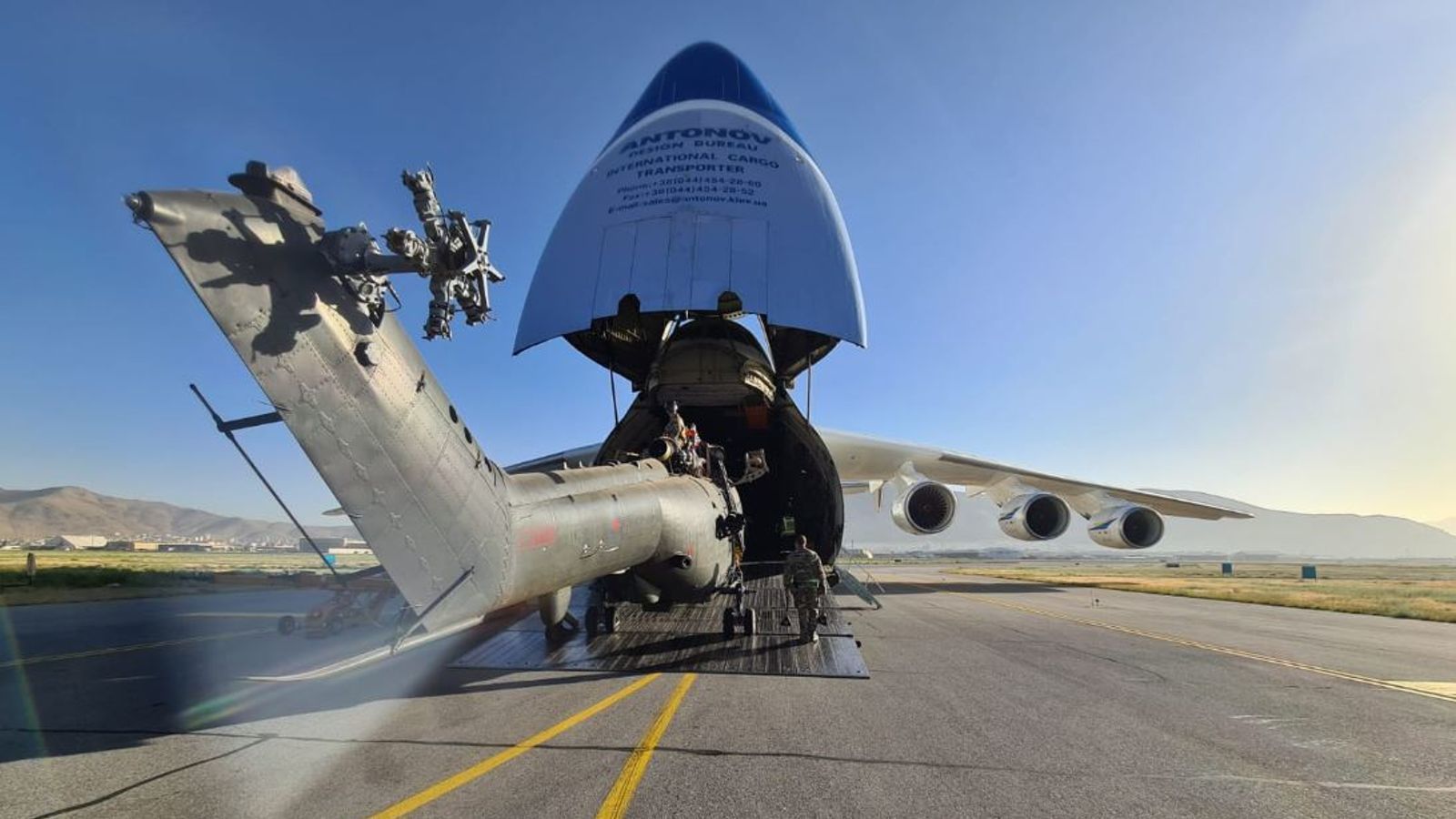

The developments emerged as expectations grew that a much larger withdrawal by the US of thousands of its forces from Afghanistan could be completed within days.

The UK's National Security Council meeting has already twice been delayed - and could be again - but time is running out to finalise and publicise the British position.

"We are getting to a crunch point," a second Whitehall source said.

Britain has been drawing down its presence of some 750 military personnel as part of a NATO mission in Afghanistan after US President Joe Biden decided to pull his troops out by 11 September - the 20th anniversary of the al Qaeda attacks on his country that prompted the US-led invasion in the first place.

In reality, the American exit is happening at a much faster rate, though Reuters reported that around 650 US troops could remain to protect the American embassy in Kabul.

Other NATO allies are also pulling off low-key departures.
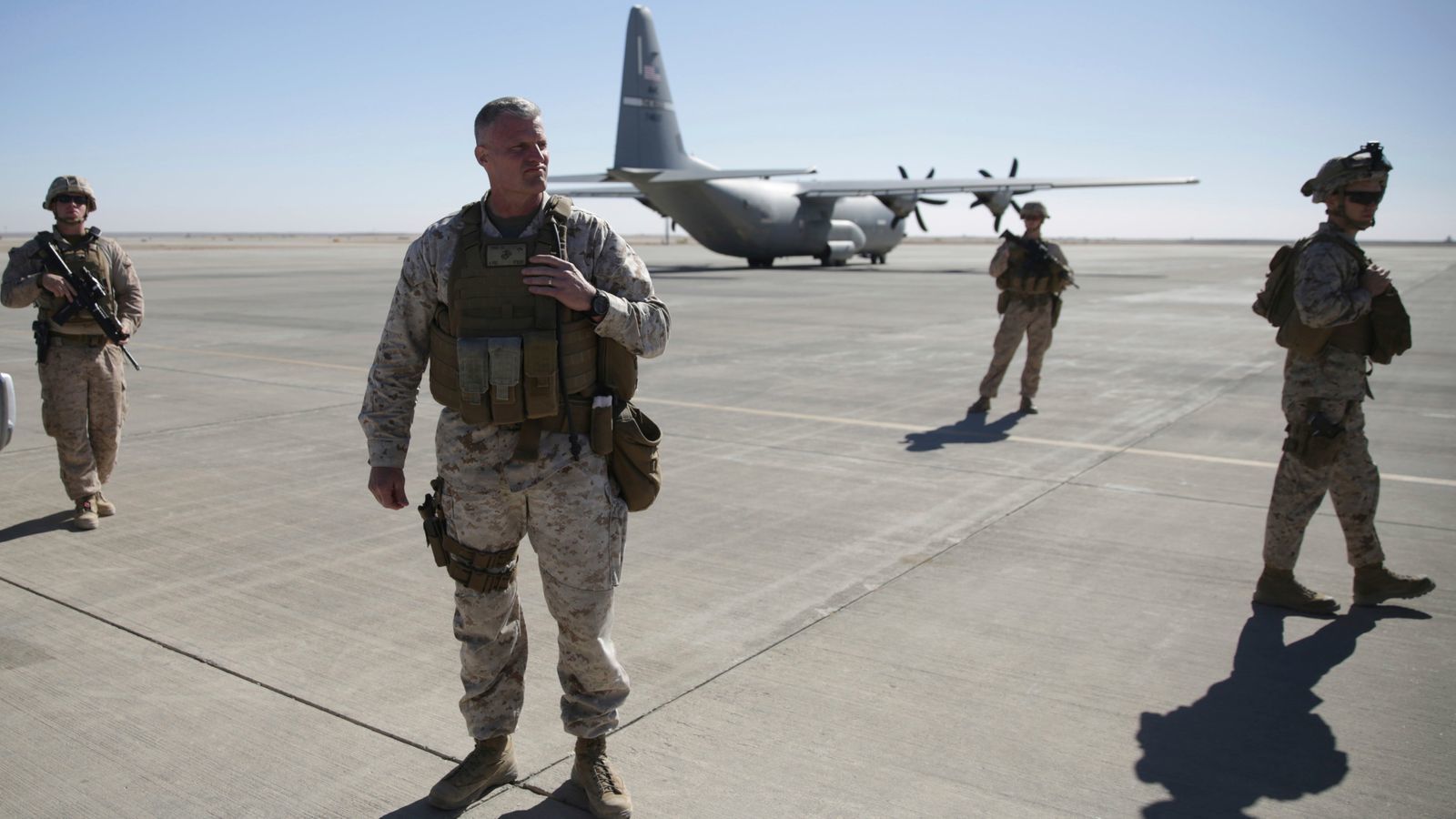
US troops are set to leave Afghanistan in September. Pic: Associated Press


On Wednesday, Germany and Italy declared their military missions in Afghanistan over and Poland's last troops returned home.

Details about the UK exit have been kept very quiet, with no official images released yet of any of the flag-lowering ceremonies, which are used to mark the end of any deployment by different units of troops.

At least one ceremony is understood to have taken place at Kabul's international airport.

In the most recent evidence of the exodus, an aircraft carrying infantry soldiers landed back in the UK this week.

It was one of a number of flights that have been transporting military equipment and personnel back from Afghanistan over the past few weeks.

The Ministry of Defence (MoD) did release a statement and photographs last Friday about the return of a detachment of three Puma helicopters and 55 military personnel.

While the majority of Britain's 750-strong mission have returned home, a number of troops still remain in the country.

A spokesperson for the MoD said the withdrawal of forces as part of the NATO mission, called Resolute Support, including the UK element, which is dubbed Operation Toral, "will be complete within a few months".
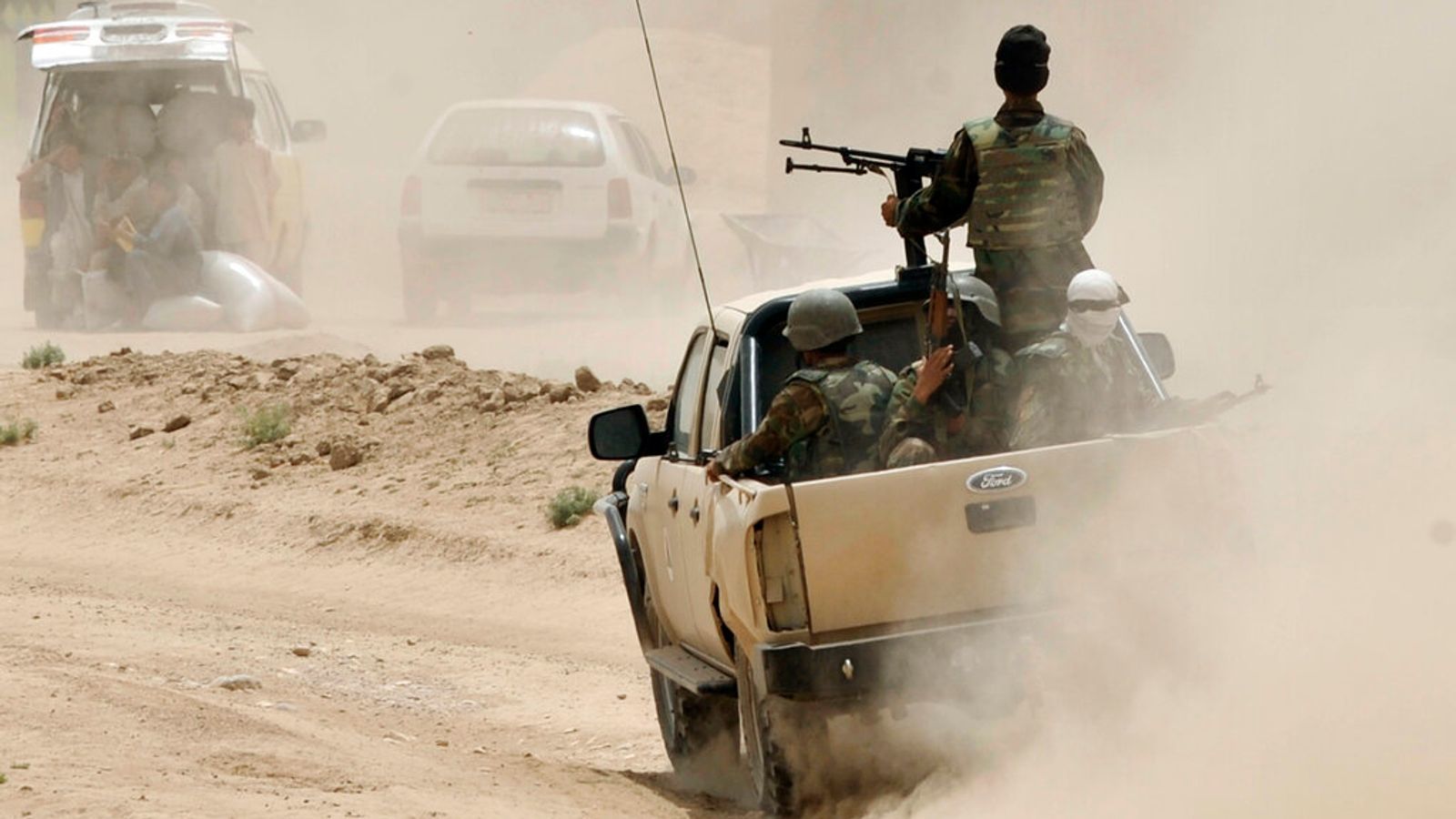
The drawdown comes amid mounting security concerns as the Afghan government loses territory to a resurgent Taliban.


The spokesperson added: "The UK is involved in ongoing discussions with US and international allies regarding the future of our support to Afghanistan."

The low-key exit is in stark contrast to a previous, much larger, drawdown in 2014 - when the UK mission in Afghanistan shifted from a combat operation involving thousands of troops to one focused purely on supporting the Afghan security forces.

At that time journalists were invited to embed with British troops as they lowered flags at their sprawling base in Helmand province, in the south of the country, and as the last aircraft took off from Camp Bastion.

Back then, there had been relatively more optimism about the sustainability of the Afghan government and its security forces.

Newsletter

Related Articles

0:00
0:00
Close
UK Prime Minister Keir Starmer Offers Condolences Following Death of Qatar’s Father Amir
UK Regional Innovation Policy Focuses on Research Clusters Across Scotland, Wales, and Northern England
UK Corporate Transparency Rules Set to Become More Strict Under Modern Slavery Reform Plans
UK Civil Service Estate Strategy Shifts Government Activity Away From London
UK Strengthens National Security Powers Through New Threat Designations
Greater Manchester Police Conduct Drink and Drug Driving Operations After Football Events
UK Government Advances Darlington Economic Campus With Construction Milestone
UK Authorities Increase Football-Related Security Operations After Tournament Fixtures
UK Invests Fifty-One Million Pounds in National Cryogenics Facility and Regional Innovation Hubs
UK Moves Toward Tougher Modern Slavery Reporting Rules With Corporate Penalties
UK Government Reports Forty-Three Million Pounds in Savings From Office Estate Reform
UK Government Expands Civil Service Regional Strategy With Manchester and Darlington Campus Projects
UK Designates Iran’s Islamic Revolutionary Guard Corps as National Security Threat
United Kingdom Financial Markets Monitor Business Response to Economic Policy Changes
Scottish Renewable Energy Expansion Highlights Need for Faster Grid Development
Wales and Regions Strengthen Focus on Economic Development Through Tourism and Investment
Retail Industry Warns High Street Businesses Remain Under Pressure
Police Chiefs Highlight Growing Challenges Managing Protests and Public Order
Agriculture Leaders Seek Clarity on Post-Brexit Farming Support and Environmental Rules
Transport Unions Warn of Further Industrial Action Over Pay and Working Conditions
Welsh Tourism Sector Reports Strong Growth Driven by Domestic and International Visitors
National Infrastructure Review Gains Support as Leaders Seek Faster Project Delivery
Financial Markets Assess Impact of United Kingdom Corporate Tax Policy Changes
Northern Ireland Assembly Debates Cross-Border Trade and Infrastructure Cooperation Plans
Government Opens Consultations on Housing Reform and Planning System Changes
Scottish Government Faces Pressure to Accelerate Offshore Wind and Grid Expansion
National Energy System Operator Warns Grid Investment Is Needed for Future Electricity Demand Growth
United Kingdom Research Council Invests in Artificial Intelligence and Biotechnology Innovation Hubs
United Kingdom Expands Oversight of Skilled Worker Visa Sponsors Amid Migration Debate
Cross-Party MPs Call for National Infrastructure Strategy Review to Accelerate Economic Growth
Prime Minister Announces One Billion Pound NHS Funding Package Ahead of Winter Pressures
Bank of England Signals Cautious Approach to Interest Rates as Inflation Remains Above Forecasts
World Cup Visitors Turn American Big-Box Stores Into Souvenir Stops
Netflix Weighs Always-On Channels, Bundles and Short-Form Video
Passenger Is Pulled Partly Outside Ryanair Jet After Window Fails Mid-Flight
Innovation-led growth strategy
Public service reform pressure
Defence and industrial security
Labour leadership transition and economic reset
Northern England Pushes for Greater Influence in Britain’s Future Economic Model
UK Technology Strategy Focuses on Life Sciences, Digital Innovation and Research Investment
Britain and United States Maintain Focus on Pharmaceuticals Cooperation and Industrial Growth
UK Public Services Face Continued Pressure as Government Promises Visible Improvements
Regional Economic Power Becomes Key Theme in Britain’s Next Political Phase
Britain Expands Support for Small Businesses as Firms Seek Better Access to Finance
UK Economy Remains Central Political Challenge as Cost of Living and Growth Concerns Persist
National Health Service Introduces New Workplace Reviews to Improve Conditions for Healthcare Staff
UK Life Sciences Sector Secures More Than Three Billion Pounds in Investment to Support Innovation
Britain Strengthens Defence Strategy as Security Concerns Reshape Military and Industrial Policy
Andy Burnham Promises Stronger UK Defence Industry and Expanded Domestic Production
×