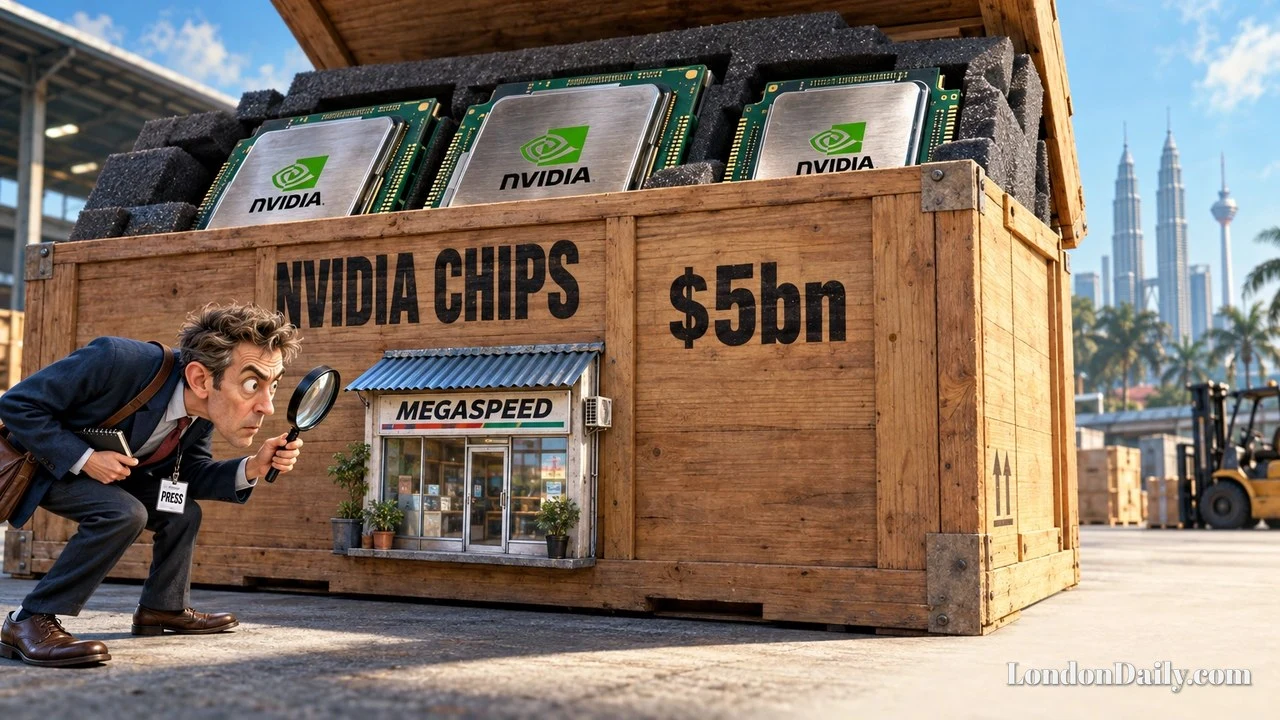
Megaspeed reportedly bought $5 billion worth of Nvidia chips while apparently employing no engineers. That is a discrepancy demanding an explanation, not a detail to wave past on the way to celebrating another enormous technology deal.
Reporters looking for the Singaporean company found a tiny storefront in Malaysia and two employees in Singapore who could not explain what the business actually does. Their enquiries apparently uncovered not a single engineer. The contrast is extraordinary: billions of dollars in advanced computing hardware, against a remarkably thin visible operation.
That does not, by itself, prove Megaspeed is an intelligence front. Buying chips and engineering them are different activities; an intermediary need not resemble a research laboratory. But that distinction only makes the unanswered commercial question more important. What function justified purchases on this scale, and where was the organisation capable of carrying it out?
The suspicion of a front company deserves scrutiny, not promotion into an established fact. A modest office can conceal a substantial operation, legitimate or otherwise. What matters is whether the business, its capabilities and the purpose of its purchases withstand examination. An address and a corporate name are not answers to those questions.
Then comes the allegation that the president had already been warned months earlier. If that warning concerned the same suspected arrangement, the issue extends beyond an obscure company's implausible footprint to what those in power knew and how they responded. The warning's contents and the response are essential to establishing responsibility.
The case for scrutiny does not require pretending the investigation is finished. It rests on a narrower, harder-to-evade point: a company purchasing $5 billion in advanced chips should be able to explain its business. If two employees cannot, the questions should travel upwards—not disappear.








Join the conversation