

Your ethnicity could soon be recorded when you get a COVID-19 test. Would you be OK with that?
The Health Department has confirmed it is "actively considering" capturing cultural and linguistic diversity data, cautioning it would only collect information in a way that is "useful and respectful".
Community leaders and academics have been pushing for data collection on ethnicity in the same way gender, Indigenous background and age are recorded.
University of Technology Sydney sociology emeritus professor Andrew Jakubowicz said the information was crucial.
"It's important to know if particular groups have been affected badly, it's important to know if groups have been missed out in testing regime," he said.
"It's important what networks exist in local areas and how that might help trackers get to the source.
"It also helps us know which groups are the most vulnerable because they haven't been caught up in the testing regime."
The consideration by the Health Department comes after criticism of the Federal Government for its handling of ethnic communities during the pandemic, with an expert panel warning earlier this year of a "missed opportunity" to protect at-risk groups such as migrants.
The ABC last week also revealed the Department of Home Affairs had used Google Translate in an effort to communicate with multicultural communities during the pandemic.
Ethnic minorities are among those at a higher risk of becoming ill from coronavirus and passing it on without realising because they are more likely to have a chronic disease and less likely to engage with public health messages.
Professor Jakubowicz said recording ethnicity would have been beneficial much earlier, when the pandemic began.
"I've been pushing for this since April and I think perhaps we would have done better in some of the situations in Victoria, in Melbourne in particular," he said.
"If we had been collecting this data early on, we would have become alerted to some of the patterns which have now become clear in retrospect.
The fact we're only discovering this later on rather than while it's happening is a fairly scary finding."
But Professor Jakubowicz acknowledged concerns about individual security and racism involved with data collection on ethnicity.
"It's one of the reasons governments have been worried about this — if the data is misinterpreted or used in ways that damage communities," he said.
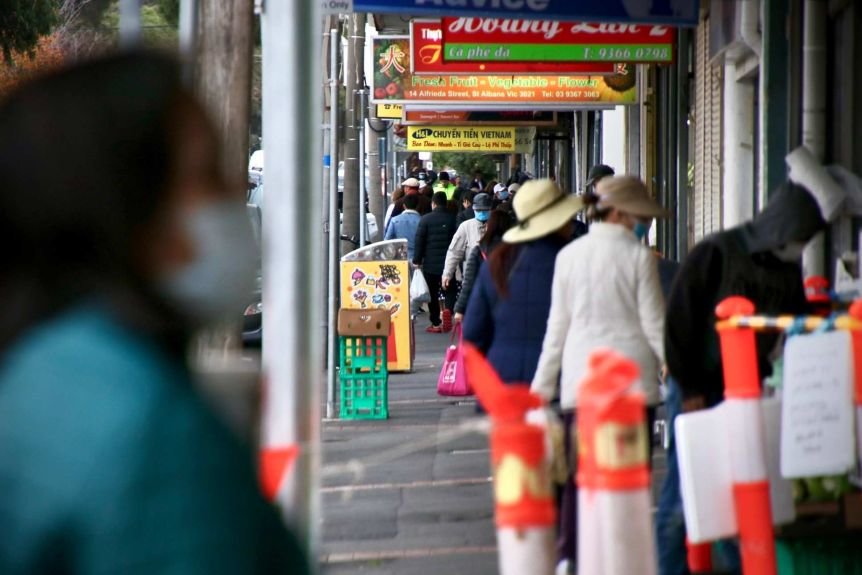
The first outbreaks of the second wave in Melbourne's outer suburbs were in the homes of culturally diverse communities.
Victorian Chief Health Officer Brett Sutton later acknowledged the State Government had not always properly engaged with those groups.
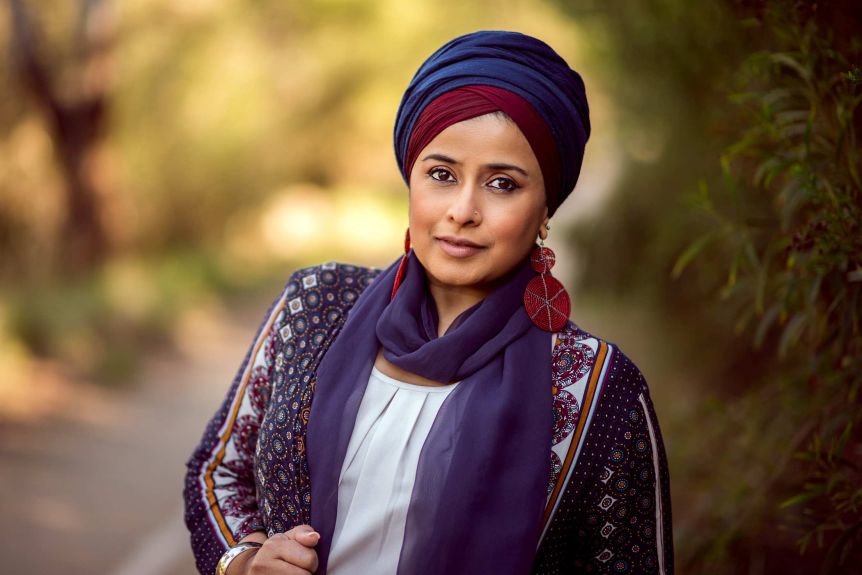
Diversity consultant Tasneem Chopra said the information would also allow officials to target resources and better engage community leaders.
"If the data is indicating that there's one particular community group more so than others that's presenting itself as testing positive, this is an opportunity for systems and health service providers to be more creative in the way they're engaging," she said.
In a report issued in September by peak national multicultural body Federation of Ethnic Community Councils Australia (FECCA), it described the "diversity data deficit" in relation to the COVID-19 pandemic as an "omission of serious concern".
It also said the data would be "essential to inform targeted public health initiatives" to ethnic communities, while helping governments respond comprehensively to future disease outbreaks or pandemics.
NZ already recording ethnicity
Countries like New Zealand are already recording ethnicity when testing for COVID-19.
Senior lecturer at the University of Otago, Lesley Gray, said it had been a valuable part of the country's pandemic response.
"It's important to monitor the health outcomes to achieve health equity," she said.
"It certainly helps us identify where people are acquiring the cases.
"In terms of our interest in health equity, we're already [asking] — although we've had a small number of people die from COVID 19 in this country — why are our Maori statistics so high?
"That's likely to relate to poorness, previous health experiences, colonisation, so we need to know how we can best protect our more vulnerable populations."
Taskforce set up to mitigate health impact
The Australian Government has also set up a taskforce to help it mitigate the health impact of COVID-19 for people from multicultural backgrounds.
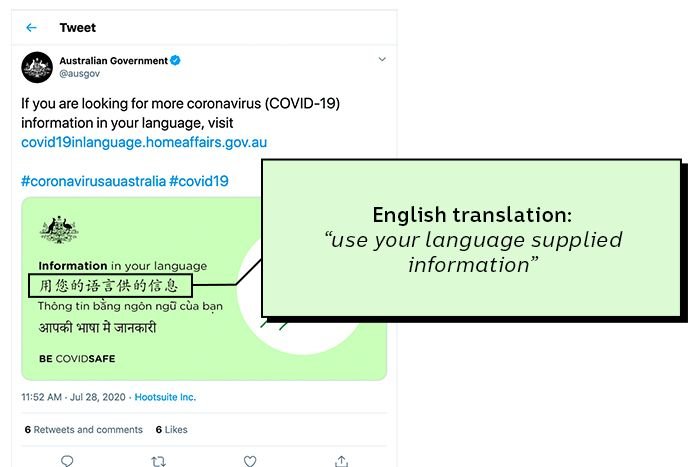
It comes after "nonsensical" and "laughable" language translations of COVID-19 public health messages were distributed to multicultural communities, prompting fears migrants and refugees would lose trust in authorities' handling of the coronavirus pandemic.
The Federal Government is still finalising the membership of the taskforce, but the ABC understands it will be headed by Lucas De Toca, the acting first assistant secretary of the COVID-19 Primary Care Response Team.
Dr De Toca currently co-chairs the Aboriginal and Torres Strait Islander Advisory Group on COVID-19.
A spokesman for the Health Department it was establishing the advisory group "in recognition of the challenges that some individuals and communities face in relation to public health interfaces and access to health services in the context of the pandemic".