

'You can't tell victims what racism is'
Instead it pointed to family structure and social class as having a bigger impact on how people's lives turned out.
Here is what some people have made of the commission's conclusions.
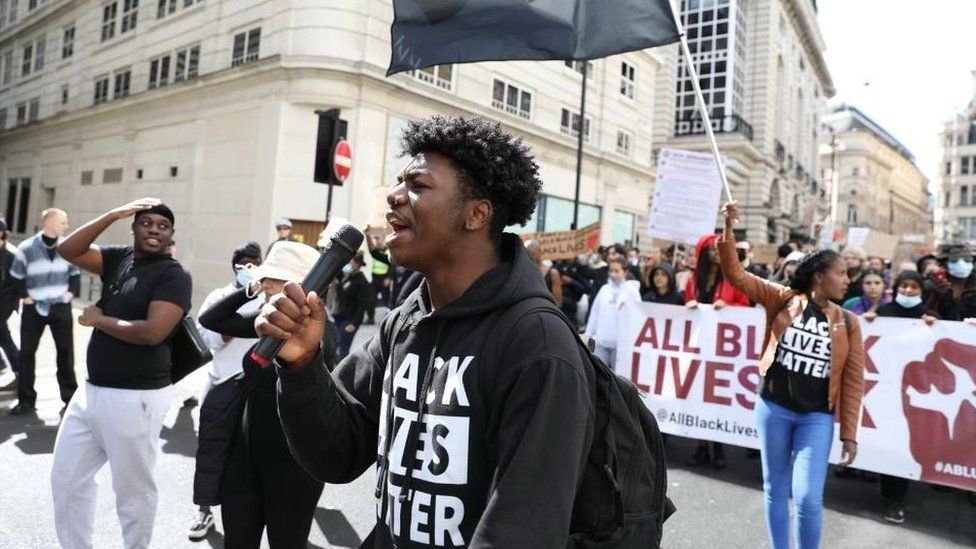
'You can't tell victims what racism is'
Tyrek Morris, a 21-year-old student in Manchester who took part in the Black Lives Matter protests last summer, is not surprised by the reports' findings.
"They say we are a model country in terms of how we deal with race in this country which quite frankly it is not that at all," he says.
"We live in a racist country, you can't take that away from us, this is what black people have been saying for years upon years, upon years and we finally get the government to look into race and it says 'no it's not racist'.
"You can't tell people, you can't tell the oppressed, you can't tell the victims of racism what's racist and what's not because it is not you that is facing it," he says.
He says it was "highly condescending to say the least" to suggest that young campaigners were idealists.
"This is how the country should work, asking for this country to start teaching about black history or black literature in schools isn't an idealist thing, it is something which we should do, especially considering black history is very deep rooted into this country's history," he says.
He says "the proof is in the pudding" when it comes to the recommendations from the report but said he personally did not trust it to produce anything "useful" for black people.
"A lot of these things are good ideas, there is a lot more to be done and a lot more which needs to be looked at," he says.
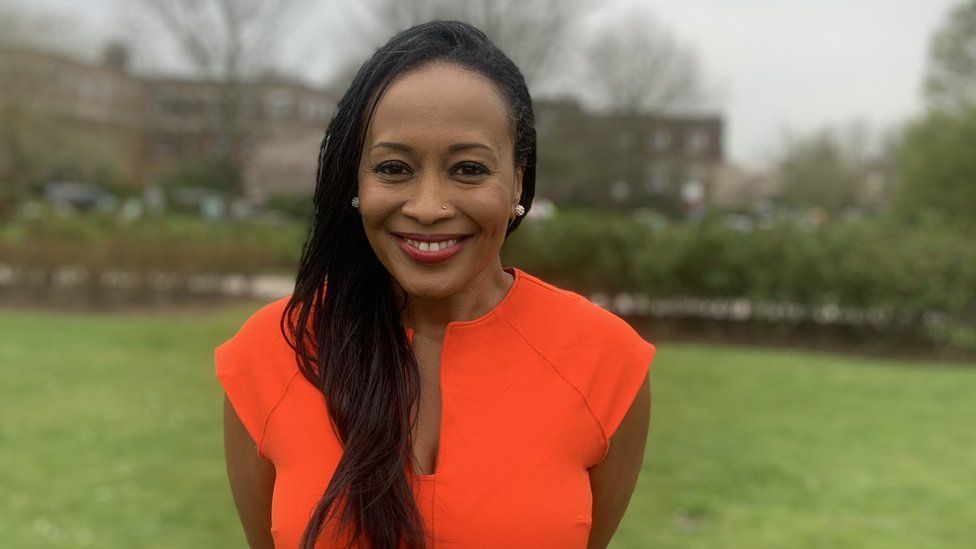
'You have to look at the facts'
Nadine Drummond, a communications strategist for the UN, says she is not sure about the report's conclusions or optimism.
"I'm not quite sure how you can be optimistic when you consider the health outcomes of black people in this country," she says.
"When you have women that are four times more likely to die in child birth than their white mates, when you have black men 19 times more likely to be stopped and searched than their white mates, when you have black men three times more likely to die in police custody than their white mates.
"So when you talk about optimism you have to look at the statistics and the facts."
She says the report "seeks to gaslight black and other minority ethnic people in the UK by telling us institutional racism in the UK is a myth and intersectionality is a dirty word".
But she agrees with its recommendation to stop using the term BAME, which means Black Asian and Minority Ethnic. "The term is actually dehumanising and it 'otherises' us and doesn't give any consideration to our uniqueness as people with views from different parts of the globe".
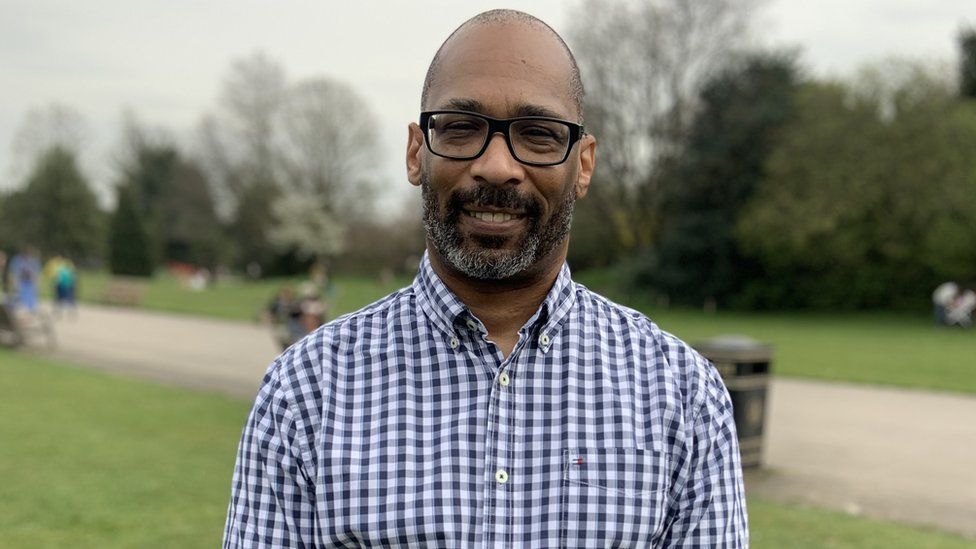
'Trust is key to progress'
"Yes, we have made some progress," says civil servant Shaun Pascal, "but the progress has come at a very slow pace and what we are seeing is a generation of young people that are tired of being asked to be patient and to wait and we need to have some real conversations and acknowledge what people of colour are saying and move forward."
He says there needs to be more people from ethnic minority communities at the top of corporations and organisations.
"As black people we are not asking you to change for us, you need to do it for yourself because we have a contribution to bring if you allow us the opportunities," he says. "Our contribution goes further than the low position we are given.
"We need to see more black people, more people of colour, in those CEO positions at the top of those organisations."
"Trust is key to progress and when you are constantly denying what people are experiencing and what we see and not acknowledging it you are never going to win people over," he adds.

'These are good plans, let's see them in action'
London-based artist Ajani Carrington, 22, says he found the conclusions of the report "interesting" and agrees that sometimes socio-economic factors could be bigger than ethnicity in people being denied life opportunities.
"But I feel like ethnicity is the reason that some people get dismissed in life from chances and opportunities, I think it all goes together," he says.
"I'll be optimistic when I can feel and see it coming to life in actual lifetime experiences and real life stories," he says.
"The government, the politicians, the system, everyone knows what to say to make it sound nice but what we want to see is it put into action."
"We have had years and years of words and manipulations and deceptions and what we now want is actual actions which represent those words and these plans," he says.
"These are good plans, let's see them in action."
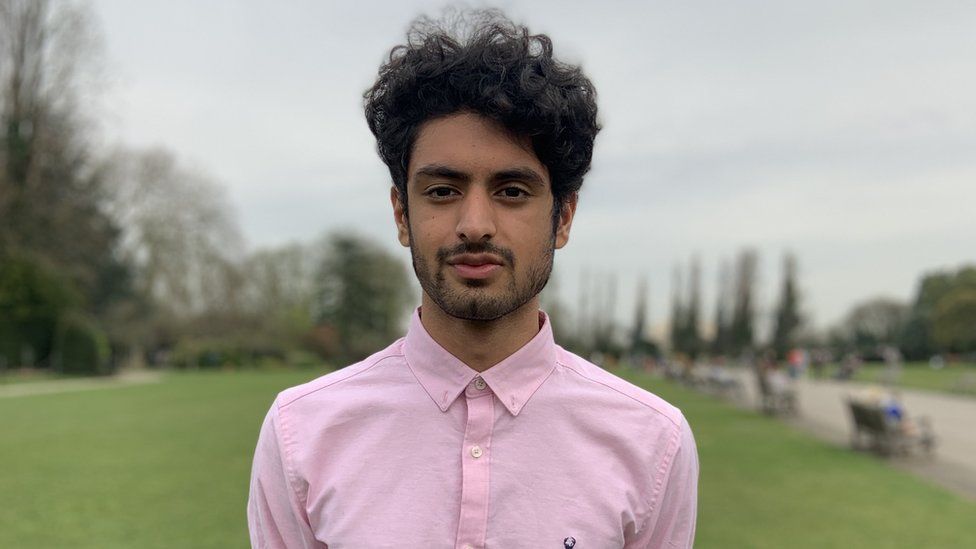
'A report will not make a difference'
Mohammad Karin, the founder of a youth consultancy and a student, says while some ethnic minority pupils did well academically it "doesn't mean the system is perfect it means that they have learnt to thrive in an imperfect system".
"We have got to celebrate the fact that children from ethnic minorities are doing better than their counterparts but that's not to say that the issue doesn't exist," he says.
He says it is contradictory for the report to call the UK a model for other white-majority countries when it also states there is overt racism.
"The report is going to do very little for the individual people that this report was commissioned for. We can start to be optimistic when this report is acted on but today we can't be optimistic because a report in of itself will not make a difference," he says.
"I don't trust the people who carried out this report to make substantial change based on the tone they are giving, that it is 'not as big an issue as you are saying it is', saying that we are some sort of model country for dealing with it," he says.