

Who is still striking and which disputes are resolved?
But where have we got to in the different disputes? And are more strike dates upcoming?
Take a look at our guide below:
Junior doctors
Status of the dispute: Unresolved
Future strike dates: To be confirmed
Junior doctors have held two rounds of strike action in their ongoing dispute over pay and conditions, with up to 47,000 members taking industrial action.
The group of staff - which includes any qualified hospital doctor below consultant level - says their wages have fallen 26% in the last 15 years, with newly qualified medics making less than a barista in a coffee shop.
Their union, the British Medical Association (BMA), is demanding a 35% rise to restore their pay to 2008/09 levels and take into account record high inflation.
Health secretary Steve Barclay has accused junior doctors of taking a "militant stance", and called their pay demands "unreasonable".
The government has said it is willing to talk to the BMA about a resolution but only if they call off strikes - a measure the union is unwilling to accept.
More strikes are expected, though dates have yet to be confirmed.
Other NHS staff
Status of the dispute: Partially resolved
Future strike dates: To be confirmed
For other staff in the NHS, including nurses and ambulance workers, the picture is a bit more mixed.
Back in March, the Royal College of Nursing, GMB and Unison reached an agreement with the government over a pay offer, which would see a one-off payment to staff for last year and a 5% pay increase for 2023/24.
Unite said the offer wasn't good enough, but joined the other three unions in putting it to their members.
And while GMB and Unison accepted the deal, RCN and Unite members rejected the offer.
The deal has now been accepted by the NHS staff council, where all the unions gather, and will be implemented by the government.
But Unite said the decision "does not override the members' vote", meaning it could stage further walk-outs. and the RCN is planning to re-ballot their members and carry out further strikes.
No dates have been set, but RCN boss Pat Cullen told Sky News the industrial action could go on "up until Christmas", demanding the health secretary gets back round the table to negotiate.
Mr Barclay said the fact the council has accepted the deal shows it is "fair and reasonable", and called on the other unions to bring the walk-outs to an end.
Teachers
Status of the dispute: Unresolved
Future strike dates: Autumn term
The position of teachers and school leaders appears to be more aligned, after initial splits across the profession.
Earlier this year, only the National Education Union (NEU) reached the threshold to carry out strike action over working conditions and pay, but it still saw 200,000 teachers stage walk-outs - with almost 45% of state schools being impacted.
After holding negotiations with the government, the NEU put an offer to its members of a £1,000 payment for the current school year plus an average 4.5% rise next year.
But members overwhelmingly rejected it, with 98% of those who voted going against the offer, saying between 42% and 58% of schools would have to make cuts to afford it.
Now, the Association of Head Teachers (NAHT) and NASUWT will re-ballot their members, along with the Association of School and College Leaders (ASCL), which is asking its members whether they want to strike for the first time in its history.
The bosses of the four unions vowed coordinated action if they got the go ahead.
A Department for Education spokesperson said the plan was "unreasonable and disproportionate, especially given the impact the pandemic has already had on [children's] learning".
Strike dates have yet to be confirmed as the ballots are taking place over the summer term, but they are expected to take place come autumn.
University staff
Status of the dispute: Ongoing
Future strike dates: Ongoing marking boycott
More than 70,000 members of the University and College Union (UCU) staged strikes throughout February and March over pay, pensions and working conditions.
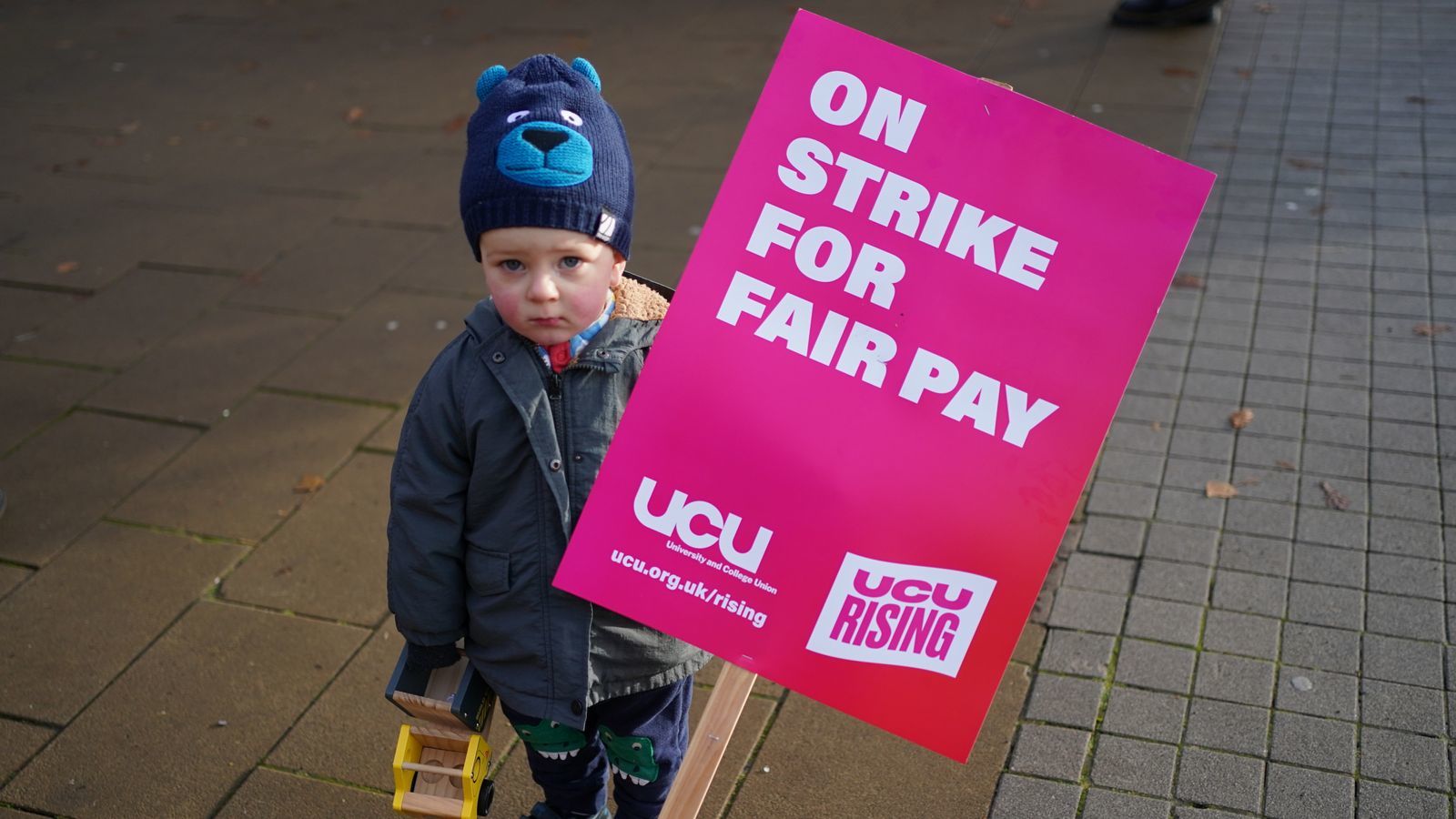 A child holds a placard alongside UCU lecturers on the picket line outside the University of Birmingham.
Staff wanted a higher pay offer than the 4% to 5% put on the table, as well as a reversal of the cuts to pensions that will see the average member lose 35% of their guaranteed future retirement income, according to the union.
But so far, their employers haven't budged.
On 20 April, staff decided to use a new tactic - boycotting marking and assessments until a better offer is made - and this action is ongoing.
Train drivers
Status of the dispute: Partially resolved
Future strike dates: 12, 13, 31 May and 3 June
The longest running of the disputes with government over pay and conditions falls to the railways - though with a mixture of staff and unions, some disputes have been settled while others roll on.
Signal workers and maintenance staff represented by the RMT voted in favour of an agreement with Network Rail in March for a 5% pay rise for last year and a 4% pay rise for next, backdated by three months.
However, train drivers represented by the Aslef union and other rail staff workers represented by the RMT have refused offers on the table from the Rail Delivery Group - representing the 14 train companies involved - as they would have to call off strike action before negotiations for the current year could take place.
Both unions have now confirmed fresh strike dates, clashing with the FA Cup final and the Eurovision Song Contest, and say they will carrying on their walk-outs until the pay offers reflect inflation and the rising cost of living.
Transport Secretary Mark Harper called the decision "deeply disappointing", especially in light of the song contest being held in Liverpool due to the war in Ukraine, accusing the unions of "targeting" those attending.
Civil servants
Status of the dispute: Unresolved
Future strike dates: 2, 3, 5, 6 and 10 May, and 7 June
The civil service covers a huge range of staff, from cleaners at departmental buildings through top officials in the Cabinet Office.
But a large number of them are unhappy about their pay, and have been staging strikes for months, from passport offices in Glasgow to border posts in Dover.
Whitehall has been told it can offer staff a 4.5% raise - with scope for an extra 0.5% "targeted at lower pay bands" if they deemed it necessary.
But unions criticised the lack of a one-off payment - as offered to those working in health and education - and said the offer was made in the absence of substantial talks.
Members of the Public and Commercial Services union have planned walk-outs until their ballot runs out at midnight on 6 May, with staff striking in passport offices, at the Department of Work and Pensions and within the Care Quality Commission.
But they are hoping to get approval from members for further industrial action, which could see the Border Force, DVLA are other civil service staff strike again.
The Prospect union, which represents "specialist, technical, professional, managerial and scientific staff in departments including the Met Office, the Health and Safety Executive and Natural England, are staging further walk-outs in May and June.
And the FDA union has decided to ballot its members to go on strike, with plans for a single national day of action.
Royal Mail
Status of the dispute: Partially resolved
Future strike dates: Uncertain
The Communication Workers Union had been locked in a dispute with Royal Mail since last year, with members staging 18 days of strikes in the second half of 2022 over pay, jobs and conditions - hitting Christmas deliveries in particular.
Members were fighting proposed modernisation plans they claimed would "spell the end" of Royal Mail and wanted an improved pay deal on the "best and final" 9% offer they rejected last year.
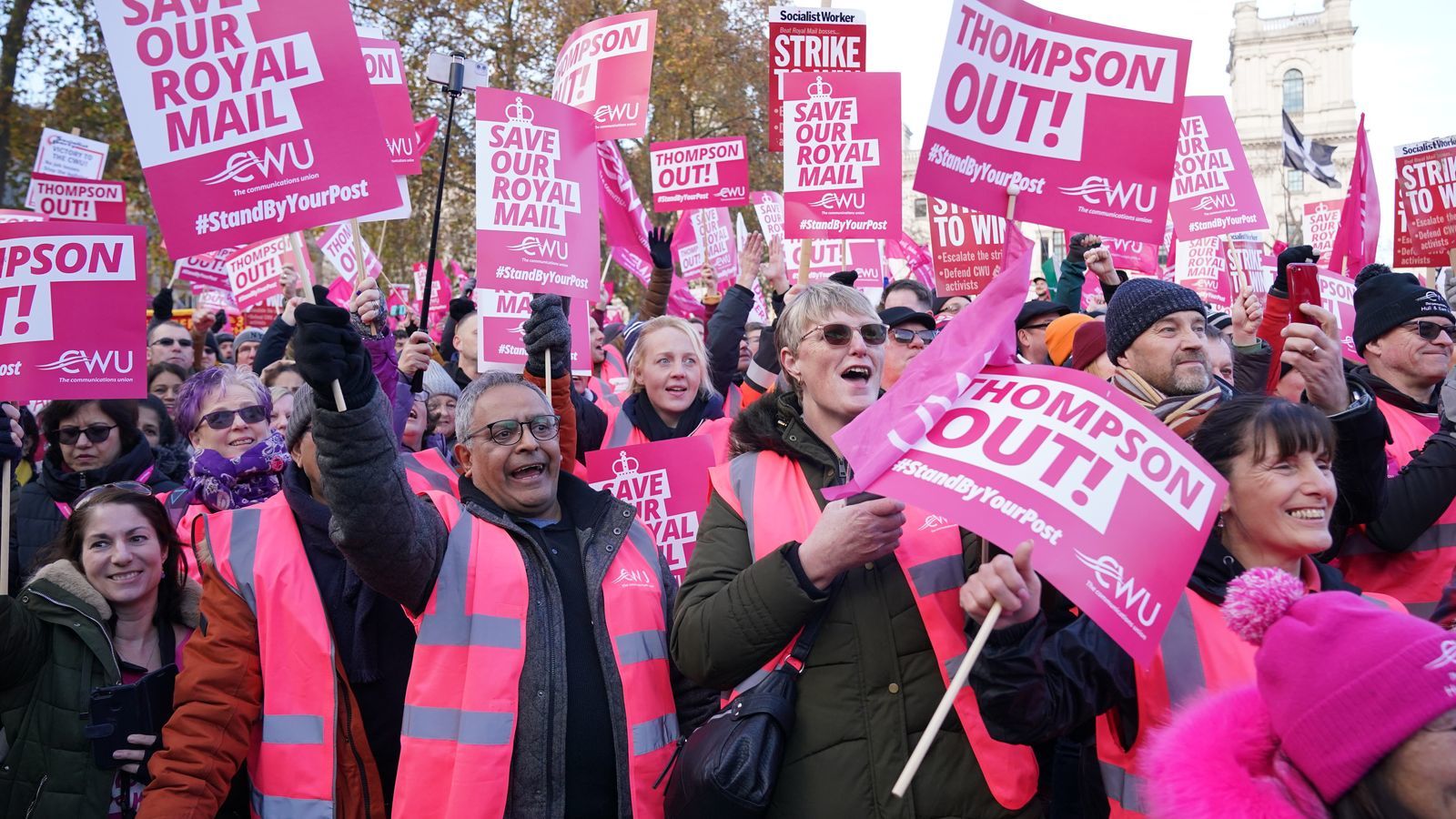 Members of the
Communication Workers Union hold a rally in Parliament Square as Royal
Mail workers mark another strike in the increasingly bitter dispute over
jobs, pay and conditions.
Members of the
Communication Workers Union hold a rally in Parliament Square as Royal
Mail workers mark another strike in the increasingly bitter dispute over
jobs, pay and conditions.
The CWU secured a fresh mandate for more strikes but, after bringing in the conciliation service Acas and former TUC general secretary Sir Brendan Barber, the two sides reached an agreement in principle in April.
The executive of the union is now sharing the offer with its representatives before it is offered to members for a vote - so while the strikes are off for now, it may depend on the response of Royal Mail workers.
Firefighters
Status of the dispute: Resolved
Future strike dates: None
Back in January, the Fire Brigades Union (FBU) voted overwhelmingly for strike action, saying they had experienced more than a decade of real-terms pay cuts, and that the 2% pay rise on offer was not enough.
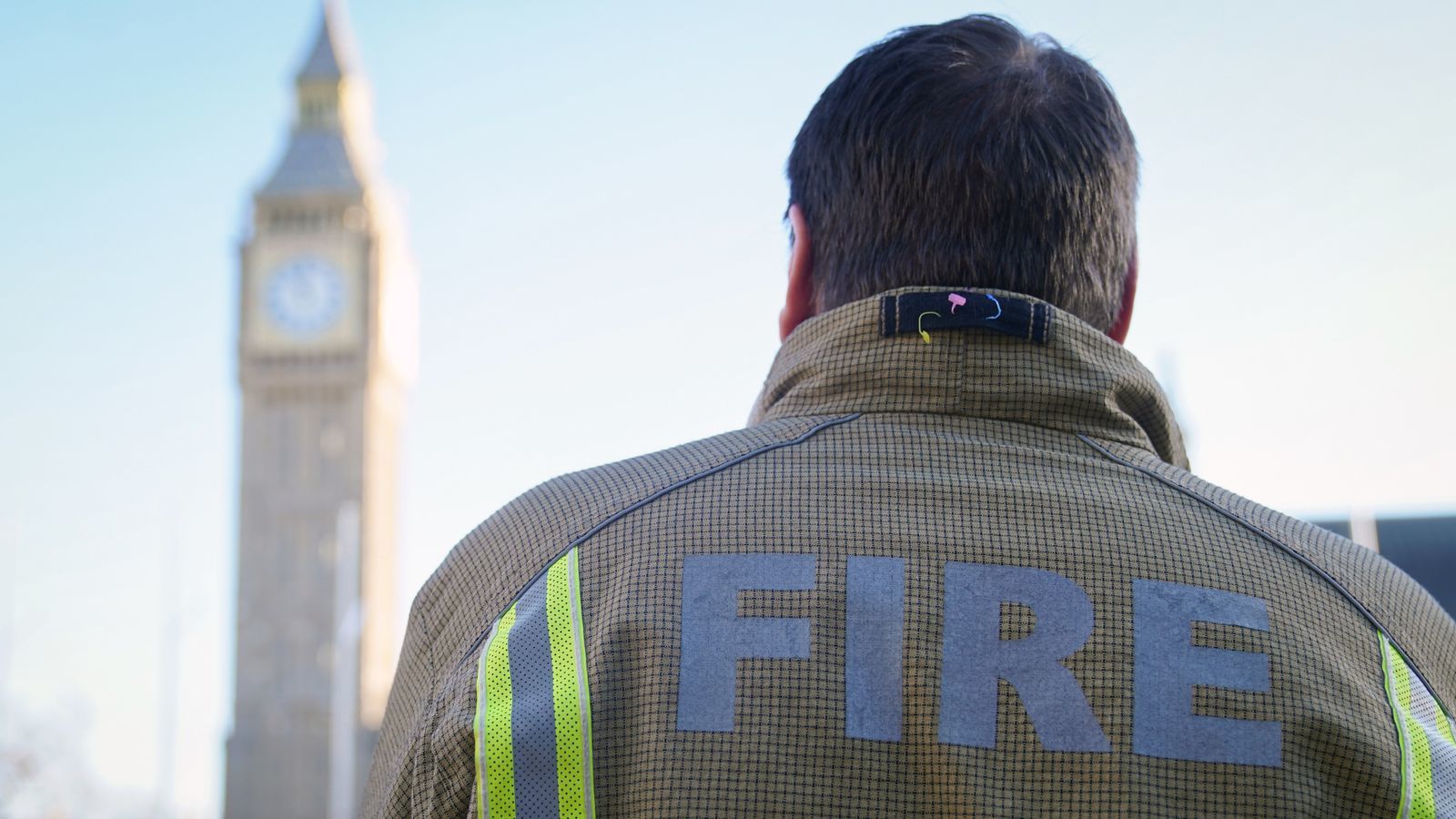 Firefighters threatened to strike over their pay, but a settlement was reached.
Had the strike gone ahead, it would have been the service's first national walk-out in 20 years.
But the offer jumped to 12% in March, and FBU members voted in favour of the deal, meaning the strike never went ahead.