London Daily

Focus on the big picture.
Saturday, Jul 18, 2026

Undercover policing: Officer defends spying on anti-apartheid movement

Undercover policing: Officer defends spying on anti-apartheid movement

An undercover officer who spied on the anti-apartheid movement has told an inquiry his work was justified because it could have caused more disorder than the far right.

The retired officer said its actions, in the 1970s, included demonstrations against cricket and rugby tours.

The movement caused "problems and dangers" and was a "nuisance", he said.

The elderly officer is the first to give evidence at the Undercover Policing Inquiry.

The inquiry is looking into the targeting of the peer and former Labour cabinet minister Lord Peter Hain.

The officer has admitted lying to a court about his identity and, separately, assaulting an activist after he was nearly unmasked.

He is among former members of the special demonstration squad, a now-disbanded Metropolitan Police unit that was tasked to infiltrate a wide range of political organisations over some 40 years.

Who was HN298?


Known officially as "HN298", the officer adopted the name and birthday of "Michael Peter Scott" - a real person whose details he had found in public records.

From 1971 he infiltrated the anti-apartheid movement and, in particular, the Young Liberals.

The campaign, jointly led by the then student Peter Hain and others, organised highly-disruptive but peaceful stunts against sporting tours involving whites-only South African teams.

Those protests are now regarded as being a key moment in the growth of the global anti-apartheid movements.

Last week, Lord Hain told the inquiry that undercover officers who had monitored him had been on the "wrong side of history".
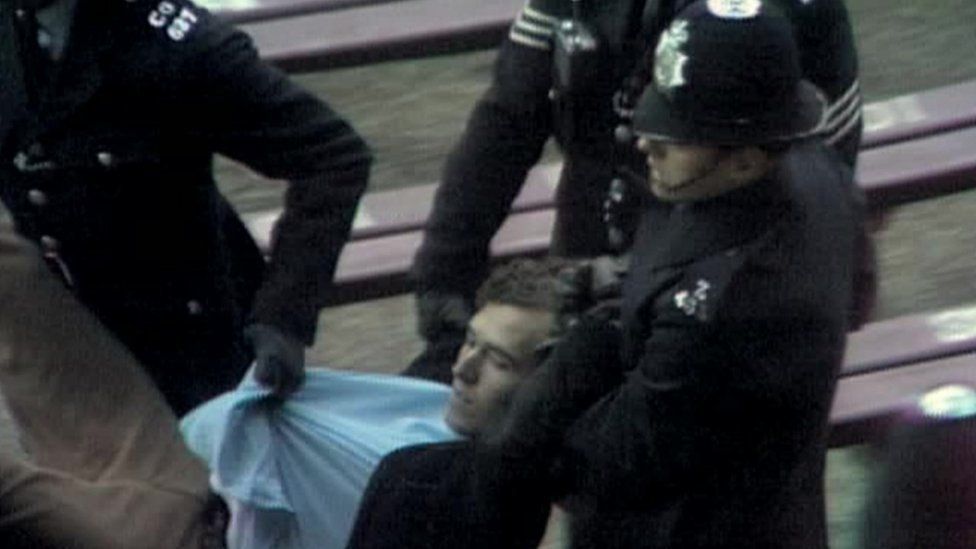
Peter Hain and others invaded sports pitches in non-violent protests against apartheid
Who did he target and why?


Over a year or more, Scotland Yard learned information about Lord Hain's family home, the names of his then teenage sisters, the car he drove and the names of other people around him.

Lord Hain was Northern Ireland secretary between 2005 and 2007, and twice served as the secretary of state for Wales.

None of the intelligence reports included any actual evidence of criminal plotting.

One did, however, warn that liberals might protest against traffic in Putney, south-west London.

On Tuesday HN-298 launched a defence of the information that was gathered on Lord Hain and others, saying Scotland Yard bosses needed it to work out who was genuinely "of interest".

The activities of his unit had been "well-directed" and it had been "money well-spent".

"Their anti-apartheid activities included demonstrations against cricket tours and rugby tours," he said.

"They were things of public disorder, and they were of interest."
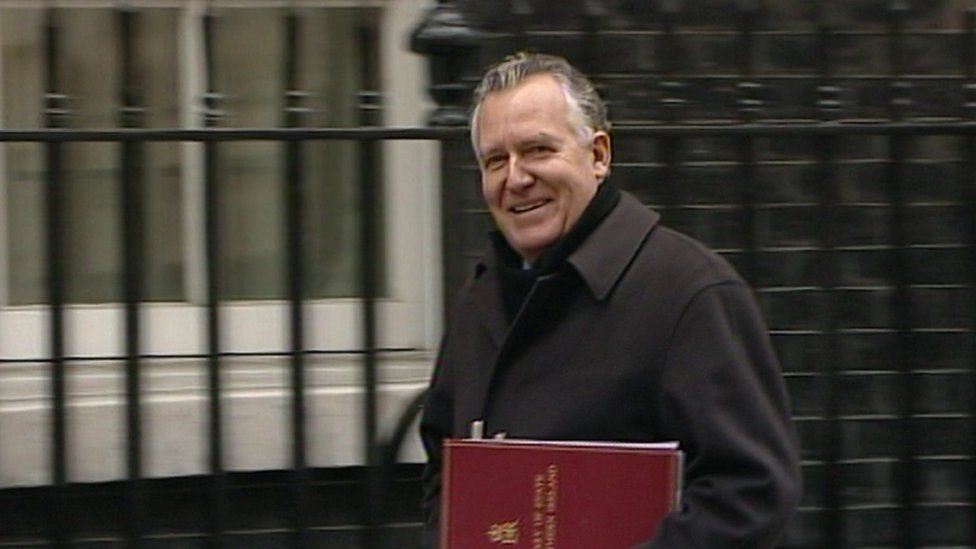
Lord Hain was Northern Ireland secretary between 2005 and 2007

David Barr QC, counsel to the inquiry, asked why the officer had not considered infiltrating the far right instead.

"Well, as far as I know, there weren't any problems with the far right," he replied.

"I guess you mean the National Front. I wasn't aware of too many demonstrations organised by them."

Were his targets attempting to overthrow democracy? asked Mr Barr.

"They may well have been but I don't think so," replied the officer.

"It was not all about overthrowing democracy but nuisance - they caused problems and dangers to the public.

"This is the role of the police, to look after us."

Why did he lie in court?


In May 1972, HN298 joined anti-apartheid demonstrators in an attempt to prevent the England rugby team flying to South Africa, by blocking their team bus.

He was charged with obstruction, and documents show his superiors decided he should lie in court by giving his fake name.

This was technically a serious crime, but it was justified on the basis that it was essential to prevent blowing the operation against the Young Liberals.

HN298 was subsequently convicted under his false name in court, and fined.

He did not know if the real Michael Scott, who would receive the criminal record, was still alive.

The fine was put on Scotland Yard expenses.

He insisted that some groups he followed later in the 1970s were dangerous, including Irish nationalism campaigners that he linked to the IRA.

When one campaigner against British troops in Northern Ireland suspected that HN298 was in the police, the undercover officer punched him so hard on the nose that he broke his own finger.

David Barr QC asked: "What made you think it was acceptable to commit a crime of violence against a member of the public?"

"It was acceptable to me at the time," said the officer. "I felt it was something I had to do."

Newsletter

Related Articles

0:00
0:00
Close
Ukrainian Drone Barrage Kills Eight and Strikes Russian Logistics Network
The Ten World Cup Finals That Defined Football History
Smartphones Are Getting More Expensive, Sales Are Collapsing, and Even Apple Admits: "Prices Will Rise"
The Monaco Bombing Has Become a Test of Ukraine’s Intelligence Accountability
Leadership Change and Strategic Rivalry Redraw the Political Map
Energy Risk, Uneven Growth and the New Geography of Global Capital
The AI Race Enters Its Infrastructure Era
Security and resilience remain long-term national priorities
Britain balances growth ambitions with public finance pressures
Regional devolution becomes a defining theme of the next Labour era
Industrial strategy returns to the centre of British economic policy
Political Instability Remains a Challenge for UK Investment Confidence
Brexit Economic Debate Continues as Public Concerns Over Long-Term Impact Remain
UK Climate Risks Rise as Met Office Warns Extreme Weather Is Becoming More Common
Housing Shortages and Regional Inequality Become Key Priorities Under Incoming Labour Leadership
National Health Service Reform Remains One of Britain’s Biggest Political Challenges
Bank of England Remains at Centre of UK Economic Debate Over Inflation and Growth
UK Economy Shows Recovery Signs but Households and Businesses Remain Under Pressure
Britain Deepens European Defence Cooperation as NATO Allies Seek Stronger Security Capabilities
United Kingdom Expands Sanctions Against Russian Cyber Networks Over Security Threats
UK Industrial Strategy Faces Test After Government Takes Control of British Steel
British Businesses Seek Policy Clarity as Andy Burnham Prepares to Lead Labour Government
Andy Burnham’s Labour Leadership Signals Major Shift Toward Regional Power and Devolution
British Steel Nationalisation Creates New UK-China Tensions Over Control of Strategic Industry
For 36 Years, He Scammed About 300 Luxury Hotels — Until He Was Caught
England's World Cup Exit Expected to Cost Hospitality and Retail £334 Million
Former ICC Prosecutor Aide Speaks Publicly About Allegations Against Karim Khan
Opposition Raises Questions Over June Heatwave Power Grid Pressures
Mastercard Explores Sale of Majority Stake in UK Payments Operator Vocalink
Boeing Forecasts Global Commercial Aircraft Fleet Will Double by 2045
London GP Surgeries Receive £18 Million to Expand Primary Care Capacity
Health Advisers Recommend Nationwide Meningitis B Vaccination for Teenagers
OECD Warns UK Economy Faces Slower Growth and Weak Productivity
Treasury Places Major Global Cloud Providers Under Direct Financial Oversight
Financial Markets Rally as Shabana Mahmood Emerges as Leading Treasury Candidate
Incoming Government Prepares Thames Water Nationalisation and New North Sea Drilling Approvals
UK Government Plans Deep Cuts to Bilateral Aid for African Nations
United States and Iran Exchange Direct Strikes for Seventh Consecutive Night
Incoming Prime Minister Andy Burnham Confirmed as Labour Leader Ahead of Downing Street Handover
Britain Nationalises British Steel to Protect Scunthorpe Production and Strategic Supply
Andy Burnham Takes Labour Leadership and Prepares to Become Britain’s Seventh Prime Minister in a Decade
Tech Companies Want to Move Computing Off Your Screen and Onto Your Body
White House Teleprompter Operator Earned More Than $100,000 From Bets Linked to the President's Speeches
French Prime Minister Survives No-Confidence Vote After Controversial Budget Cuts
European Commission Opens Excessive Deficit Procedure Against France
French Senate Blocks Key Immigration Reform Measures
French Government Pushes EU Action Against Ultra-Fast Fashion Imports
French Parliament Debates Expanded Autonomy Powers for Corsica
France Reopens Autonomy Talks With New Caledonia After Months of Unrest
Bordeaux Wine Producers Seek Three Hundred Million Euro Aid Package After Export Collapse
×
