London Daily

Focus on the big picture.
Tuesday, Mar 03, 2026

Ukraine war disruptions send food prices to their highest ever

Ukraine war disruptions send food prices to their highest ever

Prices have soared for wheat, vegetable oil, corn, grains, threatening food shortages and hunger crises.

World food prices hit an all-time high in March following Russia’s invasion of agricultural powerhouse Ukraine, a United Nations agency said on Friday, adding to concerns about the risk of hunger around the world.

The disruption in export flows resulting from the February 24 invasion and international sanctions against Russia has spurred fears of a global hunger crisis, especially across the Middle East and Africa, where the knock-on effects are already playing out.

Russia and Ukraine, whose vast grain-growing regions are among the world’s main breadbaskets, account for a huge share of the globe’s exports in several major commodities, including wheat, vegetable oil and corn, their prices reached their highest levels ever last month.

Ukrainian ports have been blocked by a Russian blockade and there is concern about this year’s harvest as the war rages on during the sowing season.

The UN Food and Agriculture Organization (FAO) said its Food Price Index, which tracks monthly changes in international prices for a basket of commodities, averaged 159.3 points last month, up 12.6 percent from February. As it is, the February index was the highest level since its inception in 1990.

FAO said the war in Ukraine was largely responsible for the 17.1 percent rise in the price of grains, including wheat and others like oats, barley and corn. Together, Russia and Ukraine account for approximately 30 percent and 20 percent of global wheat and corn exports, respectively.
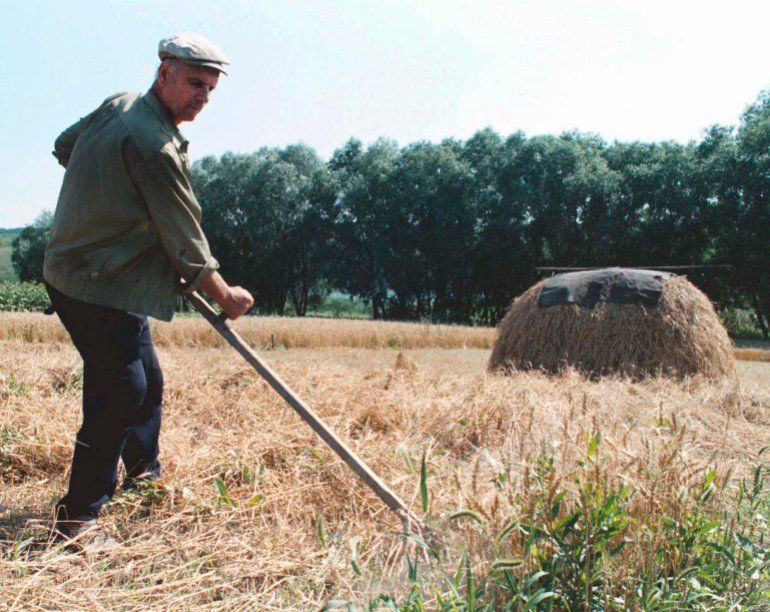
Ukraine, which has some of the most fertile land on Earth, has long been known as ‘the breadbasket of Europe’


While predictable given February’s steep rise, “This is really remarkable,” said Josef Schmidhuber, deputy director of FAO’s markets and trade division. “Clearly, these very high prices for food require urgent action.”

The biggest price increases were for vegetable oils: that price index rose 23.2 percent, driven by higher quotations for sunflower seed oil that is used for cooking. Ukraine is the world’s leading exporter of sunflower oil, and Russia is second.

Prices of sugar and dairy products “also rose significantly” the FAO said.

“There is, of course, a massive supply disruption, and that massive supply disruption from the Black Sea region has fueled prices for vegetable oil,” Schmidhuber told reporters in Geneva.

He said he could not calculate how much the war was to blame for the record food prices, noting that poor weather conditions in the United States and China also were blamed for crop concerns. But he said that “logistical factors” were playing a big role.

“Essentially, there are no exports through the Black Sea, and exports through the Baltics is practically also coming to an end,” he said.

Soaring food prices and disruption to supplies coming from Russia and Ukraine have threatened food shortages in countries in the Middle East, Africa and parts of Asia where many people already were not getting enough to eat.

Those nations rely on affordable supplies of wheat and other grains from the Black Sea region to feed millions of people who subsist on subsidised bread and bargain noodles, and they now face the possibility of further political instability.

Other large grain producers like the US, Canada, France, Australia and Argentina are being closely watched to see if they can quickly ramp up production to fill in the gaps, but farmers face issues such as climbing fuel and fertiliser costs exacerbated by the war, drought and supply chain disruptions.

In the Sahel region of Central and West Africa, the disruptions from the war have added to an already precarious food situation caused by COVID-19, conflicts, poor weather and other structural problems, said Sib Ollo, senior researcher for the World Food Program for West and Central Africa in Dakar, Senegal.


“There is a sharp deterioration of the food and nutrition security in the region,” he told reporters, saying six million children are malnourished and nearly 16 million people in urban areas are at risk of food insecurity.

Farmers, he said, were particularly worried that they would not be able to access fertilisers produced in the Black Sea region. Russia is a leading global exporter.

“The cost of fertilisers has increased by almost 30 percent in many places of this region due to the supply disruption that we see provoked by a crisis in Ukraine,” he said.

The World Food Program has appealed for $777m to meet the needs of 22 million people in the Sahel region and Nigeria over six months, he said.

To address the needs of food-importing countries, the FAO was developing a proposal for a mechanism to alleviate the import costs for the poorest countries, Schmidhuber said. The proposal calls for eligible countries to commit to added investments in their own agricultural productivity to obtain import credits to help soften the blow.


Comments

Oh ya 4 year ago
Well that plus there was no mention of the true nature of inflation... Central banks of the world lead by the USA of endless money printing. Africa has a problem because they have killed off or chased off all the white farmers that were feeding the country, and the blacks have no idea or will to farm. Sort of killing the goose that lays the golden eggs. But in all honesty can you name a country run by blacks that is not a shit hole? And third NATO and the other countries should have been in the Ukraine helping Russia destroy the NAZIS. People forget it was Russia at a great loss to its citizens (20-27)million during WW2 that defeated the Germans, and they are trying to do it again but now for some reason the world condemns them. Maybe it has to do with the Biden crime family ties to Ukraine and that is now really starting to come out with the crackheads computer. Would it not be nice if news groups of the world offered fair and unbiased reporting. People need to remember exactly why Japan got into the 2nd world war. The US President hated Japan and was putting sanctions on them just like the USA is doing to Russia now. They cut of fuel supplies to Japan and its people were going to starve thus forcing them to fight to survive. Then the USA the only country in the world ever dropped 2 atomic bombs on the civilization and they take about war crimes of other countries. Like the pot calling the kettle black.

Newsletter

Related Articles

0:00
0:00
Close
UK Arrests Prominent Figures Linked to Epstein Network as Questions Mount Over US Action
Trump Says UK ‘Took Far Too Long’ to Approve Use of Airbases for Iran Strikes
Scope of Britain’s Role in the Expanding Middle East Conflict Comes Under Scrutiny
Trump Says He Is ‘Very Disappointed’ in Starmer Over Iran Comments
U.S. Embassy in Riyadh Struck by Drones Amid Escalating Iran Conflict
Starmer Confronts Strategic Test After Drone Strike Near British Base in Cyprus
Rolls-Royce Chief Signals Openness to Germany Joining UK-Led Fighter Jet Programme
UK Stocks Slip as Escalating Iran Conflict Triggers Global Market Selloff
UK Overhauls Asylum System to Make Refugee Status Temporary
Starmer Warns of ‘Reckless’ Iranian Strikes Amid Escalating Regional Tensions
British Base in Cyprus Targeted as Drones Intercepted Amid Expanding Iran Conflict
Starmer Diverges from Trump on Iran Strategy, Rejects ‘Regime Change from the Skies’
U.S. and Israel Intensify Strikes on Iran as Conflict Expands to Lebanon and Gulf States
Violent Pro-Iranian Protesters Storm U.S. Consulate in Karachi
Missile Debris Sparks Fires at Dubai’s Jebel Ali Port Near Palm Jumeirah
Iran Strikes U.S. Fifth Fleet Headquarters in Bahrain Amid Wider Gulf Retaliation
When the State Replaces the Parent: How Gender Policy Is Redefining Custody and Coercion
Bill Clinton Denies Knowing Woman in Hot Tub Photo During Closed-Door Epstein Deposition
Former U.S. President Bill Clinton Testifies on Ties to Jeffrey Epstein Before Congressional Oversight Committee
Dyson Reaches Settlement in Landmark UK Forced Labour Case
Barclays and Jefferies Shares Fall After UK Mortgage Lender Collapse Rekindles Credit Market Concerns
Play Exploring Donald Trump’s Rise to Power by ‘Lehman Trilogy’ Author to Premiere in the UK
Man Arrested After Churchill Statue Defaced in Central London
Keir Starmer Faces Political Setback as Labour Finishes Third in High-Profile By-Election
UK Assisted Dying Bill Set to Fall Short in Parliament as Regional Initiatives Gain Ground
UK Defence Ministry Clarifies Position After Reports of Imminent Helicopter Contract
Independent Left-Wing Plumber Secures Shock Victory as Greens Surge in UK By-Election
Reform UK Refers Alleged ‘Family Voting’ Incidents in By-Election to Police
United Kingdom Temporarily Withdraws Embassy Staff from Iran Amid Heightened Regional Tensions
UK Government Reaches Framework Agreement on Release of Mandelson Vetting Files
UK Police Contracts With Israeli Surveillance Firms Spark Debate Over Ethics and Oversight
United Airlines Passenger Hears Cockpit Conversations After Accessing In-Flight Audio Channel
Spain to Conduct Border Checks on Gibraltar Arrivals Under New Post-Brexit Framework
Engie Shares Jump After $14 Billion Agreement to Acquire UK Power Grid Assets
BNP Paribas Overtakes Goldman Sachs in UK Investment Banking League Tables
Geothermal Project to Power Ten Thousand Homes Marks UK Renewable Energy Milestone
UK Visa Grants Drop Nineteen Percent in 2025 as Migration Controls Tighten
Barclays and Jefferies Among Banks Exposed to Collapse of UK Mortgage Lender MFS
UK Asylum Applications Edge Down in 2025 Despite Rise in Small Boat Crossings
Jefferies Reports Significant Exposure After Collapse of UK Lender MFS
FTSE 100 Reaches Fresh Record Highs as Major Share Buybacks and Earnings Lift London Stocks
So, what's happened is, I think, government policy, not just under Labour, but under the Conservatives as well, has driven a lot of small landlords out of business.
Larry Summers, the former U.S. Treasury Secretary, is resigning from Harvard University as fallout continues over his ties to Jeffrey Epstein.
U.S. stocks ended higher on Wednesday, with the Dow gaining about six-tenths of a percent, the S&P 500 adding eight-tenths of a percent, and the tech-heavy Nasdaq climbing roughly one-and-a-quarter percent.
From fears of AI-fuelled unemployment to Big Tech's record investment, this is AI Weekly.
Apple just dropped iOS 26.4.
US Lawmakers Seek Briefing from UK Over Reported Encryption Order Directed at Apple
UK Business Secretary Calls on EU to Remove Trade Barriers Hindering Growth
Legal Pathways for Removing Prince Andrew from Britain’s Line of Succession Examined
PM Netanyahu welcome India PM Narendra Modi to Israel
×