UK Debate Intensifies After Preacher With Pro-Hamas Statements Announces Tour Plans
British politicians and campaign groups urge Home Secretary to block entry of controversial speaker amid concerns over inflammatory rhetoric
A planned speaking tour of the United Kingdom by an American Islamic preacher whose past social media posts appear to defend Hamas’s 7 October attacks has triggered a fierce political dispute over free speech, public safety and extremism.
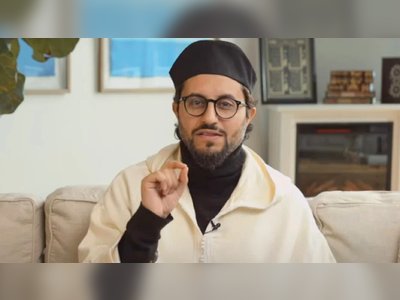
Dr Shadee Elmasry, an Islamic scholar based in New Jersey, is due to begin a three-day schedule of talks in venues including Birmingham, Bolton and Ilford.
His itinerary, organised by the charity Global Relief Trust, has drawn sharp criticism from senior British politicians who argue his presence would be “not conducive to the public good” and risks inflaming tensions in an already volatile climate.
Elmasry’s social media history includes posts that described the October 7 attacks as people “finally punched back” after decades of conflict and framed violent actions as expressions of “legitimate resistance,” language that opponents say amounts to justifying or normalising militant violence.
His critics argue that giving such a figure a platform in the UK could embolden extremist narratives, particularly at a time when antisemitic incidents have risen sharply in Britain following regional conflicts.
Senior voices including Conservative MP Nick Timothy have publicly called on Home Secretary Shabana Mahmood to use her statutory powers to bar Elmasry from entering the country on the grounds of public safety and national cohesion.
Campaign Against Antisemitism echoed these calls, stating that the preacher’s interpretation of events “smacks of insidious rhetoric” and should not be permitted at community events.
They argue that existing Home Office powers allow foreign nationals whose presence is judged harmful to be refused entry or removed.
The Global Relief Trust has defended its invite, emphasising that Elmasry’s participation is intended to support faith-based and humanitarian discussions and that any individual’s expressed views are not affiliated with the charity’s stated purpose.
The Home Office has so far declined to confirm whether it will intervene in this specific case but reiterated that the government retains robust mechanisms to protect national security and public safety, including excluding individuals whose presence is judged disruptive or harmful.
The dispute highlights broader tensions in British public life over freedom of expression, community relations and the challenge of balancing open civil dialogue with the prevention of speech perceived as endorsing violence.
With debates continuing in Westminster and among civil society groups, the government’s next move will be closely watched as a test of how authorities manage foreign speakers with polarising views amid heightened sensitivities around Middle East conflict and social cohesion.
Dr Shadee Elmasry, an Islamic scholar based in New Jersey, is due to begin a three-day schedule of talks in venues including Birmingham, Bolton and Ilford.
His itinerary, organised by the charity Global Relief Trust, has drawn sharp criticism from senior British politicians who argue his presence would be “not conducive to the public good” and risks inflaming tensions in an already volatile climate.
Elmasry’s social media history includes posts that described the October 7 attacks as people “finally punched back” after decades of conflict and framed violent actions as expressions of “legitimate resistance,” language that opponents say amounts to justifying or normalising militant violence.
His critics argue that giving such a figure a platform in the UK could embolden extremist narratives, particularly at a time when antisemitic incidents have risen sharply in Britain following regional conflicts.
Senior voices including Conservative MP Nick Timothy have publicly called on Home Secretary Shabana Mahmood to use her statutory powers to bar Elmasry from entering the country on the grounds of public safety and national cohesion.
Campaign Against Antisemitism echoed these calls, stating that the preacher’s interpretation of events “smacks of insidious rhetoric” and should not be permitted at community events.
They argue that existing Home Office powers allow foreign nationals whose presence is judged harmful to be refused entry or removed.
The Global Relief Trust has defended its invite, emphasising that Elmasry’s participation is intended to support faith-based and humanitarian discussions and that any individual’s expressed views are not affiliated with the charity’s stated purpose.
The Home Office has so far declined to confirm whether it will intervene in this specific case but reiterated that the government retains robust mechanisms to protect national security and public safety, including excluding individuals whose presence is judged disruptive or harmful.
The dispute highlights broader tensions in British public life over freedom of expression, community relations and the challenge of balancing open civil dialogue with the prevention of speech perceived as endorsing violence.
With debates continuing in Westminster and among civil society groups, the government’s next move will be closely watched as a test of how authorities manage foreign speakers with polarising views amid heightened sensitivities around Middle East conflict and social cohesion.