U.S. Tankers Head Toward Venezuela as Oil Production Risks Sharp Decline
Chevron-chartered vessels prepare to lift stranded crude amid a blockade that threatens to cut Venezuelan output by roughly one-third within weeks
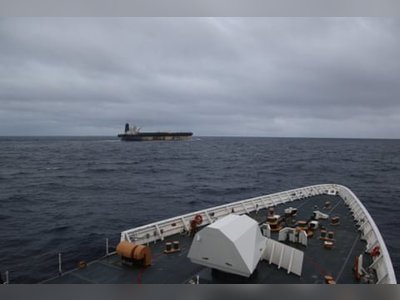
A fleet of United States-chartered oil tankers is moving toward Venezuelan ports to begin lifting crude that has been stranded by a naval blockade, raising the prospect of a dramatic drop in the country’s oil production in the coming weeks.
President Donald Trump’s administration has tightened maritime restrictions on sanctioned vessels trading with Venezuela, part of a broader effort to pressure the government in Caracas.
Chevron remains the principal U.S. energy firm with special authorization to operate in Venezuela’s oil fields and has been negotiating with Venezuela’s state oil company about exporting crude to American refineries.
The goal is to relieve mounting storage pressures that have accumulated in onshore tanks and floating storage as exports to traditional markets have fallen sharply.
Venezuela’s oil output, already reduced in recent weeks, could decline by about one-third over the next month if crude cannot be moved out of storage.
That would bring production down to roughly six hundred thousand barrels per day, according to industry estimates, from levels near nine hundred thousand barrels per day before the most severe restrictions took hold.
The export blockade has halted most shipments to major buyers, including long-standing crude customers in Asia, leaving vast quantities of crude locked in storage or aboard vessels awaiting clearance.
U.S. discussions with Venezuelan officials include potential arrangements to divert oil originally bound for other markets to U.S. refineries, using special licenses to facilitate sales and ease the storage bottleneck.
The combination of constrained crude movement, storage capacity limits, and the naval blockade has prompted warnings from energy analysts that output could contract sharply in the short term.
For Venezuela’s oil sector, already weakened by years of under-investment and logistical strain, the coming weeks may determine whether production stabilizes or collapses further.
The evolving situation underscores the broader economic and geopolitical strains affecting global energy markets and Venezuela’s role within them.
President Donald Trump’s administration has tightened maritime restrictions on sanctioned vessels trading with Venezuela, part of a broader effort to pressure the government in Caracas.
Chevron remains the principal U.S. energy firm with special authorization to operate in Venezuela’s oil fields and has been negotiating with Venezuela’s state oil company about exporting crude to American refineries.
The goal is to relieve mounting storage pressures that have accumulated in onshore tanks and floating storage as exports to traditional markets have fallen sharply.
Venezuela’s oil output, already reduced in recent weeks, could decline by about one-third over the next month if crude cannot be moved out of storage.
That would bring production down to roughly six hundred thousand barrels per day, according to industry estimates, from levels near nine hundred thousand barrels per day before the most severe restrictions took hold.
The export blockade has halted most shipments to major buyers, including long-standing crude customers in Asia, leaving vast quantities of crude locked in storage or aboard vessels awaiting clearance.
U.S. discussions with Venezuelan officials include potential arrangements to divert oil originally bound for other markets to U.S. refineries, using special licenses to facilitate sales and ease the storage bottleneck.
The combination of constrained crude movement, storage capacity limits, and the naval blockade has prompted warnings from energy analysts that output could contract sharply in the short term.
For Venezuela’s oil sector, already weakened by years of under-investment and logistical strain, the coming weeks may determine whether production stabilizes or collapses further.
The evolving situation underscores the broader economic and geopolitical strains affecting global energy markets and Venezuela’s role within them.