UK and France lead multinational military planning push to secure Strait of Hormuz
More than 30 countries are joining London-hosted talks to develop a coordinated maritime security mission aimed at reopening the strategic shipping route once conditions allow.
The United Kingdom and France are leading a major international effort to develop a coordinated military plan aimed at securing and reopening the Strait of Hormuz, with planners from more than 30 countries gathering in London for high-level talks focused on maritime security and freedom of navigation.
The two-day conference, hosted at the UK’s Permanent Joint Headquarters in Northwood, marks a shift from earlier diplomatic alignment toward detailed operational planning for a multinational mission designed to protect one of the world’s most critical energy corridors.
The initiative follows a series of earlier virtual and in-person meetings involving dozens of nations across Europe, Asia, and the Middle East.
According to officials involved in the process, the objective is to translate political consensus into practical military arrangements that can be activated once conditions on the ground permit, particularly following the establishment of a durable ceasefire in the wider regional conflict that has disrupted maritime traffic through the Gulf.
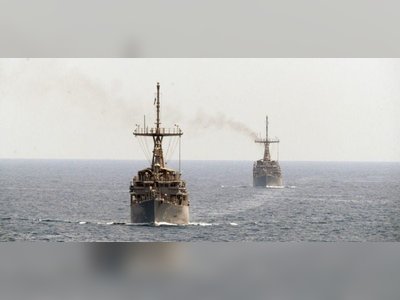
Planning discussions are expected to focus on command structures, deployment logistics, intelligence sharing, and the potential use of naval escorts and mine-clearing capabilities.
Several participating countries have already signalled readiness to contribute ships, surveillance assets, and personnel, reflecting growing concern over the stability of global shipping routes.
The Strait of Hormuz remains a strategically vital chokepoint for international energy supplies, with a significant share of global oil and liquefied natural gas transiting through its waters under normal conditions.
Recent instability in the region has raised fears over prolonged disruption, prompting coordinated international responses aimed at safeguarding commercial passage.
British officials have emphasised that the planned mission is defensive in nature and contingent on a sustainable easing of hostilities, while French counterparts have highlighted the importance of maintaining open sea lanes as a foundation for global economic stability.
Further technical planning sessions are expected to follow as the coalition moves toward defining an operational framework for the proposed mission.
The two-day conference, hosted at the UK’s Permanent Joint Headquarters in Northwood, marks a shift from earlier diplomatic alignment toward detailed operational planning for a multinational mission designed to protect one of the world’s most critical energy corridors.
The initiative follows a series of earlier virtual and in-person meetings involving dozens of nations across Europe, Asia, and the Middle East.
According to officials involved in the process, the objective is to translate political consensus into practical military arrangements that can be activated once conditions on the ground permit, particularly following the establishment of a durable ceasefire in the wider regional conflict that has disrupted maritime traffic through the Gulf.
Planning discussions are expected to focus on command structures, deployment logistics, intelligence sharing, and the potential use of naval escorts and mine-clearing capabilities.
Several participating countries have already signalled readiness to contribute ships, surveillance assets, and personnel, reflecting growing concern over the stability of global shipping routes.
The Strait of Hormuz remains a strategically vital chokepoint for international energy supplies, with a significant share of global oil and liquefied natural gas transiting through its waters under normal conditions.
Recent instability in the region has raised fears over prolonged disruption, prompting coordinated international responses aimed at safeguarding commercial passage.
British officials have emphasised that the planned mission is defensive in nature and contingent on a sustainable easing of hostilities, while French counterparts have highlighted the importance of maintaining open sea lanes as a foundation for global economic stability.
Further technical planning sessions are expected to follow as the coalition moves toward defining an operational framework for the proposed mission.