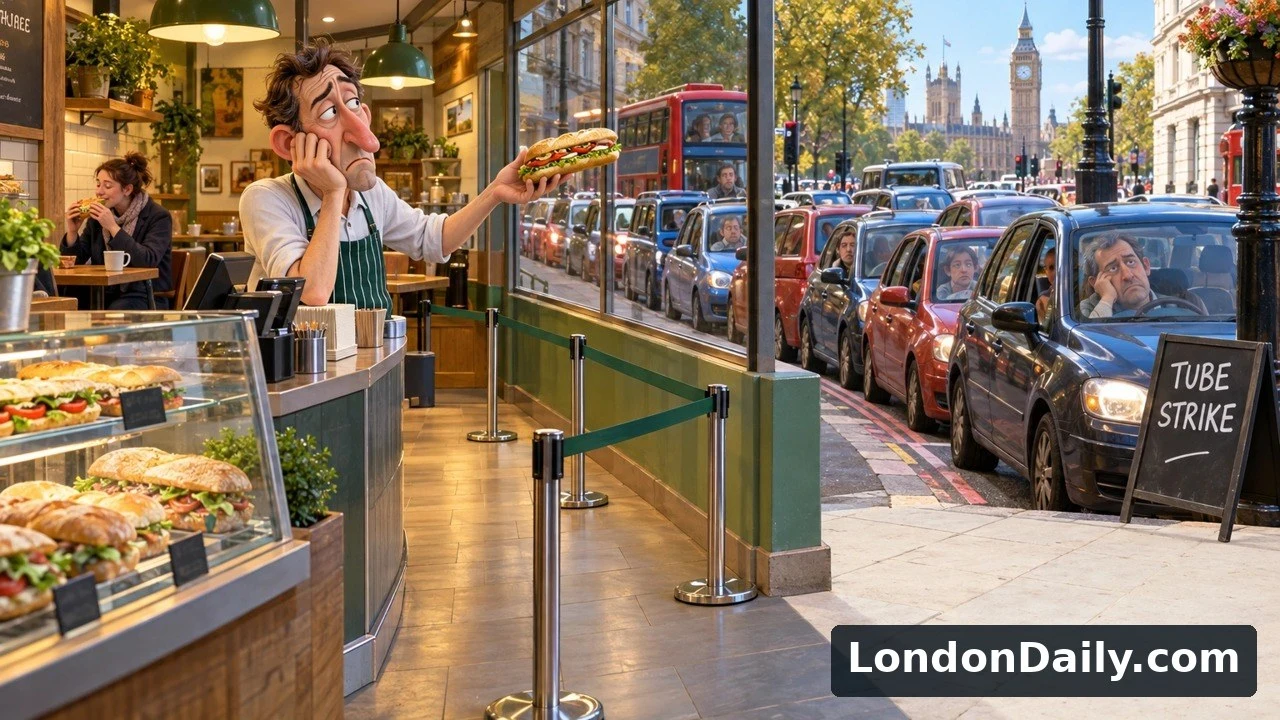
A 24-hour RMT Tube strike brought severe road congestion and falling trade across London, with Birley’s sandwich shops reporting 15–20% fewer customers and a corresponding drop in sales as commuters avoided the journey into work.
The first walkout in a planned series ended at midday on Friday, although disruption continued. Every Underground line was affected during the action, with closures, delays and overcrowding. Traffic backed up across the West End and stretched through east London from Blackfriars to Mile End.
Yet the capital’s transport system did not simply stop. TfL said more than 55% of the Tube network ran across Thursday, exceeding provision during previous strikes in the dispute. Tube ridership reached around two-thirds of normal, while usage across the wider transport network stood at 90%. Bus and Elizabeth line journeys both rose by 3%.
Those city-wide figures conceal sharper local effects. Anonymised, aggregated O2 Motion data showed worker numbers in the City and Soho around 9% below a typical Thursday, with visitor footfall down 17%. By 5pm, worker numbers were about 16% below the previous Thursday. E-bike operator Forest recorded 17% more evening rides than a week earlier.
Birley’s managing director Paul Salter expected the disruption to cost the chain tens of thousands of pounds that week. The full business losses remain unknown: a 32% fall in average Zone 1 hospitality sales relates to analysis of strikes in 2023 and 2024, not this walkout.
London Chamber of Commerce and Industry chief executive Karim Fatehi condemned the planned eight strike days as damaging to businesses, tourists and commuters before Christmas. UKHospitality urged all parties to resolve the dispute, citing lost sales and staff travel difficulties.
For passengers, the consequences were personal. May Brown feared missing much of her uncle’s funeral after cancellations. Marium, travelling home from work in Battersea to Epping, said a £60 cab fare might force her to stay with a friend. She understood the reasons for striking but wanted more notice. Bakery worker Amelia likewise acknowledged strikers’ reasons while stressing the harm to businesses.
TfL apologised. London Underground customer operations director Nick Dent called the action unnecessary and argued that driver attendance showed an appetite to vote on four-day-week proposals. He urged the RMT to put them to members.
The union acknowledged passengers’ frustration but said workers had genuine concerns about working conditions, their families and public safety. Those concerns remain at the heart of an unresolved dispute, with businesses already facing further planned walkouts.








Join the conversation