

Trust in news has grown in the UK during pandemic, research shows
The Reuters Institute Digital News Report, conducted in January this year, found that 36% of people in the UK "trust most news most of the time".
That figure is up from 28% in January 2020, before the pandemic began.
But it is still 14 percentage points down on where it was prior to the Brexit vote in 2016.
The report found that strictly regulated impartial broadcasters like BBC, ITV, Sky News, and Channel 4 remain the most trusted, followed by national broadsheet newspapers.
It also showed that trust in particular brands often splits along both political and/or generational lines.
"We also find that political partisans from both sides feel that UK media coverage has been unfair to them," the report said.
The UK was just one of 46 media markets around the world that were surveyed on the topic of trustworthiness. Around 92,000 people were involved, including more than 2,000 in the UK.
Many young people - especially young women - it suggested, felt that media coverage was less fair to them than it is to other groups.
In the US, three-quarters of those who self-identified as being on the right, politically-speaking, felt that media coverage of their views was unfair, compared with just a third of those on the left.

Black and Hispanic Americans are also more likely to say media coverage is unfair.
Finland remained the country with the highest levels of overall trust (65%) in news content, whereas the USA had the lowest levels (29%), the survey found.
Trust in news across all countries grew by an average of six percentage points in the wake of the pandemic, with 44% saying they trust most news most of the time.
'More straightforward'
The growth of social media over the past decade, the report suggested, has encouraged the growth of news sites and channels with overtly partisan lines.
However, people on the whole still strongly support the ideals of impartial and objective news.
Lead author of the report, Nic Newman, said: "The focus on factual reporting during the Covid-19 crisis may have made the news seem more straightforward, while the story has also had the effect of squeezing out more partisan political news.
"This may be a temporary effect, but in almost all countries we see audiences placing a greater premium on accurate and reliable news sources."
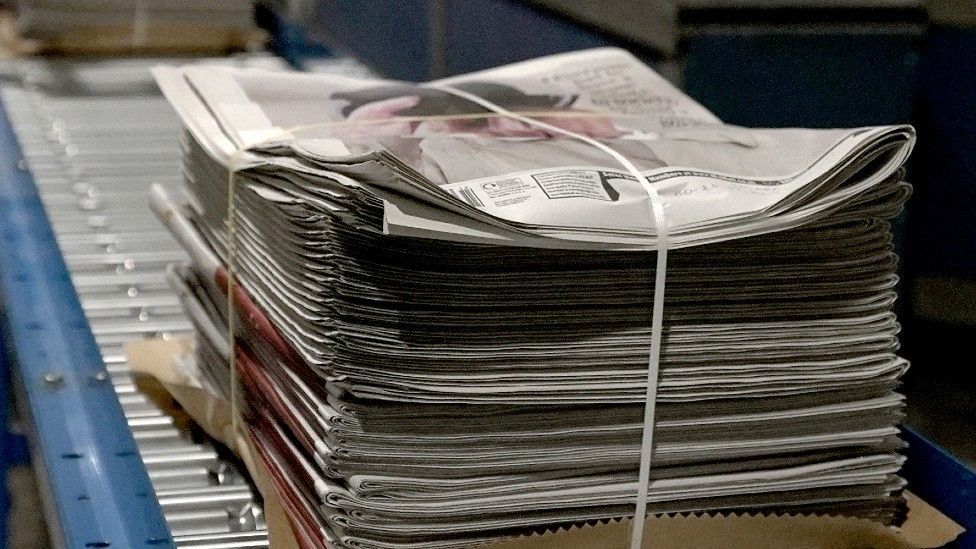
Print publications, the study showed, have been badly affected by Covid-19, due to restrictions on movement affecting sales.
Subscriptions or one-off payments to digital news publications were up by two points in the last year - with countries like the USA, Finland and Australia relying more on online news.
However, in the UK it remains a minority activity, with just 8% of people saying they currently pay for any online news.
Covid misinformation
Although many people appear to have engaged with news over the past 12 months, researchers also found signs that some are avoiding news altogether.
For instance, the study found interest in news had fallen in the United States following the election of President Joe Biden - especially with right-leaning groups.
Worries about misinformation remained high, with 58% of those asked expressing concern about what is true or false on the internet when it comes to news.
More respondents said they had seen greater misinformation about coronavirus than any other subject, including politics.
A quarter of people overall said they preferred to start their news journeys via a website or app.
Those aged 18-24 (known as Generation Z) were found to have weak links with traditional news sites and were almost twice as likely to prefer accessing news via social media, aggregators, or mobile alerts.
Platforms like WhatsApp, Instagram, Telegram and TikTok have continued to attract more young people, with many sharing stories about coronavirus and Black Lives Matter on the latter over the past year.
That particular network has also been central to a wave of protests by younger people across the world, in countries like Indonesia, Peru and Thailand.
Influencers, the report established, play a much bigger role in news on TikTok, Snapchat and Instagram than they do in more "traditional" networks like Facebook and Twitter.
Co-author of the report, Simge Andi, said: "The lack of strong journalistic presence could make those relying on these networks particularly vulnerable to misinformation.
"On the other hand, news is largely incidental in these spaces and the expectations of snappy, visual, and entertaining content do not always come naturally to newsrooms staffed by senior journalists with a focus on traditional formats."