London Daily

Focus on the big picture.
Monday, Jun 01, 2026

This entrepreneur says AI can take better care of your health

This entrepreneur says AI can take better care of your health

Dr Loubna Bouarfa, CEO of AI healthcare company, Okra, describes her vision of what our health could look like in the future with Artificial Intelligence on our side.


It’s rare to meet someone who lights up a room, but imagine someone doing so hundreds of miles away, from another country. That is what it felt like speaking to Dr. Loubna Bouarfa, CEO of AI healthcare company Okra.

COVID restrictions meant we could not travel to the UK to meet her in person, but we set up the interview exchanging via email and social media beforehand. When interview D-Day finally came, with Loubna travelling from Cambridge to a London studio, and me on our Lyon set, it felt like I was chatting to an old friend.

Part of the reason we clicked is that when we started discussing AI, I asked Loubna what inspired her. Her answer was surprising, but also created an immediate bond. Her younger brother, like my son, has autism. Her words struck a chord. Later, during our interview she told me that growing up with her brother helped her learn from an "early age that the rules and the norms that society impose on us are just generic perceptions, not representing the full spectrum of life. My fascination for AI comes from that", she revealed, "there are no rules or norms. I've learnt that you can be many things and being autistic is one of them".
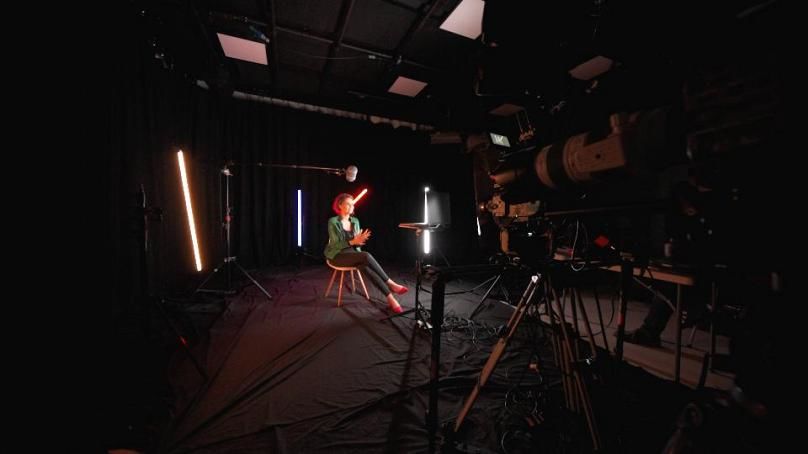
Dr. Loubna Bouarfa


Artificial intelligence is a technology that is not bound by rules, but instead, Loubna explained it "mimics the way we learn as human beings by observing, adapting and learning from our environment". It appears that healthcare is a domain of untapped potential. According to Loubna, if AI were built into healthcare systems it would allow for far more pre-emptive action from the medical community. "We don't need to wait for people to get sick. Our health care systems with AI could become more proactive and leverage this data to advise patients and to keep them healthy".


Loubna stepped into the future for us and explained how health systems could work. "So it's 2050 and someone is born. As soon as this baby is born, routine checks will be performed. Their genetic screening happens and imagine there is a mutation in important genes. So as soon as that's detected an alarm goes off". Throughout the person’s life routine checks would take place to keep track of the mutation. If one day an anomaly were detected, scans would automatically be prescribed. If it were serious "the human comes in the picture, the doctor” to speak to the patient. However, "while the doctor is performing his job, AI algorithms will be running in the back end and computing what is the best treatment for these patients. Once after treatment, we still have algorithms running on and predicting if there are any relapses and automating the whole process".

For this to work there needs to be a solid data space on health. If that were in place, Loubna told us, it would immediately help direct medical practitioners and the patient to "the best course of action and more than that, to tell you what are the best treatments that will work for you as a unique person by learning from all patients similar to you".

This would prove, it seems, nothing short of a revolution in healthcare. One of the main challenges at the moment in Europe is a lack of health data. "We don't have much of European data that fits our patient population that can help us individualise medicine here in Europe. I think that is the next important step that needs to happen before we can scale the use of AI in health care systems in Europe".
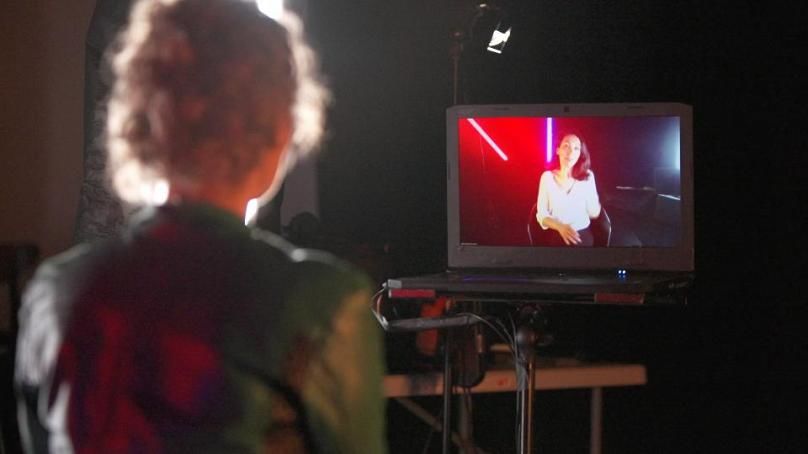
Dr. Loubna Bouarfa


There are also important issues of privacy to contend with, but Loubna said she was hopeful on that front, telling us that data can be anonymised. As part of a high-level expert group advising the European Commission, this was one of the top priorities as well as making sure data were unbiased.

Bias it appears can take many forms and is not only resolved by ensuring data from a wide range of profiles. AI, Loubna revealed, is a multi-cultural space, and to be so, it needs to be nourished by people from as many diverse backgrounds as possible. "AI is a spectrum of things. There are many aspects to AI than just the programming part. There is the design, the creativity. There is also the ethics of designing those systems, the user interface".

AI is therefore not just an intangible zone for tech wizards, in fact, it would be a door open to all of us. "Follow your passion", Loubna tells us, "and it can lead your career path to AI because we need all the genius and the experts to add value and make AI more inclusive and more beautiful".

Newsletter

Related Articles

0:00
0:00
Close
Japanese Technology Firm Fujitsu Launches Advanced Artificial Intelligence Tool for Corporate Disclosures
South Africa Officially Launches Nationwide Campaign for Highly Contested Local Government Elections
United Kingdom Commits Additional Funding for Unexploded Ordnance Clearance in Laos
Singapore Announces Stringent New Greenhouse Gas Regulations for Commercial Cooling Systems
Cambodia and Thailand Hold High-Level Border Security Talks at United Nations Headquarters
Myanmar Military Government and China Sign Major Agreement to Upgrade Media and Cultural Cooperation
Knife Attack at Swiss Train Station Leaves Three Injured in Suspected Act of Domestic Terrorism
Transnational Extortion Gang Threatens Canadian Police With Army of One Thousand Armed Operatives
Australia Imposes Forty-Two-Day Quarantine on Cruise Ship Passengers Following Deadly Hantavirus Outbreak
International Monetary Fund Unlocks Seven Hundred Million United States Dollars for Sri Lanka Following Economic Reforms
Australia Launches Record One Point Four Billion Dollar Lawsuit Against Chemical Giant 3M Over Contamination
China and Canada Foreign Ministers Meet in Ottawa in Effort to Stabilize Strained Diplomatic Ties
Indonesia Demands Urgent United Nations Security Council Reform Amid Escalating Global Conflicts
Extreme Weather Patterns Trigger Severe Drought in Madagascar and Destructive Flooding in East Africa
Indian State of Karnataka Faces Political Upheaval as Chief Minister Siddaramaiah Abruptly Resigns
Philippines and Japan Reaffirm Defense Ties as Crucial for Indo-Pacific Regional Stability
Norway Joins French Nuclear Deterrence Initiative in Major Shift for European Security Architecture
Global Critical Mineral Alliances Expand as Western Nations Move to Counter Chinese Supply Dominance
United States Imposes Fifty Percent Tariffs on Mexican Steel and Aluminum Ahead of Trade Pact Review
European Union and China Head Toward Major Trade Conflict Over Clean Technology Exports
United States Economic Growth Severely Downgraded to One Point Six Percent as Stagflation Fears Mount
World Health Organization Warns Central African Ebola Epidemic is Outpacing Containment Efforts
United States Treasury Department Conditions Sanctions Relief on Reopening of the Strait of Hormuz
Iranian Air Defenses Intercept and Destroy United States Military Drone Over Bushehr Province
Iranian Armed Forces Launch Ballistic Missiles Toward Unspecified Targets Prompting Regional Condemnation
United Nations Secretary-General Warns Global Order Facing Highest Level of Conflict Since 1945
Israel Issues Sweeping Evacuation Orders in Southern Lebanon Amid Intensified Hezbollah Conflict
Russia Announces Systemic Military Strikes Targeting Ukrainian Defense and Energy Infrastructure
United States and Iranian Negotiators Reach Draft Agreement to Extend Ceasefire and Resume Nuclear Talks
United Nations Security Council Deeply Divided Over United States Capture of Venezuelan President
US and Iran Exchange Direct Military Strikes Amid Fragile Gulf Ceasefire
World Health Organization Warns of Catastrophic Ebola Outbreak in DR Congo
Russia Threatens New Wave of Strikes on Ukrainian Infrastructure and Embassies
Scientists Warn Atlantic Ocean Currents Could Collapse Faster Than Projected
Anthropic Reaches $900 Billion Valuation in Historic AI Funding Round
Washington Imposes Crippling Sanctions on Iranian Maritime Authority
Japan and the Philippines Initiate Strategic Intelligence-Sharing Pact
Microsoft Deploys Autonomous Computer-Using AI Agents to Global Markets
Anthropic Secures $45 Billion Compute Infrastructure Agreement With SpaceX
U.S. Director of National Intelligence Resigns Amid Administration Shakeup
Micron Technology Crosses Trillion-Dollar Valuation Amid Unprecedented Hardware Demand
Canada and Germany Finalize Historic Long-Term LNG Export Agreement
China Expands International Travel Restrictions on Domestic AI Researchers
Japan Approves Sweeping Overhaul of National Intelligence Apparatus
Global Airlines Scramble Logistics as Middle East Airspace Remains Fractured
Japan's Naphtha Imports Plunge 47 Percent Amid Strait of Hormuz Closure
Global Crude Prices Retreat Below $96 as Gulf Tensions Momentarily Ease
Generative AI Outperforms Human Baselines in Landmark Global Creativity Study
NASA Partners With Private Aerospace to Unveil Permanent Lunar Base Architecture
South Korean Equity Markets Surge on Next-Generation Memory Chip Frenzy
×