London Daily

Focus on the big picture.
Tuesday, Jul 14, 2026

The Man Photographed With His Foot On Nancy Pelosi’s Desk During The Capitol Riots Will Be Released From Jail

The Man Photographed With His Foot On Nancy Pelosi’s Desk During The Capitol Riots Will Be Released From Jail

Richard Barnett was ordered to remain in jail in January, but a judge ruled Tuesday that his case now was too similar to those of other defendants who were allowed to go home.

Richard Barnett, an Arkansas man photographed with his foot on House Speaker Nancy Pelosi’s desk during the Capitol insurrection, will be allowed to go home as his case goes forward, a judge ruled Tuesday, reversing a January order that had kept him behind bars.

Barnett is one of the most high-profile defendants charged in connection with the Jan. 6 riots to date. The photos of him smiling as he sat in Pelosi’s office went viral, as did a video of him outside the Capitol in which he told a reporter that he’d left a note that read, “Nancy, Bigo was here, you bitch.” At a hearing in late January, a federal judge in Washington, DC, ordered Barnett to remain in jail, concluding that his “entitled behavior ... shows a total disregard for the law and for officials' directives.”

But the legal landscape surrounding the Capitol riot cases has changed in the last three months, and Barnett made another attempt at getting out of jail. This time, citing recent developments in the hundreds of prosecutions filed since his arrest on Jan. 8 and appearing before a different judge, he succeeded. US District Judge Christopher Cooper concluded that prosecutors had failed to show that Barnett posed a specific future threat to public safety that couldn’t be addressed by restrictive release conditions.

Throughout the hearing, Cooper expressed skepticism about arguments Barnett’s lawyer made challenging the strength of the government’s evidence. Cooper said that information presented by prosecutors about Barnett’s apparent connection to the QAnon mass delusion and involvement in QAnon-affiliated demonstrations in which he was armed was “concerning.” But a March opinion from the US Court of Appeals for the DC Circuit, which set the bar higher for pretrial detention for Jan. 6 defendants who aren’t charged with specific acts of violence, ultimately worked in Barnett’s favor, Cooper said; he announced his decision shortly after hearing arguments.
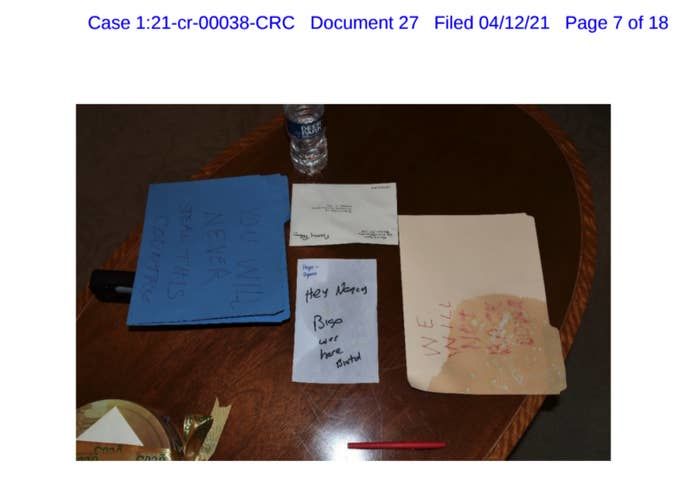
The note Barnett is alleged to have left on Pelosi's desk on Jan. 6.

Barnett’s situation wasn’t different enough from those of the defendants in the DC Circuit case, Eric Munchel and Lisa Eisenhart, Cooper said. Munchel and Barnett were both charged with carrying stun guns into the Capitol, but they weren’t accused of assaulting anyone or destroying property. The government argued that Barnett had tried to conceal evidence — his phone and the walking stick–shaped stun gun he brought to the Capitol were never recovered — but Cooper said at most this indicated “consciousness of guilt” or some risk of flight, not that he was dangerous, which was the standard the government was trying to meet.

Cooper did make clear that he was unimpressed by an argument Joseph McBride, Barnett’s lawyer, made linking the events of Jan. 6 with protests against racism and police brutality the previous year.


“The notion that the events of January 6 were a legitimate or excusable social protest against ruling elites or, worse yet, a reaction to some people in society feeling that they have been unfairly scapegoated for racism is, in a word, absurd,” Cooper said.

Barnett will be released to home detention and prohibited from having any weapons in his home — including stun guns, Cooper noted. The judge warned Barnett that the decision to allow him to go home wasn’t a sign that he’d be lenient if he later pleaded guilty or went to trial and was convicted. Cooper said he’d look at Barnett’s compliance with his release conditions in crafting any sentence. ”Consider this a test, okay?” he said. Barnett, who was appearing remotely from jail for the virtual hearing and had been silent while his lawyer argued, thanked the judge.

It’s the latest setback for the US attorney’s office in Washington since the DC Circuit’s ruling in Munchel and Eisenhart’s case. Prosecutors in some cases have dropped efforts to keep defendants behind bars in the weeks since the appeals court released the opinion, and judges in some cases — but not all — have handed the government losses when prosecutors pressed ahead with seeking detention.

Pretrial detention isn’t supposed to be punishment for a crime that a defendant hasn’t been convicted of yet; judges are only supposed to keep someone in jail if they meet certain criteria, including if they pose a flight risk or danger to the public or risk obstructing the case. Cooper noted that the DC Circuit held in Munchel’s case that participation in the insurrection on its own wasn’t enough to justify detention and that the government hadn’t shown Barnett posed a “concrete danger” any more than others who also believed in QAnon and had access to firearms.

Assistant US Attorney Mary Dohrmann told Cooper that she hadn’t formally extended a plea offer to Barnett but had been in early talks with his lawyer about that possibility. A federal grand jury returned a seven-count indictment against Barnett in late January; Dohrmann said on Tuesday that his estimated sentencing guidelines range for those charges is between 70 and 87 months in prison, although that could change if he ended up pleading guilty and cooperating. The first plea agreement in the Capitol riot cases was revealed earlier this month.

A spokesperson for the US attorney’s office declined to comment. Barnett’s lawyer did not immediately respond to a request for comment after the hearing.

Newsletter

Related Articles

0:00
0:00
Close
UK Prime Minister Keir Starmer Offers Condolences Following Death of Qatar’s Father Amir
UK Regional Innovation Policy Focuses on Research Clusters Across Scotland, Wales, and Northern England
UK Corporate Transparency Rules Set to Become More Strict Under Modern Slavery Reform Plans
UK Civil Service Estate Strategy Shifts Government Activity Away From London
UK Strengthens National Security Powers Through New Threat Designations
Greater Manchester Police Conduct Drink and Drug Driving Operations After Football Events
UK Government Advances Darlington Economic Campus With Construction Milestone
UK Authorities Increase Football-Related Security Operations After Tournament Fixtures
UK Invests Fifty-One Million Pounds in National Cryogenics Facility and Regional Innovation Hubs
UK Moves Toward Tougher Modern Slavery Reporting Rules With Corporate Penalties
UK Government Reports Forty-Three Million Pounds in Savings From Office Estate Reform
UK Government Expands Civil Service Regional Strategy With Manchester and Darlington Campus Projects
UK Designates Iran’s Islamic Revolutionary Guard Corps as National Security Threat
United Kingdom Financial Markets Monitor Business Response to Economic Policy Changes
Scottish Renewable Energy Expansion Highlights Need for Faster Grid Development
Wales and Regions Strengthen Focus on Economic Development Through Tourism and Investment
Retail Industry Warns High Street Businesses Remain Under Pressure
Police Chiefs Highlight Growing Challenges Managing Protests and Public Order
Agriculture Leaders Seek Clarity on Post-Brexit Farming Support and Environmental Rules
Transport Unions Warn of Further Industrial Action Over Pay and Working Conditions
Welsh Tourism Sector Reports Strong Growth Driven by Domestic and International Visitors
National Infrastructure Review Gains Support as Leaders Seek Faster Project Delivery
Financial Markets Assess Impact of United Kingdom Corporate Tax Policy Changes
Northern Ireland Assembly Debates Cross-Border Trade and Infrastructure Cooperation Plans
Government Opens Consultations on Housing Reform and Planning System Changes
Scottish Government Faces Pressure to Accelerate Offshore Wind and Grid Expansion
National Energy System Operator Warns Grid Investment Is Needed for Future Electricity Demand Growth
United Kingdom Research Council Invests in Artificial Intelligence and Biotechnology Innovation Hubs
United Kingdom Expands Oversight of Skilled Worker Visa Sponsors Amid Migration Debate
Cross-Party MPs Call for National Infrastructure Strategy Review to Accelerate Economic Growth
Prime Minister Announces One Billion Pound NHS Funding Package Ahead of Winter Pressures
Bank of England Signals Cautious Approach to Interest Rates as Inflation Remains Above Forecasts
World Cup Visitors Turn American Big-Box Stores Into Souvenir Stops
Netflix Weighs Always-On Channels, Bundles and Short-Form Video
Passenger Is Pulled Partly Outside Ryanair Jet After Window Fails Mid-Flight
Innovation-led growth strategy
Public service reform pressure
Defence and industrial security
Labour leadership transition and economic reset
Northern England Pushes for Greater Influence in Britain’s Future Economic Model
UK Technology Strategy Focuses on Life Sciences, Digital Innovation and Research Investment
Britain and United States Maintain Focus on Pharmaceuticals Cooperation and Industrial Growth
UK Public Services Face Continued Pressure as Government Promises Visible Improvements
Regional Economic Power Becomes Key Theme in Britain’s Next Political Phase
Britain Expands Support for Small Businesses as Firms Seek Better Access to Finance
UK Economy Remains Central Political Challenge as Cost of Living and Growth Concerns Persist
National Health Service Introduces New Workplace Reviews to Improve Conditions for Healthcare Staff
UK Life Sciences Sector Secures More Than Three Billion Pounds in Investment to Support Innovation
Britain Strengthens Defence Strategy as Security Concerns Reshape Military and Industrial Policy
Andy Burnham Promises Stronger UK Defence Industry and Expanded Domestic Production
×