London Daily

Focus on the big picture.
Friday, Oct 30, 2026

Tax rate U-turn lifts pound but markets still fret over government credibility

Tax rate U-turn lifts pound but markets still fret over government credibility

The chancellor's announcement helped lift sterling and UK bond yields, but market commentators say there is still a big question mark hanging over the new government's economic policies.

The pound and government bond yields have recovered some poise in the wake of the government's U-turn on abolishing the top rate of income tax.

Kwasi Kwarteng revealed early on Monday morning that the decision to axe the 45p rate - part of his growth plan revealed last month - would now not happen in April as he had announced just 10 days ago.

The measures were badly received by the financial markets as they were seen as placing too much strain on the public finances, with the tax cuts set to cost £45bn alone.

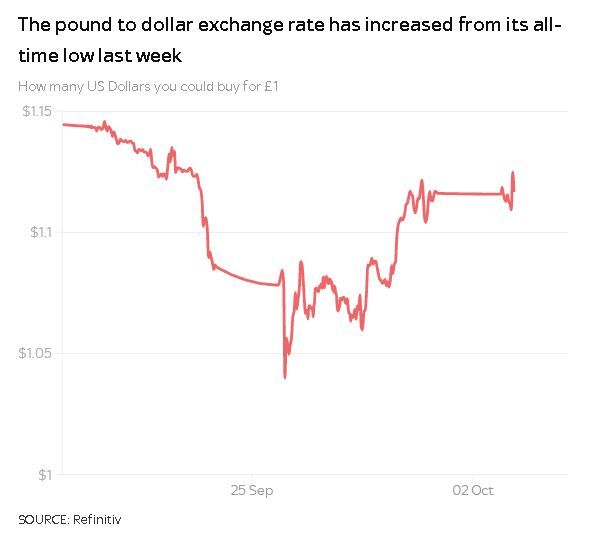
The crisis of confidence saw sterling hit record lows against the dollar a week ago while the Bank of England later had to intervene to restore market functionality for pension funds when long-dated government bond yields surged.

The yield - the effective interest rate demanded by investors to buy UK government debt - on the 30-year bond had nudged to levels not seen since 2002 before the Bank said it would buy bonds to support the market.

In a statement on Monday afternoon the Bank reaffirmed its commitment to buying up to £5 billion of long-dated gilts at each of its daily auctions. Gilt prices fell sharply in the wake of the announcement, and 30-year yields jumped more than 30 basis points after the announcement.

Monday morning's government climbdown had seen the yield, briefly, climb back to where it was ahead of the mini-budget.

The same could be said for the pound.

'The market was panicking'


But market commentators cautioned that it was likely some respite only.

AJ Bell's investment director, Russ Mould, noted that sterling had jumped from $1.1088 to $1.1264 in less than two hours on Monday morning.

"The U-turn is important for two reasons", he wrote.

"First, the market was panicking about the cost of the tax cuts and how that would push up government debt and in turn raise the prospect of reduced public spending and benefit cuts.

"Removing one of the key components of this seemingly flawed plan provided some relief, and you saw that in how the pound rallied and 10-year gilt rates briefly fell below 4%."

'UK faces challenging times'


"The other factor to consider is that Kwarteng has effectively admitted to a massive policy error only weeks into his tenure as chancellor," Mr Mould continued.

"If Liz Truss is to establish any credibility as prime minister, can she afford to have anyone on her team who has effectively scored an own goal in the opening game?

"The fact that both the pound fell back, and gilt rates started to move higher after the news had been digested, is the market's way of saying there are still plenty of problems with the government's finances, state of the consumer and business, and economic outlook.

"With or without the 45% tax cut, the country still faces challenging times with individuals and companies finding life a lot harder."

Mr Mould noted that the FTSE 100 fell 1% to 6,827 - dragged down by miners, financial services and consumer goods firms.

"Many of these earn in dollars and so a stronger pound - even if just a temporary move - is bad for them", he explained.

The FTSE 100's declines were in line with those on the continent where investors were also reacting to the latest evidence of recession ahead.

Closely-watched surveys of purchasing managers in the manufacturing sector all pointed to slowdowns - largely due to surging inflation.

In the case of the UK, a third consecutive monthly decline in activity was noted with rates of inflation in input costs and selling prices both picking up linked, in part, to the weaker pound.

By market close in London the FTSE 100 had closed up 0.2%, nearly 15 points, ending the day at 6,909.
Newsletter

Related Articles

0:00
0:00
Close
Department for Environment, Food and Rural Affairs Implements Strict Water Quality Monitoring Rules Following Severe Rainfall and Flooding
Welsh Government Unveils Comprehensive Regional Housing Strategy to Address Rural Affordability and Homelessness Pressures in Cardiff
Office for National Statistics Reports Slowing Consumer Price Inflation and Steady Retail Performance Across United Kingdom Markets
Northern Ireland First Minister Michelle O'Neill and Deputy First Minister Emma Little-Pengelly Advance Cross-Border Infrastructure Agreement in Belfast
Competition and Markets Authority Launches Formal Investigation Into Artificial Intelligence Partnerships Involving Major Technology Corporations
Scottish First Minister John Swinney Secures Cross-Party Support for Devolved Budget Framework and Renewable Energy Expansion
High Court Rules in Favor of Environmental Campaigners Over Department for Energy Security and Net Zero Licensing Procedures
National Health Service England Announces Major Digital Modernization and Artificial Intelligence Diagnostic Rollout Across Regional Trusts
Bank of England Monetary Policy Committee Signals Cautious Approach to Interest Rate Cuts Amid Persistent Wage Growth and Inflation Pressures
British Prime Minister Keir Starmer and Chancellor Rachel Reeves Outline Strategic Infrastructure Plans to Boost Regional Growth and Private Investment
Water pollution remains high despite £5bn investment
Regional Economic Divergence and Industrial Transformation
Technological Sovereignty and Regulatory Scrutiny
Fiscal Consolidation and Public Service Pressures
Automotive Industry Leadership Warns of Imminent Supply Chain Disruptions Following Recent European Trade Negotiations
High Court Delivers Landmark Ruling Affirming Strict Legal Protections for Corporate Data Privacy Against State Surveillance
Welsh First Minister Eluned Morgan Secures Additional Funding for Regional Transport Infrastructure and Rail Modernization
Scottish First Minister John Swinney Announces Major Green Energy Infrastructure Investment Package for Aberdeen
Department for Work and Pensions Proposes Sweeping Welfare Reforms to Incentivize Long-Term Unemployed Back into Work
Competition and Markets Authority Launches Formal Investigation into Artificial Intelligence Partnerships Involving Major Tech Giants
United Kingdom Foreign Secretary David Lammy Concludes High-Level Strategic Talks in Washington on Middle East Security
National Health Service England Unveils Emergency Winter Resilience Plan to Combat Projected Surge in Emergency Admissions
Bank of England Governor Andrew Bailey Signals Cautious Approach to Interest Rate Cuts Amid Persistent Inflation
British Chancellor Rachel Reeves Finalizes Corporate Tax Overhaul Ahead of Autumn Budget to Fund Public Services
Automotive Manufacturers Urge Government Action as High Energy Costs and Global Supply Chain Disruptions Threaten Production
Metropolitan Police Issue Formal Apology Following Inadvertent Release of Confidential Information During High-Profile Investigation
Scottish Finance Secretary Shona Robison Unveils Devolved Budget Highlighting Housing and Public Service Adjustments
Energy Regulator Office of Gas and Electricity Markets Prepares to Remove Household Gas Standing Charges Following Treasury Mandate
Treasury Confirms Reversal of Planned Cash Individual Savings Account Allowance Reduction Protecting Twenty Thousand Pound Limit
Office for Budget Responsibility Revisions Predict Moderate United Kingdom Economic Growth with Elevated Inflation Pressures
Chancellor John Healey Delivers First Autumn Budget in Parliament Highlighting Temporary Bank Surcharge and Cost-of-Living Support
Met Office Issues Extended Forecast Highlighting Stable High Pressure Weather Patterns Across the United Kingdom
Scottish Finance Secretary Shona Robison Outlines Changes to Tax Thresholds and Residential Property Levies in Edinburgh
Financial Markets and Government Bond Yields Remain Stable Following Muted Reaction to Autumn Budget Measures
Defence Committee Chair Tan Dhesi Criticizes Budget for Delaying Critical Defence Spending Decisions to Next Year
International Monetary Fund Forecasts United Kingdom Economic Growth at One Point Three Percent for Year
Office for Budget Responsibility Assesses Fiscal Headroom Reduced to Fifteen Billion Pounds Following Global Energy Shocks
Chancellor John Healey Delivers First Autumn Budget Introducing Household Energy Support and Bank Tax Hikes
Aberdeen City Council Co-Leader Faces Binding Vote Challenge as Local Councillors Launch High Court Legal Battle
Housebuilding Across Scotland Falls to Eleven-Year Low Despite Government Declarations of a Housing Emergency
Former Prime Minister Gordon Brown Organizes National Innovation Summit in Manchester to Boost Regional Competitiveness
UK Government Faces Mounting Criticism Over Lack of Environmental Consultation During Artificial Intelligence Datacentre Expansion Talks
Greggs Announces Closure of Four Major Manufacturing Facilities Across Britain Resulting in Seven Hundred Forty Job Losses
British Retail Consortium Warns That Cumulative Employment and Regulatory Costs Threaten High Street Price Stability
Lloyds Banking Group Chief Executive Charlie Nunn Warns That Increased Bank Taxes Could Deter Long-Term Economic Investment
Ipsos Polling Reveals Seven in Ten Britons Expect Personal Tax Increases Amid Deep Public Economic Pessimism
Chancellor John Healey Delivers First Autumn Budget in Parliament Amid Tight Fiscal Constraints and Slower Growth Forecasts
United Kingdom Finance Monthly Review Highlights Rising Long-Term Borrowing Costs and Persistent Energy Price Pressures Across British Markets
Royal Marines Pioneer Rapid Autonomous Drone Operations During Major High North Exercise Involving NATO Allies
House of Commons Justice Committee Urges Chancellor to Align Prison and Courts Reform Ambitions With Concrete Budgetary Resources
×