London Daily

Focus on the big picture.
Monday, Jan 26, 2026

Tax cuts: Kwasi Kwarteng's measures benefit richest, Labour says

Tax cuts: Kwasi Kwarteng's measures benefit richest, Labour says

The government's tax cuts will benefit the richest 1% and make the next generation worse off, Labour has said.

Deputy leader Angela Rayner told the BBC the chancellor's approach of "trickle-down economics" was a "dangerous gamble".

Independent think tank the Institute of Fiscal Studies said the richest 10% of households would gain the most.

But Chief Secretary to the Treasury Chris Philp said tax cuts for all would get the economy growing.

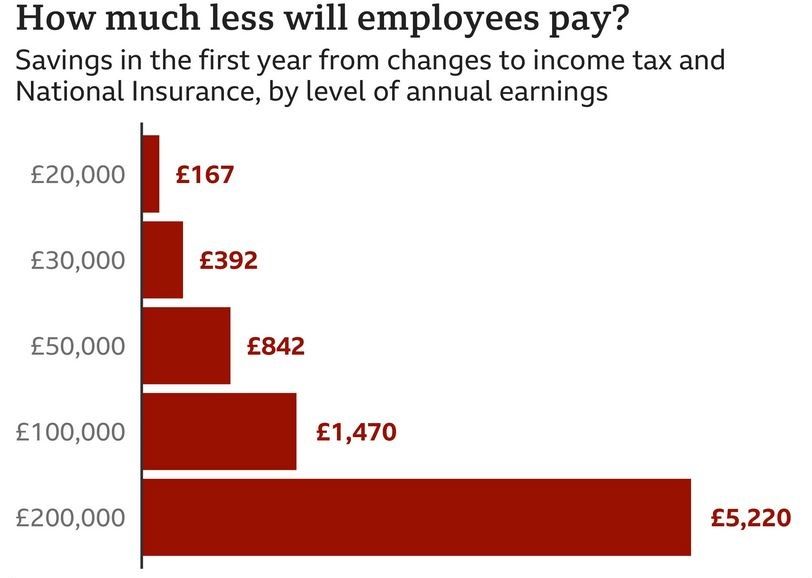
Chancellor Kwasi Kwarteng unveiled the biggest package of tax cuts in 50 years on Friday, including the scrapping of the top rate of income tax.

He also reversed the National Insurance rise from November; cut stamp duty for homebuyers; and brought forward to April a cut to the basic rate of income tax to 19p in the pound.

The measures will be paid for by a sharp rise in government borrowing amounting to tens of billions of pounds.

There was an immediate reaction in financial markets, as the pound sunk and UK stocks fell.

Speaking ahead of Labour's party conference, Ms Rayner called the plans "a very dangerous gamble on our economy and future generations".

"I don't accept the argument of trickle down economics - which is what this is - give those at the top loads more money and that will filter down to those at the bottom. That's not how it works."

She added the proposals were "grossly unfair" and would "saddle the next generation with more debt".

Arriving at the party conference in Liverpool, Labour leader Keir Starmer said the government had shown its "true colours" and the conference was "our chance to set out the alternative".

But minister Mr Philp told BBC Radio 4's Today programme: "Yesterday's tax package cut taxes for everybody across the income spectrum...

"It's a growth plan, and to get Britain growing we need to get rid of the burden of taxation. You can't tax your way to growth."

The announcements by Mr Kwarteng came after the Bank of England warned the UK may already be in a recession and raised interest rates to 2.25%.


'Betting the house'


Meanwhile, the IFS published analysis suggesting only those earning over £155,000 would see any benefits from the tax policies over the current Parliament, with the "vast majority of income tax payers paying more tax".

The think tank also said the chancellor was "betting the house" by putting government debt on an "unsustainable rising path".

IFS director Paul Johnson told BBC Breakfast: "If looked straightforwardly at people's incomes with these tax changes, the more money you have, the more you gain.

"In fact, because there was one big tax increase the chancellor didn't reverse - and that is the fall over time in the point at which you start paying income tax. If you take that into account, in three or four years' time, the only people gaining from this will be earning more than about £150,000 a year."

Responding, Mr Philp said the IFS analysis "involves speculation about what future budgets may do with the various tax thresholds".

"This wasn't a full budget - it didn't address the question of tax thresholds and I'm not going to get into speculation about what they might do in the future."

The Resolution Foundation, a think tank which focuses on those on low to middle incomes, said the package would do nothing to stop more than two million people falling below the poverty line, amid soaring living costs.

The richest 5% will see their incomes grow by 2% next year (2023-24), while the other 95% of the population will get poorer, it said.

The package will also see London and south-east England "disproportionately" better off than those living in Wales, the North East and Yorkshire, according to the think tank.

Chief executive Torsten Bell, a former Labour adviser, said: "The backdrop to yesterday's fiscal statement was an ongoing cost-of-living crisis that will mean virtually all households getting poorer next year as Britain grapples with high inflation and rising interest rates."

Elsewhere, Tony Danker, director-general of the Confederation of British Industry (CBI), told Today the measures would not "suddenly unlock growth".

"Having borrowed £150bn to support an energy package, we have to grow faster, there is no alternative."

He added: "We need a broad-based plan for growth... Action on tax is necessary but not sufficient."

On Friday Mr Kwarteng said the UK needed "a reboot", adding: "I don't think it's a gamble at all. What was a gamble, in my view, was sticking to the course we are on."


Angela Rayner: "I felt that it (the mini-budget) was casino economics"

Chief Secretary to the Treasury Chris Philp: "We are not into the politics of envy"


Newsletter

Related Articles

0:00
0:00
Close
UK Banks Pledge £11 Billion Lending Package to Help Firms Expand Overseas
Suella Braverman Defects to Reform UK, Accusing Conservatives of Betrayal on Core Policies
Melania Trump Documentary Sees Limited Box Office Traction in UK Cinemas
Meta and EssilorLuxottica Ray-Ban Smart Glasses and the Non-Consensual Public Recording Economy
WhatsApp Develops New Meta AI Features to Enhance User Control
Germany Considers Gold Reserves Amidst Rising Tensions with the U.S.
Michael Schumacher Shows Significant Improvement in Health Status
Greenland’s NATO Stress Test: Coercion, Credibility, and the New Arctic Bargaining Game
Diego Garcia and the Chagos Dispute: When Decolonization Collides With Alliance Power
Trump Claims “Total” U.S. Access to Greenland as NATO Weighs Arctic Basing Rights and Deterrence
Air France and KLM Suspend Multiple Middle East Routes as Regional Tensions Disrupt Aviation
U.S. winter storm triggers 13,000-plus flight cancellations and 160,000 power outages
Poland delays euro adoption as Domański cites $1tn economy and zloty advantage
White House: Trump warns Canada of 100% tariff if Carney finalizes China trade deal
PLA opens CMC probe of Zhang Youxia, Liu Zhenli over Xi authority and discipline violations
ICE and DHS immigration raids in Minneapolis: the use-of-force accountability crisis in mass deportation enforcement
UK’s Starmer and Trump Agree on Urgent Need to Bolster Arctic Security
Starmer Breaks Diplomatic Restraint With Firm Rebuke of Trump, Seizing Chance to Advocate for Europe
UK Finance Minister Reeves to Join Starmer on China Visit to Bolster Trade and Economic Ties
Prince Harry Says Sacrifices of NATO Forces in Afghanistan Deserve ‘Respect’ After Trump Remarks
Barron Trump Emerges as Key Remote Witness in UK Assault and Rape Trial
Nigel Farage Attended Davos 2026 Using HP Trust Delegate Pass Linked to Sasan Ghandehari
Gold Jumps More Than 8% in a Week as the Dollar Slides Amid Greenland Tariff Dispute
BlackRock Executive Rick Rieder Emerges as Leading Contender to Succeed Jerome Powell as Fed Chair
Boston Dynamics Atlas humanoid robot and LG CLOiD home robot: the platform lock-in fight to control Physical AI
United States under President Donald Trump completes withdrawal from the World Health Organization: health sovereignty versus global outbreak early-warning access
FBI and U.S. prosecutors vs Ryan Wedding’s transnational cocaine-smuggling network: the fight over witness-killing and cross-border enforcement
Trump Administration’s Iran Military Buildup and Sanctions Campaign Puts Deterrence Credibility on the Line
Apple and OpenAI Chase Screenless AI Wearables as the Post-iPhone Interface Battle Heats Up
Tech Brief: AI Compute, Chips, and Platform Power Moves Driving Today’s Market Narrative
NATO’s Stress Test Under Trump: Alliance Credibility, Burden-Sharing, and the Fight Over Strategic Territory
OpenAI’s Money Problem: Explosive Growth, Even Faster Costs, and a Race to Stay Ahead
Trump Reverses Course and Criticises UK-Mauritius Chagos Islands Agreement
Elizabeth Hurley Tells UK Court of ‘Brutal’ Invasion of Privacy in Phone Hacking Case
UK Bond Yields Climb as Report Fuels Speculation Over Andy Burnham’s Return to Parliament
America’s Venezuela Oil Grip Meets China’s Demand: Market Power, Legal Shockwaves, and the New Rules of Energy Leverage
TikTok’s U.S. Escape Plan: National Security Firewall or Political Theater With a Price Tag?
Trump’s Board of Peace: Breakthrough Diplomacy or a Hostile Takeover of Global Order?
The Greenland Gambit: Economic Genius or Political Farce?
Will AI Finally Make Blue-Collar Workers Rich—or Is This Just Elite Tech Spin?
Prince William to Make Official Visit to Saudi Arabia in February
Prince Harry Breaks Down in London Court, Says UK Tabloids Have Made Meghan Markle’s Life ‘Absolute Misery’
Malin + Goetz UK Business Enters Administration, All Stores Close
EU and UK Reject Trump’s Greenland-Linked Tariff Threats and Pledge Unified Response
UK Deepfake Crackdown Puts Intense Pressure on Musk’s Grok AI After Surge in Non-Consensual Explicit Images
Prince Harry Becomes Emotional in London Court, Invokes Memory of Princess Diana in Testimony Against UK Tabloids
UK Inflation Rises Unexpectedly but Interest Rate Cuts Still Seen as Likely
×
