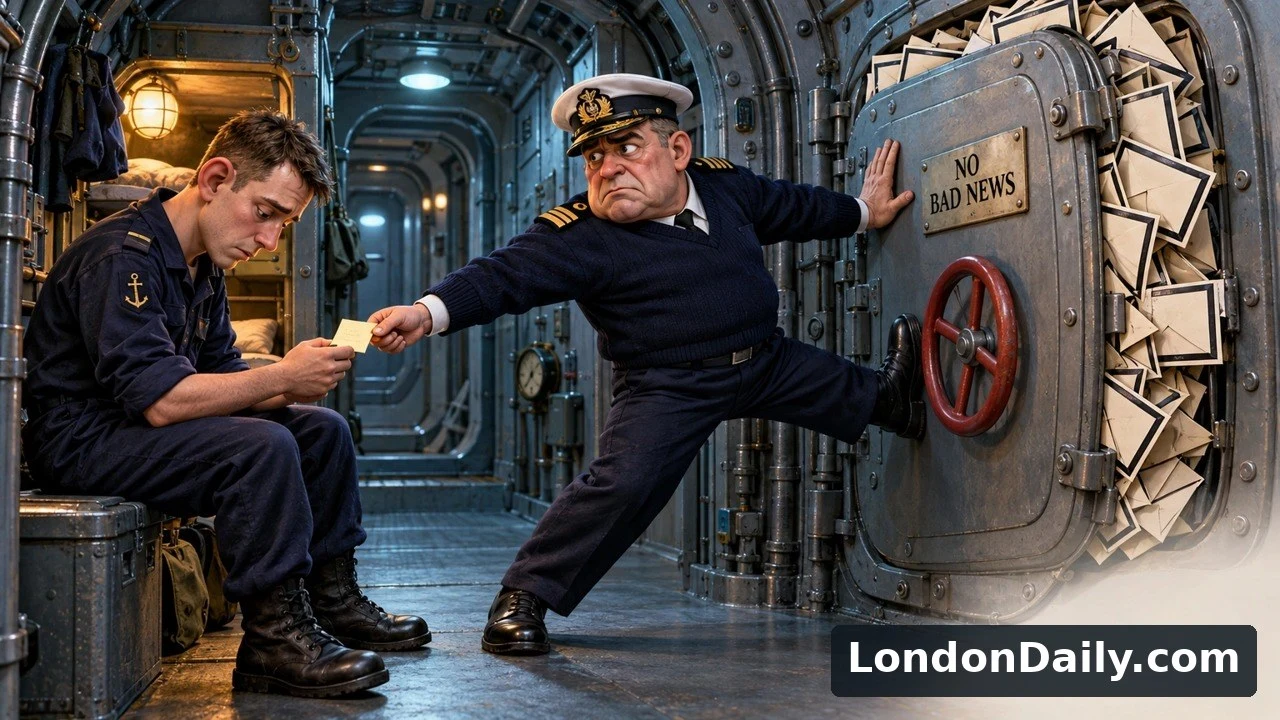
Submarine crews are kept from news of family deaths during patrols under a strict ‘no bad news’ policy, former commander Ryan Ramsey says, describing the personal sacrifices behind deployments such as HMS Vengeance’s record-breaking 217 days underwater.
Vengeance has returned to Faslane after more than seven months submerged on patrol. Ramsey, who commanded the attack submarine HMS Turbulent between November 2008 and December 2011, says his longest patrol lasted 99 days. An unexpected extension is particularly difficult: sailors and their families have prepared themselves for one period of separation, only to face another.
Staying undetected means limiting contact with the outside world. Crews can receive brief weekly messages from loved ones, but headquarters restricts their contents. Ramsey says news of a death or serious illness could distract someone who cannot be taken home for compassionate leave.
During his command, he received several messages about relatives’ deaths which he withheld until the patrol ended. He describes the burden of seeing those sailors repeatedly each day while knowing what awaited them ashore. They were generally understanding afterwards, he says, accepting that the mission came first.
Leadership also means resolving apparently small grievances before confinement magnifies them. Snoring, poor hygiene and even gloating about football results can cause friction. Only the captain had a private cabin on Turbulent, itself barely larger than a small bathroom; other sailors shared mess decks with tiny bunks.
Screening cannot reliably predict who will cope long-term, Ramsey says. One trainee became so distressed that he had to be sedated and taken off the submarine.
Routine provides structure. Sunday roasts, Friday fish and chips and Wednesday curries mark the passing week. Fresh provisions usually last six weeks, followed by dried and frozen food. Hobbies, exercise machines and storytelling help fill time; nuclear-armed submarines make no port visits.
Why Vengeance’s patrol lasted so long remains uncertain. Ramsey suspects underinvestment, arguing that repairs to the four ageing Vanguard submarines leave available crews at sea longer. He says their Dreadnought replacements were supposed to arrive in 2022 but may not come until the 2030s; his explanation does not establish the cause of this deployment’s length.
Returning home brings its own adjustment. Ramsey recalls misreading his wife’s invitation to shop for dinner as a request for practical help rather than companionship. Yet the relationships formed aboard endure: although he left the Navy in 2014, he still considers himself part of the ‘submarine family’.








Join the conversation