London Daily

Focus on the big picture.
Monday, Apr 06, 2026

Scientists believe they have discovered where asteroid which wiped out dinosaurs came from

Scientists believe they have discovered where asteroid which wiped out dinosaurs came from

A "sungrazed" comet may be responsible for the extinction event around 66 million years ago.

Scientists think they may be a step closer to understanding where the asteroid or comet that wiped out the dinosaurs came from.

The Chicxulub impactor smashed into the earth off the eastern shore of what is now Mexico, leaving a crater 100 miles across and 12 miles deep.

It ended the reign of the dinosaurs - taking out three quarters of plant and animal life with them - about 66 million years ago.
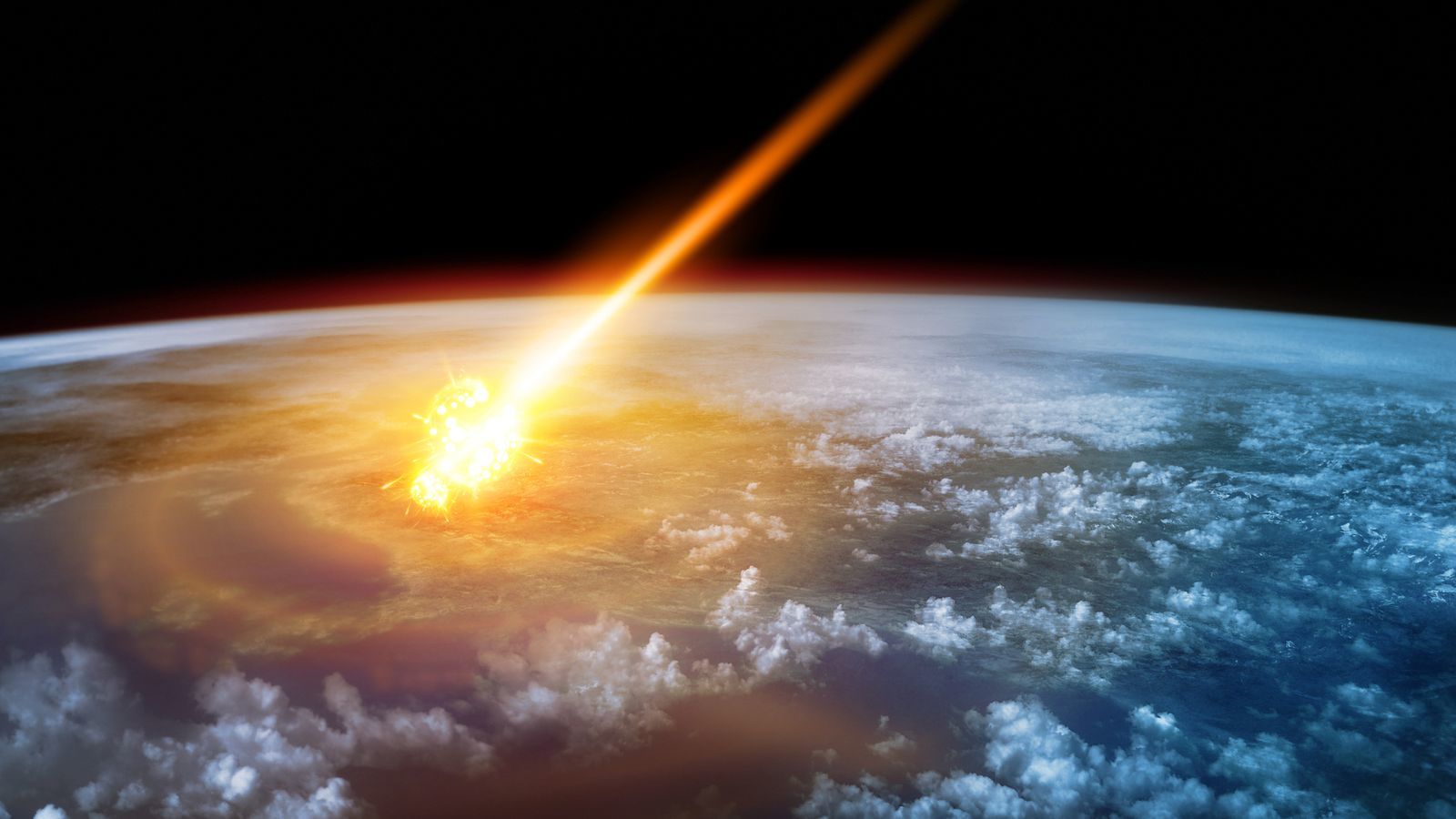
Three quarters of animal and plant life was taken out by the impact


Experts from Harvard University in the US believe they have figured out how such a large chunk of extra terrestrial rock ended up spelling death for the giant reptiles.

The gravity of the massive planet Jupiter draws comets from the icy outer edges of the solar system and hurtles them inwards, towards the sun.

As the comets slingshot around the sun, the gravitational power of the star breaks apart the cosmic missile.

The resulting shards fly across the solar system - increasing the chance of a collision with planets like Earth.

Undergraduate student Amir Siraj explained: "The solar system acts as a kind of pinball machine.

"Jupiter, the most massive planet, kicks incoming long-period comets into orbits that bring them very close to the sun."

Long-period comets take at least 200 years to orbit the sun, and come from a region of the solar system known as the Oort cloud.

The cloud is thought to exist between 2,000 and 100,000 astronomical units away from the sun - each astronomical unit is the average distance between the Earth and the sun, or about 93 million miles.

The shattering of the comets is known as "sungrazing".

Mr Siraj added: "In a sungrazing event, the portion of the comet closer to the sun feels a stronger gravitational pull than the part that is further, resulting in a tidal force across the object.

"You can get what's called a tidal disruption event, in which a large comet breaks up into many
smaller pieces.

"And crucially, on the journey back to the Oort cloud, there's an enhanced probability that one of these fragments hit the Earth."

Astronomer Avi Loeb said: "Our paper provides a basis for explaining the occurrence of this event.

"We are suggesting that, in fact, if you break up an object as it comes close to the sun, it could give rise to the appropriate event rate and also the kind of impact that killed the dinosaurs."
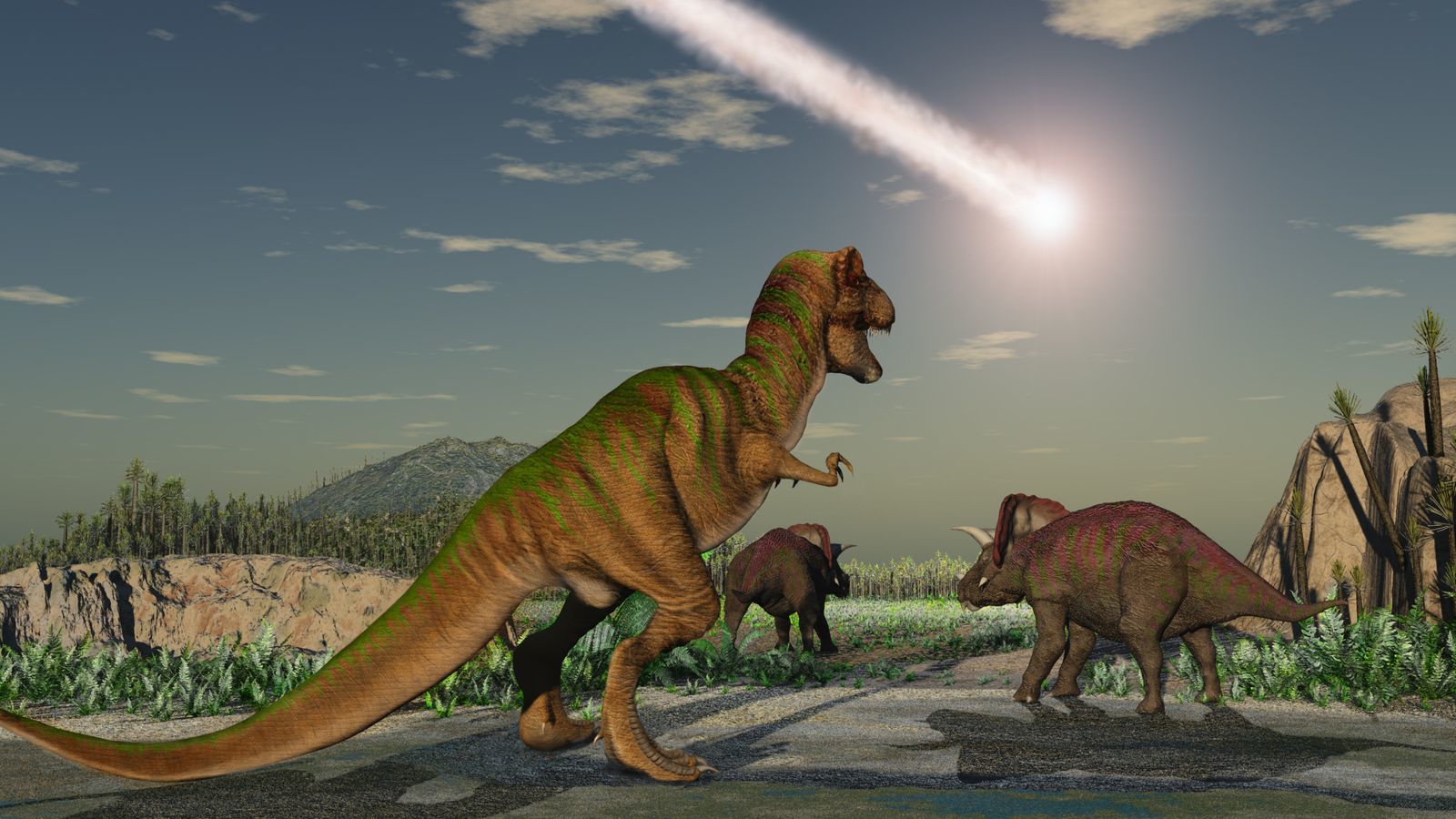
The comet struck around 66 million years ago


The paper, published in Nature's Scientific Reports, shows new calculations which increase the likelihood of a long-period comet striking the Earth by a factor of 10.

It also suggests that the carbonaceous chondrite material the dinosaur-killing comet was made of is more commonly found in the Oort cloud - something which the pair hope to study more.

Newsletter

Related Articles

0:00
0:00
Close
UK Considers Deploying Aircraft Carrier for US Independence Day Celebrations Amid Renewed Transatlantic Focus
United Kingdom Moves to Attract AI Firm Anthropic Amid Tensions with US Defense Officials
RAF Intercepts Iranian Drones in Middle East to Defend Allied Security Interests
Labour Signals Shift on Foie Gras and Fur Restrictions to Advance EU Trade Talks
Seven Arrested Near RAF Base as UK Authorities Respond to Protest Activity
Economic Pressures Mount as Analysts Warn UK Growth Is Being Constrained by Policy Burdens
UK Green Party’s Push for Church-State Separation Sparks Debate Over National Identity
Strategic Island Emerges as Growing Challenge for United States and United Kingdom Defense Planning
Pepsi Pulls Sponsorship from UK Festival Following Backlash Linked to Kanye West
Signs Emerge of Declining Enthusiasm for Social Media in the United Kingdom
Security Alert Raised Ahead of Meghan Markle’s Planned Visit to Australia
UK Food Halls Defy Hospitality Slowdown, Emerging as Bright Spot in Challenging Market
UK Sets Firm Conditions for Military Action, Insisting on Legal Mandate and Clear Strategy
UK Medicines Regulator Launches Probe into Peptide Clinics Over Health Claims
New North Sea Drilling Unlikely to Significantly Cut UK Gas Imports, Analysis Finds
Woman Linked to UK’s First All-Female Terror Plot Faces Deportation
Downed US Aircraft Over Iran Linked to Operations from UK Airfield
Two Men and Teen Detained in UK Following Attack on Jewish Charity Ambulance
UK Police Launch Inquiry After Firearms Left Unattended Outside Mayor’s Residence
Giuffre Family Calls on King Charles to Meet Epstein Survivors During US Visit
Amber Wind Warning Issued as Storm Dave Approaches Parts of the United Kingdom
Prince Harry and Meghan’s Australia Visit Set to Draw Heightened Global Attention
UK Considers Entry Fees for Overseas Visitors at Major Museums Ahead of 2026 Travel Season
UK Prime Minister and Kuwait Crown Prince Coordinate Security Response After Regional Escalation
Calls Grow to Expand Fully Paid Maternity Leave for UK Teachers Amid Workforce Pressures
UK Secures Tariff-Free Access to US Market in Landmark Pharmaceuticals Agreement
Trump Projects Strength in Critique of UK Leadership and Naval Readiness
UK FinTech Setback as VibePay and Smartlayer Cease Operations Amid Funding Pressures
UK Leads Global Coalition of Over Forty Nations to Address Strait of Hormuz Crisis
UK Firms Urged to Accelerate Preparation as New Sustainability Reporting Rules Take Shape
UK Moves Rapid Sentry Air Defence System to Kuwait After Drone Strike Escalation
Transatlantic Relations Tested as UK Seeks Balance While Trump Reshapes Strategic Approach
Trump’s Strategic Pressure on UK Seen as Push for Stronger Alignment and Fairer Terms
UK Focuses on Trade Finance to Secure Critical Materials for Defence and Energy Sectors
Majority of UK Businesses Hit by Middle East Conflict While Confidence Holds Firm
UK Royal Navy Faces Renewed Scrutiny as Debate Intensifies Over Capability and Readiness
Reform UK Faces Mounting Distractions as Policy Agenda Struggles to Gain Traction
Investigation Launched Into Northern Cyprus IVF Clinics After UK Families Receive Incorrect Sperm
International Meeting Issues Unified Call to Safeguard Navigation Through Strait of Hormuz
Potential Strait of Hormuz Closure Raises Concerns Over UK Food and Medicine Supply Chains
UK Leads Coalition of Over Forty Nations Urging Iran to Reopen Strait of Hormuz
UK Secures Tariff-Free Access for Medicines in Landmark US Pharma Trade Agreement
King Charles III Invited to Address Joint Session of U.S. Congress in Rare Diplomatic Honor
Debate Grows Over Whether Expanded North Sea Drilling Can Reduce UK Energy Bills
UK Faces Heightened Risk of Jet Fuel Shortages, Airline Chief Warns
UK Ends Police Investigations into Lawful Social Media Posts After Review Finds Overreach
Abramovich Moves to Establish Charity for Frozen Chelsea Sale Proceeds Amid UK Dispute
Starmer Reaffirms NATO Commitment While Responding to Trump’s Strategic Critique
UK Aid Reductions Raise Fears of Severe Human Impact Across Parts of Africa
UK Signals Renewed Push for EU Cooperation as Iran Conflict Reshapes Security Landscape
×