London Daily

Focus on the big picture.
Wednesday, Aug 05, 2026

Rwanda deal: Migrants in Calais say they'll still try to cross to UK

Rwanda deal: Migrants in Calais say they'll still try to cross to UK

Five weeks after the UK announced a deal with Rwanda to resettle undocumented migrants who arrive on British shores, the mood among migrants in Calais has shifted.

"Before, people were all afraid," Hassan told me, at an aid distribution site near Calais. "But now they're not. They think they must get to the UK."

Hassan isn't easily deterred. Thirty years old, from the Sudanese region of Darfur, he limped from his camp to the distribution point where I met him, leaning on a walking stick. After living for three years in the French city with chronic back injuries, he was still determined to make it across the Channel.

I asked what he would do if the UK sent him to Rwanda instead.

"My life would be finished," he told me. "My life would be over. It would be like killing me slowly. Everyone knows what Rwanda was before. It doesn't have human rights. Migrants are not welcome there."

An aid worker estimates 10-15% of migrants have been put off by the new policy


At a camp table nearby, Mohammed - also from Sudan - slammed dominos down in a lively four-way game with fellow migrants. Mohammed usually plays for higher stakes, hiding in lorries bound for the UK.

If he found himself one day resettled in Rwanda, he said, he would come straight back to Calais, and try to cross the Channel again.

Only one of those I spoke to here said the new UK policy had changed his plans.

Aid agencies say there is a great deal of worry over the policy, but that the majority of migrants living here have not abandoned their bid to reach the UK - often because they have family ties or job opportunities there.

Some non-African migrants reportedly believe the resettlement policy won't apply to them; others see it as a scare tactic that won't be implemented at all.

One aid worker estimated the number of people deterred by the resettlement policy to be 10-15%.
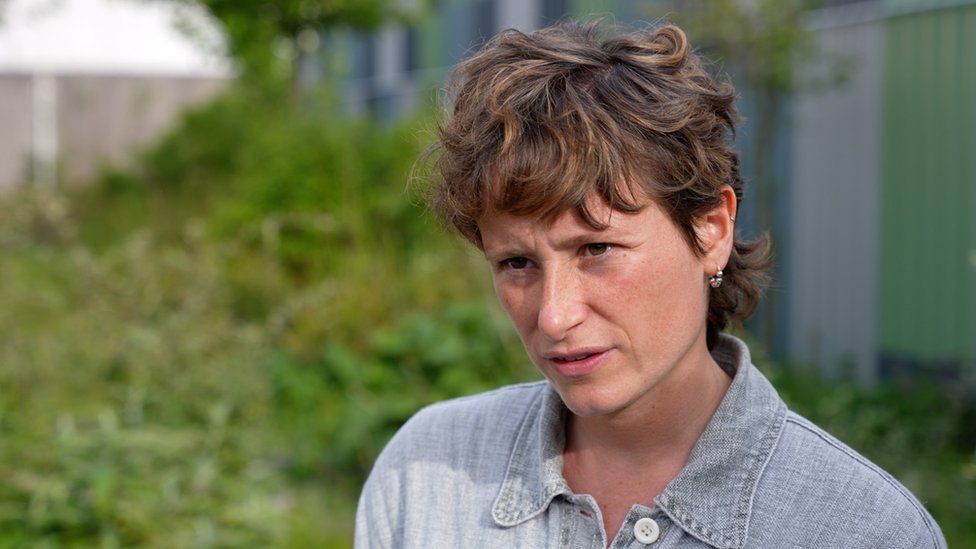
Juliette Delaplace from the Secours Catholique charity says some people are now claiming asylum in France


Juliette Delaplace, from the Christian charity Secours Catholique, said the uncertainty was pushing some people to leave Calais for a few weeks or months, to see how the situation evolves.

"We've seen people claiming asylum in [France]," she told me, "because they're not sure what will happen to them once they reach the UK."

The number of people living in camps around Calais has fallen, but it's hard to tell whether that's linked to the resettlement policy, or to tougher tactics by French police to break up migrant camps.
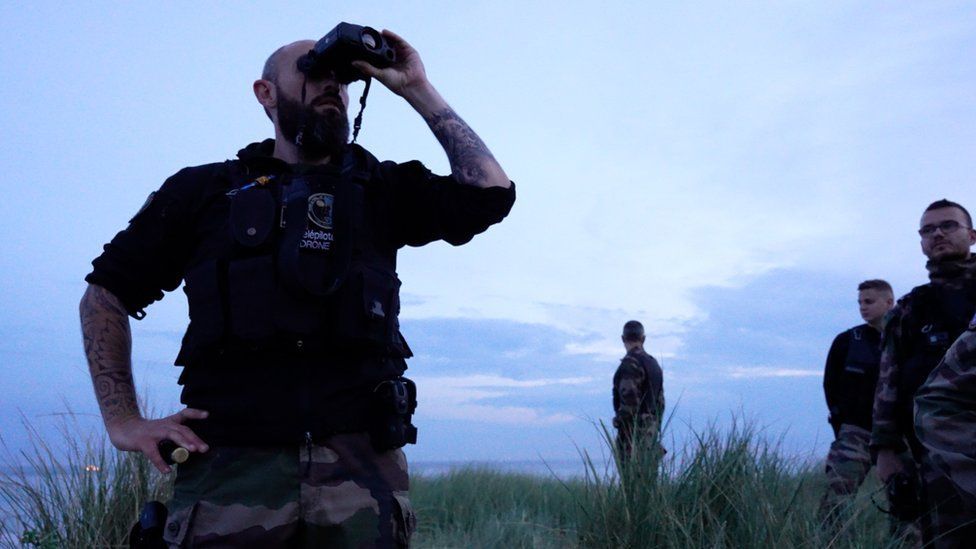
French gendarmes patrol the coastline on the English Channel trying to stop illegal crossings


And as security around Calais and Dunkirk has improved, many smuggling networks - and their customers - have simply moved further down the coast.

The regional gendarme commander, Gen Franz Tavart, has said for years that the length of this coastline, and the lure of the UK, means that policing alone will never be enough to stop the crossings.

So, on a dune overlooking France's northern beaches at dawn, I asked him whether the threat of resettlement in Rwanda had made any impact over the past five weeks.

"It's still a little early to measure the impact," he said. "Decisions have been made with Rwanda, but regardless of the announcement, I think smugglers will watch to see if this measure is actually implemented - that's what might dissuade them, and therefore the migrants, from continuing to try their luck in the UK."

More than 600 people crossed this water successfully last weekend. More have followed since then.

It's early days, but for most migrants here, ready to gamble with their lives to reach the UK, resettlement is just one more risk.


Newsletter

Related Articles

0:00
0:00
Close
Spain and Morocco Trade Blame After 72,000 Migrants Enter Ceuta
Met Police Investigated Journalist Who Questioned Cambridge Professor
Badenoch Defends Tory Candidate Jailed for Antisemitic Abuse of Luciana Berger
NHS Spends £240m a Year Storing Paper Records Despite Digital Push
Apple Seeks Court Order to Stop OpenAI Using Alleged Trade Secrets
Breaking With the Past: One of the World’s Smallest Countries Changes Its Name
AI Is Remaking the US Economy, From GDP Growth to iPhone Prices
Comcast: Tied to a Chair and Hit in the Face With Cake: The Regular Humiliation Ritual at the US Corporate Giant
Aston Martin Faces Legal Threat Over £550m Rescue Deal
Conservative Party and Reform UK Face Growing Scrutiny Over Political Transparency
GMB and Public Sector Unions Prepare for Wider Debate Over Government Priorities
UK Government Faces Pressure to Address National Water Infrastructure Failures
NHS Radiographers Report Rising Racist Abuse From Patients
Breast Cancer Experts Call for Overhaul of NHS Diagnostic Approach
UK Government Reviews Prison Policy After Debate Over Capacity and Public Safety
Nigel Farage Faces Questions Over Leadership Discussions and Five Million Pound Donation
Conservative Party Faces Candidate Controversy Over Former Antisemitic Activist
UK Energy Industry Pushes for Greater Role for Domestic Oil and Gas Production
Gatwick Expansion Debate Continues as Airport Prepares for Second Runway Construction
Reform UK Wants the Royal Navy to Return Channel Boats to France
Government Faces Pressure Over Charity Funding Linked to Illegal Israeli Settlements
UK Fire Chiefs Demand Ban on Disposable Barbecues During Severe Drought
Medical Review Warns Current Breast Cancer Guidelines Miss Many Young Women
NHS Mental Health Trust Announces Twenty-Five Million Pound Service Cuts
MI6 Rated Europe’s Most Capable Foreign Intelligence Service in International Review
UK Watchdog Finds Serious Failures in Electronic Offender Monitoring System
BP Chief Warns UK Must Protect Domestic Oil and Gas Capacity
Water Supply Crisis Threatens England’s Housing Expansion Plans
UK Government Rewrites Procurement Rules to Prioritise Jobs Over Environmental Targets
English Channel Rescue Operation Saves One Hundred Seventy-Three Migrants After Boat Capsizes
Gatwick Airport Wins Legal Approval for Second Runway Expansion
UK Government Tightens Early Prison Release Scheme After Public Backlash Over Offender Freedoms
US and Japan Step In to Support the Yen in Rare Joint Intervention
The AI Pricing Problem: Companies Cannot Predict Their Own Bills
Europe’s Heat and Drought Are Now Disrupting Power, Shipping and Tourism
Apple’s OpenAI Lawsuit Becomes a Public Fight Over AI Hardware
UK Man Jailed After Keeping His Mother’s Body in a Freezer and Claiming £78,000
A SpaceX Rocket Is About to Crash Into the Moon — and Scientists Hope to Watch
World War II munitions discovered after wildfires in southern France
BP profits reach four-year high amid Middle East conflict
Europe’s Drying Rivers Trigger Power Cuts, Factory Shutdowns and Wildfire Emergencies
UK Driver Sentenced to Four Years for Staged Electric Vehicle Brake Failure Fraud
Conservative Party and Reform UK Face Scrutiny During Clacton By-Election Campaign
Ministry of Justice Reviews Early Release Rules After Public Anger Over Police Killer Cases
NHS Radiographers Report Rising Racist Abuse From Patients Across UK Hospitals
UK Banking Regulators Face Pressure After Customer Loses Fourteen Thousand Pounds in AI Voice Scam
Research Challenges Treasury Control Over UK Public Spending and Calls for Greater Local Decision-Making
Home Office Begins Four-Week Weapons Surrender Campaign Across Major English Cities
Southern England Records Driest July in Nearly Two Centuries as Drought Concerns Grow
Apple Challenges UK Government Request for Access to Encrypted User Data in Legal Fight
×