London Daily

Focus on the big picture.
Wednesday, Jun 24, 2026

Retail sales plunge as consumer confidence 'nears financial crisis all-time low'

Retail sales plunge as consumer confidence 'nears financial crisis all-time low'

The data, coupled with a closely-watched reading of consumer confidence, prompts a dive in the value of the pound and places the Bank of England in a tricky position as it decides whether to hike interest rates for a fourth consecutive time.

The pound has fallen sharply after several pieces of data raised fears of a slump ahead for UK economic growth, driven by surging inflation.

The market mood turned ugly when the Office for National Statistics (ONS) reported a 1.4% monthly decline in retail sales in March, led by a big drop in demand for online purchases.

There was little sign for optimism among retailers, except for the owners of garden centres and DIY shops, though the data did suggest that COVID-weary consumers shifted discretionary spending towards hospitality and attractions instead as the weather improved.

Economists had expected a 0.3% decline in sales month-on-month - and sterling dived by more than 1.5 cents against the dollar, to an 18-month low of $1.28, as investors fretted over the prospects for economic growth ahead.
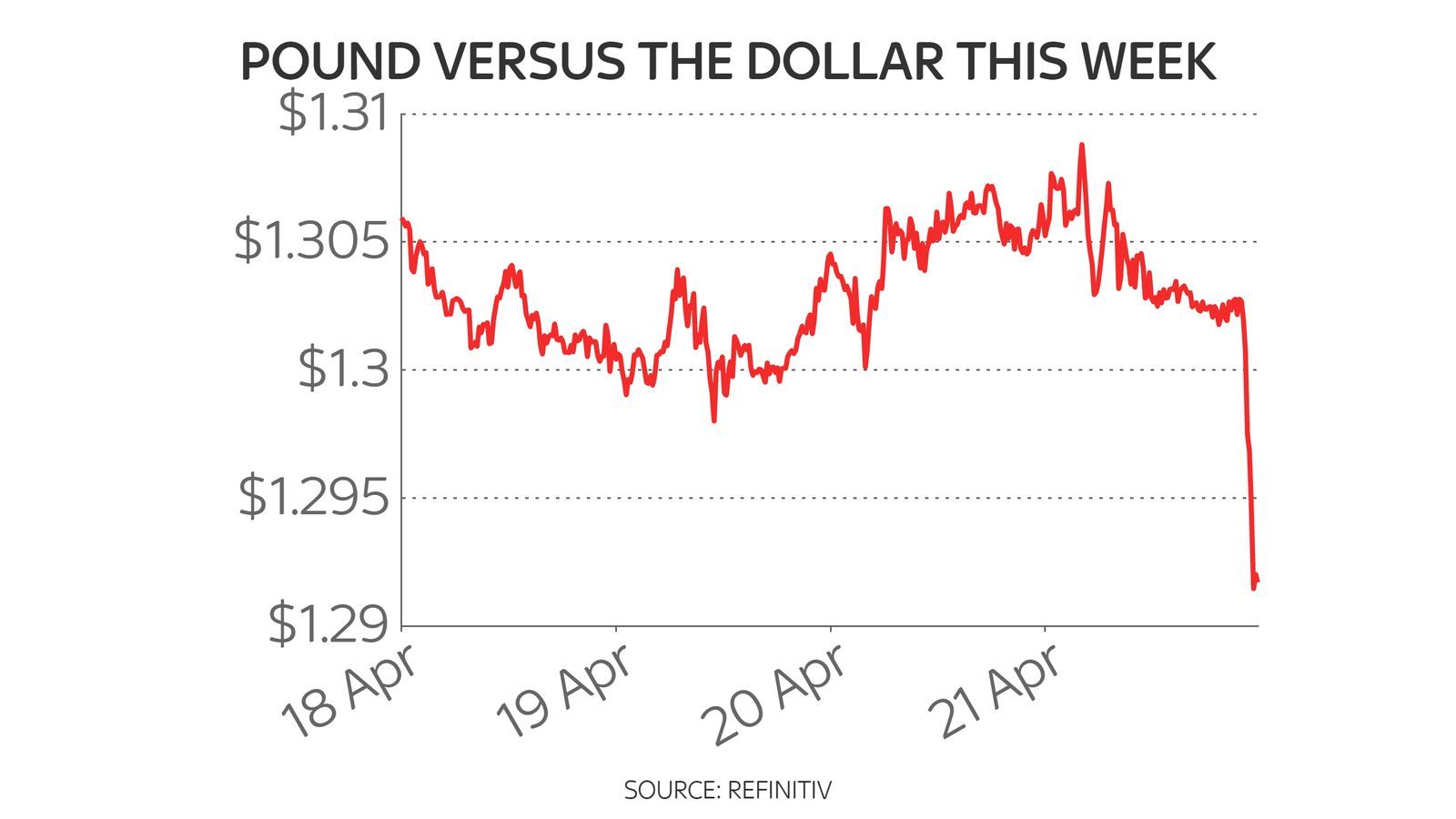

The UK currency was also more than one cent off against the euro.

Adding to the gloom was data from a survey of purchasing managers showing the slowest rise in private sector output for three months in April - with record inflationary pressures and war in Ukraine hitting demand.

A closely-watched measure of consumer confidence, also covering April, delivered its second-lowest reading since records began nearly 50 years ago.

It suggests that consumer spending, the biggest contributor to the UK's GDP, is at risk of being choked off as families fret over rising bills for everyday goods and services.

ONS Director of Economic Statistics Darren Morgan said of the retails sales data: "Retail sales fell back notably in March with rises in the cost of living hitting consumers' spending.

"Online sales were hit particularly hard due to lower levels of discretionary spending.

"Fuel sales also fell substantially, with evidence suggesting some people reduced non-essential journeys, following record high petrol prices, while food sales continued to fall, dropping for the fifth consecutive month."

It all makes for worrying reading at the Bank of England.

The GfK consumer confidence index, derived from a survey, came in at -38 - worse than economists had expected and just shy of the all-time low seen in 2008 as the global financial crisis was gathering pace.

The responses were registered at a time when we learned that inflation had hit a 30-year high of 7%.

It is forecast by the Office for Budget Responsibility to climb above 9% after the unprecedented surge in the energy price cap in April - and rises in other household bills such as mobile, water and broadband are reflected in the calculations.

The price cap is currently expected to rise further - by up to £500 - in October when the additional effects of Russia's invasion of Ukraine are included, while the retail sector expects price rises to intensify throughout 2022.

GfK reported a sharp decrease in consumers' intentions to make major purchases.

All the data will be taken into account by rate-setters at the Bank, who have signalled more caution on rising rates ahead after lifting Bank rate to 0.75% at their last meeting.

They will be anxious not to choke off economic growth through rising interest rates, which are intended to stop rising inflation expectations, such as wage hikes, rather than rising prices as the inflation has been caused by factors outside their control including energy and food costs.

Inflation, while not demand-led, is nevertheless proving more sticky and persistent than policymakers had expected and financial markets still forecast a 0.25% rate hike at the next meeting of the monetary policy committee in two weeks' time.

That is because the inflationary fires have been stoked by Russia's war against Ukraine.

However, Bank governor Andrew Bailey admitted on Thursday that policymakers were walking a tight line between tackling inflation and avoiding recession.

That is because raising borrowing costs to help ease inflationary pressures could prove counterproductive with millions of mortgage holders - those on tracker or standard variable deals - already paying more.

Russ Mould, investment director at AJ Bell, said of the situation: "The ONS' retail sales data is a wake-up call that life is going to be tough for shops - virtual or physical - in the coming months.

"Once those vastly increased energy bills hit the doormat and households take time to reassess their financial situation, there is every chance that retail sales could get even worse," he wrote.


Newsletter

Related Articles

0:00
0:00
Close
UK Announces New Military Infrastructure at Catterick to Support Engineer Regiment Relocation
University of Reading Ranked Among Top 100 Globally for Sustainability Impact
UK Launches Counter-Fraud Taskforce to Investigate Covid Loan Scams
UK Government Introduces Customs and Tax Reforms to Support High Street Retailers
Jonathan Haskel Nominated as Chair of the UK Office for Budget Responsibility
UK Government Expands Powers to Recover Benefit Debt and Tackle Welfare Fraud
Labour Party Leadership Contest Intensifies as Andy Burnham and Ed Miliband Clash Over Economic Direction
Rail Operators Urge Essential Travel Only as Extreme Heat Threatens UK Network Stability
United Kingdom Issues Red Extreme Heat Warning as Temperatures Forecast to Reach 38°C
Keir Starmer Announces Resignation as UK Prime Minister Amid Deepening Political Instability
UK Biotechnology Sector Receives Increased Public Funding to Support Regional Growth
Police Chiefs Update National Protest Management Guidelines Amid Rising Demonstration Activity
UK Aviation Regulator Expands Support for Regional Airports to Strengthen Domestic Routes
CMA Launches Investigation Into Retail Pricing Across UK Grocery Sector
UK Energy Operator Warns of Winter Supply Pressures Despite Stable Overall Grid Outlook
UK Research Council Expands Funding for Regional Biotechnology and Life Sciences Clusters
UK Compensation Scheme for Post Office Horizon Scandal Reaches 80 Percent Completion
Police Chiefs Issue Updated National Guidance on Managing Large Public Demonstrations
UK Expands Regional Airport Funding Scheme to Boost Domestic Connectivity
UK Competition Watchdog Launches Inquiry Into Grocery Pricing Practices
National Grid Warns of Tight Energy Management Needs During Upcoming Winter Peak Demand
UK Education Department Introduces National Standards for AI Use in Secondary Schools
UK High Court Clears North Sea Carbon Capture Project After Final Legal Challenge Fails
Northern Ireland Leaders Hold Emergency Talks on Trade Disruption Under Windsor Framework
Welsh Government Moves to Expand Social Housing in Response to Severe Affordability Pressures
UK Economy Sees Unexpected Rise in Business Investment in Second Quarter, ONS Data Shows
Scottish Government Unveils Multi-Billion Pound Investment Plan for Renewable Energy and Grid Expansion
UK and EU Agree Enhanced Defence Cooperation Pact Covering Intelligence and North Sea Security
Prime Minister Orders Independent Review of NHS Performance After Record Waiting Lists
Bank of England Holds Interest Rates at 5 Percent as Services Inflation Remains Persistent
UK Heatwave Disrupts Transport, Healthcare and Public Services as Red Weather Alerts Expand Nationwide
Barclays Warns of Growing Cyber Risk Divide Between Large UK Firms and Micro Businesses
European Defence Plans Including Ukraine Integration Prompt UK Strategic Reassessment
UK Equity Markets React as US–Iran Peace Roadmap Eases Oil Price Pressures
United Kingdom Expands Global Clean Energy Partnerships With Brazil, Morocco and Tanzania
Lord David Frost Urges Incoming UK Leadership to Abandon EU Regulatory Reset Strategy
Housing Groups Support Amendment to Strengthen Fire and Gas Safety Access Powers in Social Housing
South London NHS Estates Staff Ballot on Industrial Action Over Pay Structures in Hospital Maintenance Services
United Kingdom Government Invests £60 Million in AI Research Labs at Oxford and University College London
Barclays Cyber Security Report Highlights Rising Threat Exposure Among UK Small Businesses in AI-Driven Attacks
UK Met Office Heatwave Triggers Transport Warnings as Rail Operators Urge Cancellations Amid Infrastructure Strain
South London NHS Estates Workers Ballot for Strike Action Over Pay Disputes Across Major London Hospitals
Barclays Warns of Severe Cyber Security Gap Between Large Corporations and Small Businesses in the United Kingdom
United Kingdom Government Allocates £60 Million for Artificial Intelligence Research Laboratories at Oxford and UCL
National Health Service Approves Teplizumab Treatment to Delay Onset of Type One Diabetes in First European Rollout
Met Office Issues Rare Red Extreme Heat Warning Across London, South East and West Midlands as Transport and Health Systems Face Disruption
Prime Minister Keir Starmer Resigns After Labour Party Revolt Following Economic Stagnation and Local Election Losses
United Kingdom Economy Contracts for Second Consecutive Month as Private Sector Weakens and Job Loss Fears Rise
Taxpayer Support Grows for Higher Digital Levies on Multinational Tech Companies
Bank of England Signals Caution Over Inflation Despite Easing Energy Prices
×