London Daily

Focus on the big picture.
Friday, Jun 12, 2026

Residents struggle to flee quake-hit Turkish city of Gaziantep

Residents struggle to flee quake-hit Turkish city of Gaziantep

People who are stuck in the province take refuge in shopping malls, stadiums, mosques and community centres.


After a series of earthquakes and aftershocks in Turkey and Syria, many tried to flee the devastated city of Gaziantep, located about 33km (20 miles) from the epicentre.

With the airport and many roads outside the city blocked, those who were unable to leave took refuge on Tuesday in shopping malls, stadiums, mosques and community centres.

“When I thought of leaving the city, it was already too late,” 25-year-old Yunus Koser told Al Jazeera. Koser, who took shelter in Sih Fetullah square with his mother and brother, was working a night shift in the Ibrahimli neighbourhood – one of the city’s most affected areas – when the first earthquake hit early on Monday.

He said he immediately ran home through the chaos that had overtaken the streets, only to find that his house’s walls were damaged. When the second earthquake hit, Koser feared that his home was no longer safe.

“So, we preferred to camp in the open air, with dozens of other families,” he said.

“Sitting next to each other, around a fire, makes the situation slightly more bearable, more humane.”
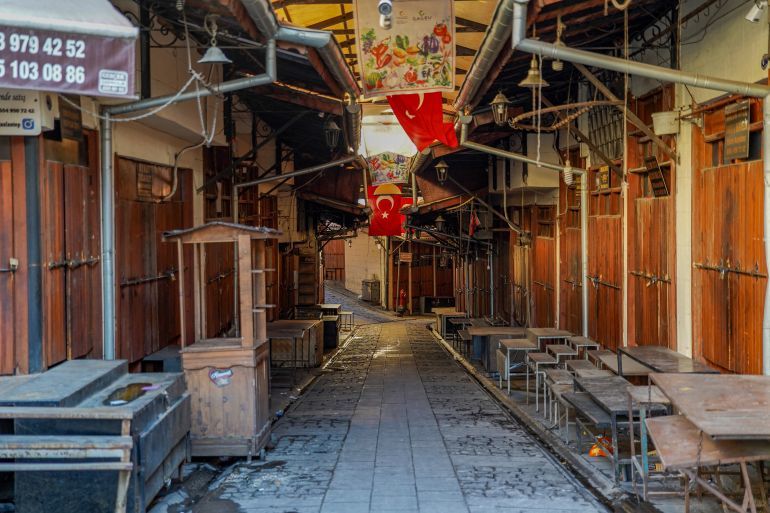
The city has become a ghost town following the disaster


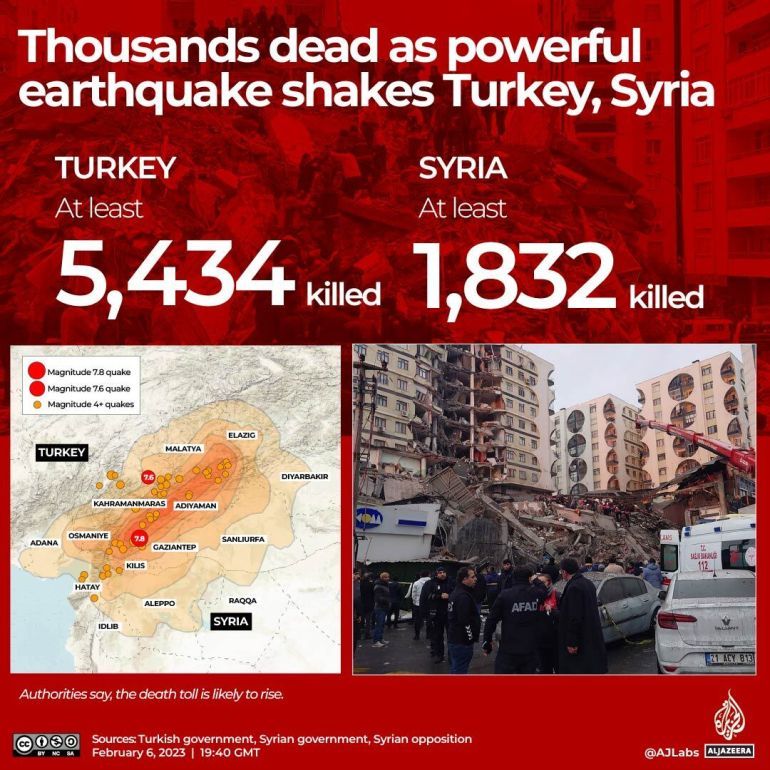
A day after the earthquakes shook southeastern Turkey and northwestern Syria, killing thousands, rescue operations were under way.

The death toll surpassed 7,000 late on Tuesday and is expected to continue to rise. Many in need are still isolated due to frigid temperatures and blocked roads, preventing rescue teams from reaching the affected areas.


‘As far as possible’


Mariia Honcharuk, 24, a Ukrainian refugee living in Gaziantep, said that she was still trying to leave the city.

“We are trying to go as far as possible until the situation calms down,” she said.

On Monday, Honcharuk quickly packed a few clothes in a bag and hopped on the first bus to Antalya, but the bus station was full of people trying to escape the city.

When she finally managed to get a ticket, she got stuck on the road to Adana. “We had to take another road because the main one was blocked, so it took much more time than usual,” Honcharuk said.

“Then, we were just waiting in a traffic jam the whole night and morning in Nurdagi [the epicentre of the earthquake], and we had to find an alternative way south.”

Yahaya Hassan Labaran, a Nigerian civil engineering PhD student at Gaziantep University, said that foreign students living alone have been panic-struck by the disaster.

“When the earthquake happened, they told us to leave our dormitory immediately, without knowing if we would go back,” Labaran said, adding that being stuck in a temporary shelter with hundreds of other people, with limited food and water, was emotionally draining.

“I even left my passport in the building. I’ve been trying to recollect it, because I want to reach my home country, but security won’t let me inside. I just want to go back home, I have never seen a disaster like this.”

Experts feard that Monday’s earthquakes could compound the loss of the region’s cultural legacy – Turkey’s government has said more than 5,600 buildings in Turkey have been destroyed. On Tuesday, UNESCO warned that several World Heritage Sites, identified by the United Nations agency for their cultural, historical, scientific and other forms of significance, might have been damaged.

After the first earthquake, Emad al-Mustafa jumped in his car with his wife and four children. Although his house, located near Sanko Park, was not damaged by the quake, he no longer believed it is safe to be there.

“When we realised there was no water, no electricity, no safety in our building, we decided to go,” al-Mustafa said by telephone as he travelled to Eskisehir, a city far away from the damaged areas. “But I wish I hadn’t taken that car journey. What we saw along the way was just rubbles and complete devastation, like an apocalypse movie.”

Newsletter

Related Articles

0:00
0:00
Close
NHS Trust Secures Funding for AI Tool to Detect Heart Failure Earlier
Government Unveils £4.5 Billion Investment Plan for Walking and Cycling Infrastructure
Nationwide Reports UK House Prices Falling as Borrowing Costs Remain Elevated
Centre for Social Justice Says Two Million Britons Are Using Illegal Loan Sharks
UK Carmakers Warn EU Local Content Rules Could Damage British Manufacturing
UK Government Imposes Emergency Ban on Seven Potent Synthetic Opioids
Royal Navy Completes Major North Atlantic Anti-Submarine Exercise Off Norway
NHS Figures Show Nearly 3,000 Patients a Day Receiving Care in Hospital Corridors
CBI Cuts UK Growth Forecast as Middle East Tensions Drive Inflation Risks Higher
Dan Jarvis Appointed UK Defence Secretary Following Major Government Reshuffle
University College London Study Links Physical Punishment to Higher Risk of Bullying
East Midlands Railway Unveils First Refurbished Train in £60 Million Modernization Programme
RNLI Issues National Water Safety Appeal Ahead of Expected Heatwave
Climate Change Raises Subsidence Risks for Millions of Homes Across Southeast England
Manchester Advances Plans for Underground Piccadilly Station With £1 Million Funding Commitment
Anti-Immigration Violence Continues in Belfast Amid Heightened Security Concerns
UK Law Locks Great British Railways Into Public Ownership
Office for National Statistics Adopts Supermarket Checkout Data for Inflation Measurement
Applied Atomics Launches With $500 Million Space Infrastructure Order Book
BYD Plans Nationwide Rollout of Ultra-Fast EV Charging Network
UK House Prices Unexpectedly Fall in May
CBI Warns UK Growth Is Becoming Increasingly Dependent on Public Spending
Makerfield By-Election Fuels Speculation Over Labour’s Future Leadership
Britain Declines to Join EU SAFE Defence Fund
UK Unveils 2040 Emissions Target Despite Strong Political Opposition
Government Orders Full Review of Palantir’s NHS Data Contract
UK Borrowing Costs Climb as Markets Price in Further Bank of England Rate Rises
Resident Doctors Confirm Five-Day NHS Strike Across England
Violent Anti-Immigrant Riots in Belfast Spark Political and Diplomatic Tensions
United Kingdom Sees Recovery in Horizon Europe Research Funding Share to 9.3 Percent
UK Inflation Holds at 2.8 Percent as Office for Budget Responsibility Flags Persistent Price Pressures
United Kingdom Launches National Anti-Fraud Framework to Combat Rising Pension Scam Losses
United Kingdom Expands Sanctions on Israeli Groups While Funding Palestinian Authority Salaries and Gaza Mine Clearance
United Kingdom Issues Three-Month Ultimatum to Major Technology Firms Over Child Online Safety Controls
United Kingdom Government Moves Toward Blanket Social Media Ban for Children Under Sixteen
Widespread Anti-Immigration Rioting Erupts Across Belfast After Knife Attack Linked to Asylum Seeker
Farmers Warn of Crop Losses Following Months of Unseasonal Rainfall
Civil Aviation Authority Launches Review of Regional Airport Operations
Met Office Issues Heat-Health Alert Across Parts of England
National Grid Introduces New Measures to Protect Winter Energy Supply
Northern England Rail Upgrades Receive Additional Government Funding
Wales Advances Green Hydrogen Strategy to Decarbonize Heavy Industry
UK Expands Recruitment Incentives to Address Shortage of STEM Teachers
High Court Opens Door to Climate Liability Claims Against Major Industrial Emitters
Police Service of Northern Ireland Investigates Major Personnel Data Breach
Defense Ministry Overhauls Procurement System to Accelerate AUKUS Submarine Program
Net Migration Remains Above Government Expectations, New Data Shows
UK and Scottish Governments Agree Framework for Expanded North Sea Wind Development
UK Treasury Launches New Tax Incentives to Boost AI and Semiconductor Investment
Bank of England Signals Continued Caution on Interest Rate Cuts
×