London Daily

Focus on the big picture.
Sunday, Jul 19, 2026

Rail unions told: Let London get back to work by calling off strikes hitting the city

Rail unions told: Let London get back to work by calling off strikes hitting the city

Rail chief offers hope as he says partial deal is within ‘touching distance’

Rail unions were urged on Tuesday to let London “get back to work” by calling off a wave of strikes crippling the transport network.

Hundreds of thousands of people across the country were having to work from home after the Christmas break as so few trains were running. Former Cabinet minister Theresa Villiers, MP for Chipping Barnet, told the Standard: “These strikes are unjustified and deeply irresponsible. The unions should call off their industrial action right now so that our capital city can get back to work.”

Members of the Rail, Maritime and Transport union at Network Rail and 14 train operators were staging two 48-hour walkouts from Tuesday and Friday, while drivers in the Aslef union will strike on Thursday.

At Euston station this morning, William Tulley, 58, said: “I’m not anti-strike but the country cannot continue like this. It’s certainly a bleak start to the new year.”

Student Aisha Bhati, 26, added: “I need to get to college. I’m training to work in the NHS so that I can do something worthwhile and these (rail) strikes are making life more difficult.”

But Mayor of London Sadiq Khan turned the spotlight firmly onto the Government, with Britain also being hit by walkouts by nurses, postal workers, civil servants and other public sector workers.
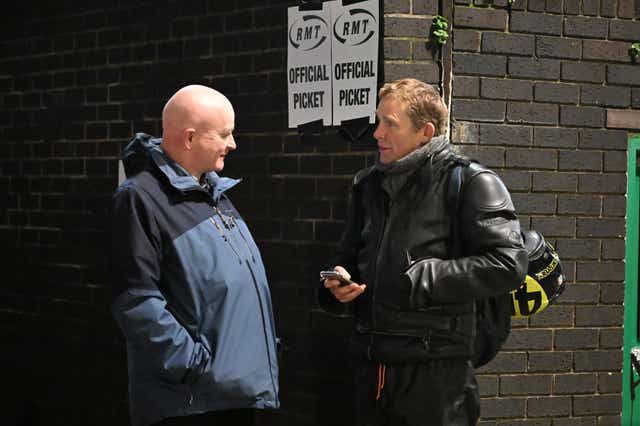

RMT chief Mick Lynch (left) with the Standard’s John Dunne

On the rail strike, he stated: “Strikes are always a sign of failure and the Government has let this dispute run on for far too long. Workers deserve fair pay and conditions, and it’s about time ministers began being competent and negotiated to put an end to this disruption for the good of our city and country.”

Amid the commuting misery, there was a glimmer of hope after Tim Shoveller, Network Rail’s chief negotiator, said a deal to stop the strikes was in “touching distance”.

He argued that the last time the RMT consulted its members on the walkouts it was “rushed” and that some of them wanted clarification of the deal on offer.

He told BBC Radio 4’s Today programme: “We want to make sure that we can work with the RMT now to make clarifications where there’s been misunderstanding and put the deal out again. We only need 2,000 people who voted No last time to change their vote and the deal will pass. So, we think that’s within touching distance.”
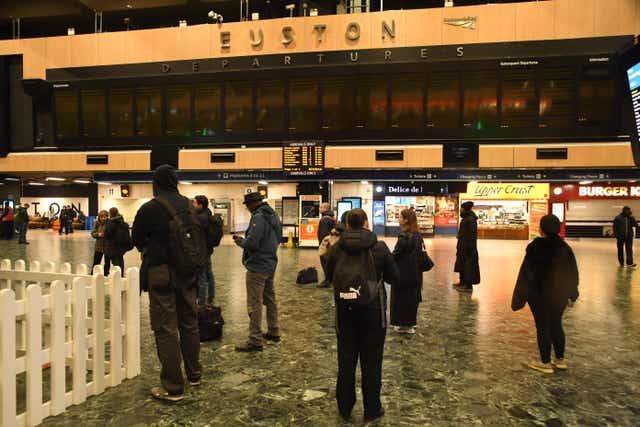
Members of the Rail, Maritime and Transport union at Network Rail and 14 train operators were staging two 48-hour walkouts from Tuesday


But RMT general secretary Mick Lynch and Transport Secretary Mark Harper were giving no signs that a breakthrough was imminent, despite talks set to restart next week.

In an ongoing war of words, Mr Harper said the rail unions should get “off the picket line and round the negotiating table” to end the train chaos.

“There is a very fair pay offer on the table which has been accepted by two of the trade unions on Network Rail,” he added, referring to the proposal of four per cent one year and five the next, with extra payments for lower-paid staff. He refused to say that train companies could improve their pay offer without the approval of Government, but stressed: “There is not a bottomless pit of taxpayers’ money here.” However, Mr Lynch said the union was available and eager to negotiate throughout the Christmas period but the other side has been “enjoying the holidays” instead of engaging in talks.

“I’ll come and meet the Transport Secretary whenever he wishes to — I could meet him in 20 minutes,” he said, speaking outside Euston station, though ministers insist the detailed talks should be between rail bosses and unions. He suggested ministers had “torpedoed” an agreement in December. Mr Lynch also threatened that strikes could go for many more months. “We’ve got a mandate that runs through to May this year, and if we have to go further, that’s what we’ll need to do. We don’t want that, though,” he said.

There were widespread closures across the rail network on Tuesday, including no Elizabeth line trains between Paddington and Heathrow and between Liverpool Street and Shenfield. The London Overground suffered part-closures after services started late. Last trains were due to depart by 6.30pm.

Network Rail advised passengers to only travel if absolutely necessary for the rest of the week. On RMT strike days, around half of the network will shut down, with only about 20 per cent of normal services running.

Newsletter

Related Articles

0:00
0:00
Close
Iran Claims It Destroyed Bahrain’s Main Artificial Intelligence Center in Missile and Drone Strike
Brothers Andrew and Tristan Tate Who Turned "Toxic Masculinity" Into a Brand Arrested in Miami as Britain Seeks Their Extradition
Trump Administration Pressures Banks to Restrict Financial Access for Undocumented Immigrants
Passenger Bound for Germany Refused to Sit Beside a Woman on a Plane — Then Slapped a Flight Attendant
Ukraine’s Leadership Rift Spills Into the Streets as Protesters Target Army Chief
Ukrainian Drone Barrage Kills Eight and Strikes Russian Logistics Network
Key Trends to Watch
Financial Conduct Authority Warns Cloud and Digital Risks Are Becoming a Financial Priority
Jeffrey Donaldson Appeals Sexual Abuse Conviction as Democratic Unionist Party Opens Review
Welsh Health Authorities Launch Emergency Meningitis Vaccination Programme for Students
Scottish Business Activity Falls for Third Month as Companies Face Rising Costs
Bank of England Regulators Demand Better Access to Digital Banking Services
United Kingdom Cuts Bilateral Aid to Several African Countries by Up to Ninety Per Cent
United Kingdom Introduces Tougher Deportation Rules After Rochdale Exploitation Scandal
NHS England Launches Wearable Technology Plan to Reduce Sepsis Deaths
Amazon Web Services Billing Error Sends Trillion-Dollar Invoices to British Companies
Bank of England Takes Direct Regulatory Role Over Major Global Cloud Providers
Extreme Summer Heat Drives Record Fire Risk and Rising Deaths Across Britain
United Kingdom Nationalisation of British Steel Sparks Diplomatic Dispute With China
United Kingdom Economy Shows Weak Growth Ahead of Major Autumn Budget
Andy Burnham Set to Become United Kingdom Prime Minister After Labour Leadership Victory
The Ten World Cup Finals That Defined Football History
Smartphones Are Getting More Expensive, Sales Are Collapsing, and Even Apple Admits: "Prices Will Rise"
The Monaco Bombing Has Become a Test of Ukraine’s Intelligence Accountability
Leadership Change and Strategic Rivalry Redraw the Political Map
Energy Risk, Uneven Growth and the New Geography of Global Capital
The AI Race Enters Its Infrastructure Era
Security and resilience remain long-term national priorities
Britain balances growth ambitions with public finance pressures
Regional devolution becomes a defining theme of the next Labour era
Industrial strategy returns to the centre of British economic policy
Political Instability Remains a Challenge for UK Investment Confidence
Brexit Economic Debate Continues as Public Concerns Over Long-Term Impact Remain
UK Climate Risks Rise as Met Office Warns Extreme Weather Is Becoming More Common
Housing Shortages and Regional Inequality Become Key Priorities Under Incoming Labour Leadership
National Health Service Reform Remains One of Britain’s Biggest Political Challenges
Bank of England Remains at Centre of UK Economic Debate Over Inflation and Growth
UK Economy Shows Recovery Signs but Households and Businesses Remain Under Pressure
Britain Deepens European Defence Cooperation as NATO Allies Seek Stronger Security Capabilities
United Kingdom Expands Sanctions Against Russian Cyber Networks Over Security Threats
UK Industrial Strategy Faces Test After Government Takes Control of British Steel
British Businesses Seek Policy Clarity as Andy Burnham Prepares to Lead Labour Government
Andy Burnham’s Labour Leadership Signals Major Shift Toward Regional Power and Devolution
British Steel Nationalisation Creates New UK-China Tensions Over Control of Strategic Industry
For 36 Years, He Scammed About 300 Luxury Hotels — Until He Was Caught
England's World Cup Exit Expected to Cost Hospitality and Retail £334 Million
Former ICC Prosecutor Aide Speaks Publicly About Allegations Against Karim Khan
Opposition Raises Questions Over June Heatwave Power Grid Pressures
Mastercard Explores Sale of Majority Stake in UK Payments Operator Vocalink
Boeing Forecasts Global Commercial Aircraft Fleet Will Double by 2045
×