London Daily

Focus on the big picture.
Wednesday, Nov 04, 2026

Rail firm reduces services ‘after losing passengers to Elizabeth line’

Rail firm reduces services ‘after losing passengers to Elizabeth line’

MPs to probe decision by Southeastern Railway to axe more than 700 trains a week

MPs are to scrutinise a rail firm’s plan to axe services – including a link to the Elizabeth line – that has angered passengers.

Southeastern, which was taken under Government control last year, is imposing a series of cuts and service reductions in its new timetable from December 11 to save £10m a year.

Among the changes are the axing of the suburban “loop” from Cannon Street, which goes via Sidcup and Abbey Wood before returning to Cannon Street.

This means passengers from stations such as Bexley and Erith will lose their direct link to Abbey Wood, where they can currently board Elizabeth line trains to Canary Wharf and on to the West End and Heathrow.


Abbey Wood: Southeastern and Thameslink passengers can switch onto the Elizabeth line

Southeastern said the success of the Elizabeth line, which carries about 300,000 passengers a day on its central section between Abbey Wood and Paddington, “has reduced demand on our own train services, and we therefore need to adapt our timetables accordingly”.

Labour MP Clive Efford, who represents Eltham, will lead a Westminster Hall debate on Tuesday into the changes, which are being introduced without consultation.

Other MPs who have expressed alarm about the new timetable include Sir Bob Neill, Abena Oppong-Asare, Matthew Pennycook and Ellie Reeves.

Sir Bob Neill, Tory MP for Bromley and Chislehurst, said the changes appeared to be “rushed and ill thought through” and reminiscent of previous “botched” timetable changes by other rail firms that had to be reversed.

He said pre-pandemic his constituency had the second highest number of rail commuters in England and Wales, behind only Lewisham West and Penge.


Mr Efford said the Government had used the pandemic “as an excuse” to allow peak services to be cut – and warned of trains becoming “chronically overcrowded” as more commuters returned to central London.

Steven Reilly-Hii, a Bexley resident who uses the Elizabeth Line to commute to Canary Wharf and at weekends to travel via Liverpool Street, said: “It’s farcical that Southeastern have waited until the Elizabeth Line has finally opened to then pull the direct way of reaching it for many people - plus not bother to consult the paying public about it.”
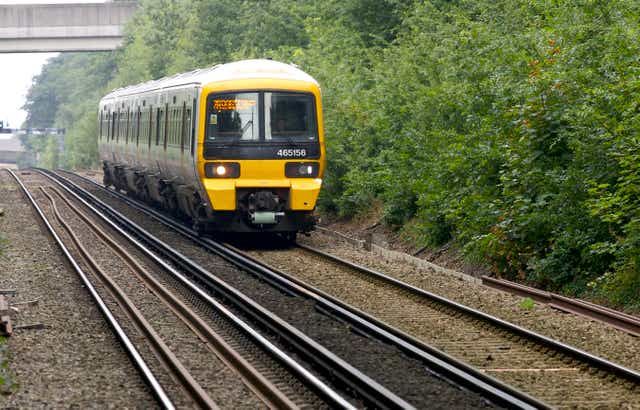
Southeastern: axing hundreds of trains to save £10m a year

The number of Southeastern trains will fall by more than 300 each weekday, from 1,988 pre-pandemic to 1,686 under the new timetable, transport minister Huw Merriman revealed in a written parliamentary answer.

Across its seven-day timetable, Southeastern will operate 3,913 services – 728 fewer, or a loss of one in six trains.

A Southeastern spokesman confirmed the Sidcup “loop” services were being axed.

But six London-bound trains an hour would call at Abbey Wood throughout the day – either Southeastern or Thameslink services – he said.

Campaigners have launched a petition to save the loop train.

The firm said it wanted to improve punctuality by reducing by two-thirds the number of trains crossing each other’s route at “notorious bottlenecks” such as Lewisham junction.

Its modelling predicts 12 per cent fewer cancellations and some 300,000 more “on time” – namely, within 59 seconds of timetable - station stops each year.

Southeastern wants to “match space on trains with demand” - its passenger numbers are down about 40 per cent on Mondays and Fridays, due to the post-pandemic collapse in five-day commuters.

It is also scrapping first class – freeing up an extra 60 seats on a 12-carriage train.

On the Sidcup line, Southeastern says passenger numbers have fallen from 23m a year to 12m a year.

Abbey Wood station was rebuilt for the opening of the Elizabeth line


On the Woolwich line, which includes Abbey Wood, all trains will be routed into Cannon Street station, rather than a third going to Charing Cross. There will be five Southeastern trains an hour in the morning peak, and four in the evening peak out of Cannon Street.

Passengers wanting to get to Charing Cross will need to change at London Bridge.

On the Sidcup line, all off-peak and weekend trains will run into Charing Cross, with no services into Cannon Street. There will be six trains an hour at peak times using both stations.

Newsletter

Related Articles

0:00
0:00
Close
Northern Ireland Executive Agrees on Multi-Year Public Sector Pay Restructuring Framework at Stormont
Department for Transport Confirms Acceleration of Electric Vehicle Charging Infrastructure Rollout Along Strategic Motorways
Welsh Government Announces Emergency Funding Package to Support Agricultural Sector Facing Severe Weather Impacts
High Court Rules in Favor of Environmental Coalition Over Government Carbon Reduction Plan Deficiencies
Office for National Statistics Reports Stable Retail Sales Growth Supported by Strong Digital Commerce Volumes
Scottish First Minister John Swinney Secures Cross-Party Support for Renewable Energy Export Expansion
National Health Service Digital Reports Major Breakthrough in Reducing Elective Waiting Lists Across England
Chancellor Rachel Reeves Outlines Infrastructure Spending Reforms to Boost Regional Economic Growth Across Northern England
Bank of England Holds Baseline Interest Rate at Five Percent Amid Persistent Core Inflation Pressures
House of Lords Advances Representation of the People Bill to Modernize Electoral Law Ahead of General Election
Financial Markets and Private Equity Assess Tax and Corporate Realignment Following Recent Chancellor Budget Adjustments
Justice Committee Warns Legal Aid Is a Service in Managed Decline Due to Inadequate Government Funding Responses
Royal Navy Intercepts Russian Intelligence Vessel and Warships Across Intensive North Sea Operations
Business and Trade Committee Slams Government Policy on China as Fragmented and Lacking Strategic Direction
Home Secretary Shabana Mahmood Softens Immigration Plans Following Intensive Cabinet Backlash Over Settlement Timelines
Automotive Industry Data Reveals Continued Acceleration in Battery Electric Vehicle Registrations Across British Dealerships
High Court of England and Wales Rules on Landmark Legal Challenge Regarding Local Government Housing Mandates
Department for Energy Security and Net Zero Approves Expanded Offshore Wind Infrastructure Along Scottish Coastline
Competition and Markets Authority Launches Broad Investigation Into Artificial Intelligence Infrastructure and Cloud Partnerships
United Kingdom and European Union Launch High-Level Preparations for Bilateral Defense and Security Summit in Brussels
National Health Service England Unveils Emergency Workforce Reforms to Alleviate Winter Accident and Emergency Pressures
Chancellor Rachel Reeves Finalizes Autumn Budget Adjustments to Meet Fiscal Rules and Fund Public Services
Bank of England Prepares for Interest Rate Decision Amid Rising Bond Yields and Inflationary Pressures
House of Lords Begins Detailed Legislative Scrutiny of Representation of the People Bill and Cyber Security Laws
Metropolitan Police Detain More Than Three Hundred Individuals Following Large-Scale Demonstration Outside London Embassy
Home Office Prepares Stricter Residency Rules Requiring Vulnerable Migrants to Wait Decade for Settlement Rights
Professional Mental Health Bodies Demand Statutory Regulation for Counsellors and Psychotherapists
National Grid Confirms Construction of Britain's Largest Electrical Substation to Power Teesside Data Centre
Prime Minister Keir Starmer Travels to Samoa for Commonwealth Summit Amid Debates on Economic Cooperation and Reparations
Home Office Implements Enhanced Digital Border Controls and Visa Processing Systems at Major Airports
Office for National Statistics Reports Stable Employment Participation Rates Across Regional Labor Markets
Department for Business and Trade Announces Strategic Partnership to Secure Critical Mineral Supply Chains
Scottish Government Unveils Regional Economic Development Strategy to Boost Advanced Manufacturing in Glasgow and Dundee
Treasury Officials Review Taxation Frameworks and Capital Gains Rules Ahead of Autumn Budget Disclosures
National Health Service Leaders Warn of Winter Capacity Pressures Across Acute Care Facilities
Bank of England Prepares for Key Interest Rate Decision Amid Sticky Inflation and Fiscal Policy Pressures
Home Office Expands Border Security Operations and Intelligence Sharing With European Partners
Office for National Statistics Reports Modest Retail Sales Growth Ahead of Crucial Christmas Trading Season
Welsh Government Unveils Strategic Plan to Boost Regional Technology Innovation and Digital Skills Training
Department for Environment Food and Rural Affairs Implements New Agricultural Subsidies Framework for English Farmers
Scottish First Minister John Swinney Announces Major Regional Infrastructure and Green Energy Investment Strategy
National Health Service Leaders Warn of Severe Winter Pressures and Mounting Accident and Emergency Backlogs
Bank of England Monetary Policy Committee Signals Cautious Interest Rate Path Amid Persistent Services Inflation
Chancellor of the Exchequer Rachel Reeves Finalizes Autumn Budget Framework Aiming to Close Public Sector Fiscal Gap
Department for Science, Innovation and Technology Prepares Enhanced Artificial Intelligence Safety and Cyber Defense Frameworks
United Kingdom Government Expands International Sanctions Framework Against Russian Shadow Fleet and Financial Enablers
Institute of Directors Reports Sharp Post-Budget Drop in Business Confidence Despite Long-Term Investment Intention Shifts
Chancellor John Healey Defends Sweeping Fiscal Adjustments and Household Support Packages Following Autumn Budget
Parliamentary Petitions Committee Schedules Major Legislative Debates on Special Educational Needs and Non-Stun Meat Labelling
Regional Devolution and Good Growth Fund Frameworks Reshape Local Government Funding Across English Regions
×