London Daily

Focus on the big picture.
Thursday, Jun 25, 2026

Polls open in Greece's first election since spending controls ended

Polls open in Greece's first election since spending controls ended

Polls have opened in Greece’s parliamentary election, the first since the country’s economy ceased to be subject to strict supervision and control by international lenders who had provided bailout funds during its nearly decade-long financial crisis.

The two main contenders in Sunday’s vote are conservative Prime Minister Kyriakos Mitsotakis, 55, a Harvard-educated former banking executive, and 48-year-old Alexis Tsipras, who heads the left-wing Syriza party and served as prime minister during some of the financial crisis’ most turbulent years.

Although Mitsotakis has been steadily ahead in opinion polls, a newly introduced electoral system of proportional representation makes it unlikely that whoever wins the election will be able to garner enough seats in Greece’s 300-member parliament to form a government without seeking coalition partners.
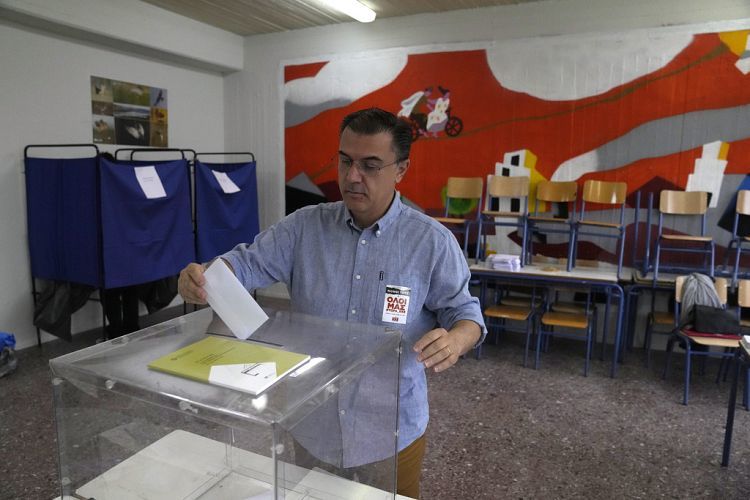
Greeks head to the polls on Sunday to elect a leader who will have more control over the country's economy for the first time in over a decade.


The winner of Sunday’s election will have three days to negotiate a coalition with one or more other parties. If that fails, the mandate to form a government is then given to the second party. But deep divisions between the two main parties and four smaller ones expected to enter parliament mean a coalition will be hard to come by, making a second election likely on 2 July.

The second election would be held under a new electoral law which makes it easier for a winning party to form a government by giving it a bonus of up to 50 seats in parliament.

A total of 32 parties are vying for votes, although opinion polls have indicated only six have a realistic chance of meeting the three per cent threshold to gain seats in parliament.

Greece’s once-dominant socialist Pasok party is likely to be at the centre of any coalition talks. Overtaken by Syriza during Greece’s 2009-2018 financial crisis, the party has been polling at around 10%. Its leader, Nikos Androulakis, 44, was at the centre of a wiretapping scandal in which his phone was targeted for surveillance.

Polling at around 10 per cent, Pasok would be vital in any coalition deal, but Androulakis’ poor relationship with Mitsotakis, who he accuses of covering up the wiretapping scandal, means a deal with the conservatives is unlikely. His relationship with Tsipras is also poor, accusing him of trying to poach Pasok voters.

The far-right Greeks Party, founded by a jailed former lawmaker with a history of neo-Nazi activity, was banned from participating by the Supreme Court. His former party, Golden Dawn, which rose to become Greece's third largest during the financial crisis, was deemed to be a criminal organisation.

In the run-up to the election, Mitsotakis had enjoyed a double-digit lead in opinion polls but saw that erode following a rail disaster on 28 February that killed 57 people after an intercity passenger train was accidentally put on the same rail line as an oncoming freight train. It was later revealed that train stations were poorly staffed and safety infrastructure broken and outdated.

The government was also battered by a surveillance scandal in which prominent Greek politicians, including Androulakis, and journalists discovered spyware on their phones. The prime minister said he had not been aware of the tapping of Androulakis' phone, and that he would not have allowed it had he known. But the revelations deepened mistrust among the country’s political parties at a time when consensus may be badly needed.

Tsipras has campaigned heavily on the rail disaster and wiretapping scandal.

In power since the 2019 elections, Mitsotakis has delivered unexpectedly high growth, a steep drop in unemployment and a country on the brink of returning to investment grade on the global bond market for the first time since it lost market access in 2010, at the start of its financial crisis.
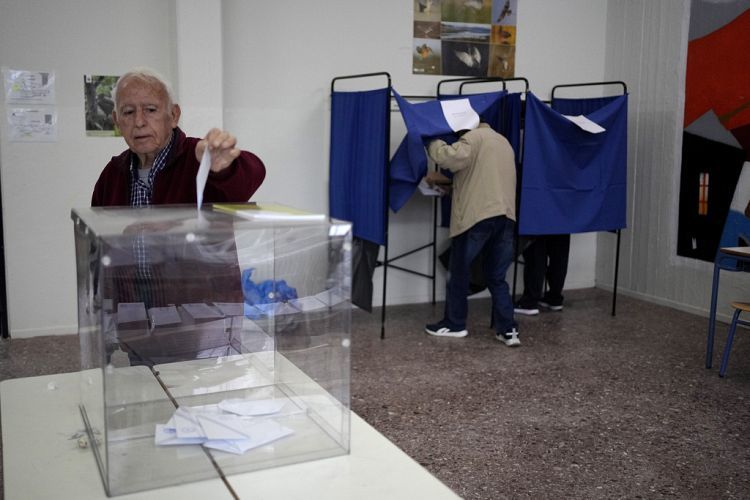
Two voters cast their ballots at a polling station in Athens, Greece, Sunday, May 21, 2023.


Debts to the International Monetary Fund were paid off early. European governments and the IMF pumped 280 billion euros ($300 billion) into the Greek economy in emergency loans between 2010 and 2018 to prevent the eurozone member from going bankrupt. In return, they demanded punishing cost-cutting measures and reforms that saw the country's economy shrink by a quarter.

A severe recession and years of emergency borrowing left Greece with a whopping national debt that reached 400 billion euros last December and hammered household incomes, which will likely need another decade to recover.

The other three parties with realistic chances of parliamentary seats are Greece's Communist Party, or KKE, led by Dimitris Koutsoumbas; the leftwing European Realistic Disobedience front (MeRA25), led by Tsipras' flamboyant former finance minister; and the rightwing Elliniki Lysi, or Greek Solution, headed by Kyriakos Velopoulos.

The KKE, a staple of Greek politics, has seen a steady core of support around 4.5%-5.5% over the past decade, while Varoufakis' party has been polling at just over the 3% parliamentary threshold. Velopoulos' party elected 10 lawmakers in 2019 and looks set to enter parliament again.

Newsletter

Related Articles

0:00
0:00
Close
UK Energy Price Volatility Reinforces Pressure for Faster Electrification of Economy
UK Defence and Aerospace Strategy Gains Momentum as Keir Starmer Pushes Industrial Cooperation in Berlin
Department for Environment, Food and Rural Affairs Unveils £53 Million Investment in Farming Innovation
Foreign Secretary Announces Medical Evacuations and University Support for Palestinians in Gaza
Government-Commissioned Report Highlights Economic Exposure to Climate-Driven Fossil Fuel Price Shocks
Climate Change Committee Warns UK Is Off Track on Emissions Cuts and Calls for Faster Decarbonisation
Prime Minister Keir Starmer Calls for Deeper UK-EU Defence and Industrial Cooperation in Berlin Address
Met Office Issues Red Extreme Heat Warning as Temperatures Set to Surpass 37°C in England and Wales
Bank of England Holds Interest Rates at 3.75% as Inflation Outlook Remains Uncertain
UK Announces New Military Infrastructure at Catterick to Support Engineer Regiment Relocation
University of Reading Ranked Among Top 100 Globally for Sustainability Impact
UK Launches Counter-Fraud Taskforce to Investigate Covid Loan Scams
UK Government Introduces Customs and Tax Reforms to Support High Street Retailers
Jonathan Haskel Nominated as Chair of the UK Office for Budget Responsibility
UK Government Expands Powers to Recover Benefit Debt and Tackle Welfare Fraud
Labour Party Leadership Contest Intensifies as Andy Burnham and Ed Miliband Clash Over Economic Direction
Rail Operators Urge Essential Travel Only as Extreme Heat Threatens UK Network Stability
United Kingdom Issues Red Extreme Heat Warning as Temperatures Forecast to Reach 38°C
Keir Starmer Announces Resignation as UK Prime Minister Amid Deepening Political Instability
UK Biotechnology Sector Receives Increased Public Funding to Support Regional Growth
Police Chiefs Update National Protest Management Guidelines Amid Rising Demonstration Activity
UK Aviation Regulator Expands Support for Regional Airports to Strengthen Domestic Routes
CMA Launches Investigation Into Retail Pricing Across UK Grocery Sector
UK Energy Operator Warns of Winter Supply Pressures Despite Stable Overall Grid Outlook
UK Research Council Expands Funding for Regional Biotechnology and Life Sciences Clusters
UK Compensation Scheme for Post Office Horizon Scandal Reaches 80 Percent Completion
Police Chiefs Issue Updated National Guidance on Managing Large Public Demonstrations
UK Expands Regional Airport Funding Scheme to Boost Domestic Connectivity
UK Competition Watchdog Launches Inquiry Into Grocery Pricing Practices
National Grid Warns of Tight Energy Management Needs During Upcoming Winter Peak Demand
UK Education Department Introduces National Standards for AI Use in Secondary Schools
UK High Court Clears North Sea Carbon Capture Project After Final Legal Challenge Fails
Northern Ireland Leaders Hold Emergency Talks on Trade Disruption Under Windsor Framework
Welsh Government Moves to Expand Social Housing in Response to Severe Affordability Pressures
UK Economy Sees Unexpected Rise in Business Investment in Second Quarter, ONS Data Shows
Scottish Government Unveils Multi-Billion Pound Investment Plan for Renewable Energy and Grid Expansion
UK and EU Agree Enhanced Defence Cooperation Pact Covering Intelligence and North Sea Security
Prime Minister Orders Independent Review of NHS Performance After Record Waiting Lists
Bank of England Holds Interest Rates at 5 Percent as Services Inflation Remains Persistent
UK Heatwave Disrupts Transport, Healthcare and Public Services as Red Weather Alerts Expand Nationwide
Barclays Warns of Growing Cyber Risk Divide Between Large UK Firms and Micro Businesses
European Defence Plans Including Ukraine Integration Prompt UK Strategic Reassessment
UK Equity Markets React as US–Iran Peace Roadmap Eases Oil Price Pressures
United Kingdom Expands Global Clean Energy Partnerships With Brazil, Morocco and Tanzania
Lord David Frost Urges Incoming UK Leadership to Abandon EU Regulatory Reset Strategy
Housing Groups Support Amendment to Strengthen Fire and Gas Safety Access Powers in Social Housing
South London NHS Estates Staff Ballot on Industrial Action Over Pay Structures in Hospital Maintenance Services
United Kingdom Government Invests £60 Million in AI Research Labs at Oxford and University College London
Barclays Cyber Security Report Highlights Rising Threat Exposure Among UK Small Businesses in AI-Driven Attacks
UK Met Office Heatwave Triggers Transport Warnings as Rail Operators Urge Cancellations Amid Infrastructure Strain
×