

Pensioner's hope of reuniting with wife after deep-freeze preservation
Alan Sinclair, 82, is signed up to a cryonics scheme in the US where clinically dead Sylvia is already suspended in liquid nitrogen.
She became the first British person known to be placed in ‘cryonic suspension’ after her death from cancer at the age of 66.
The grandfather plans to join her at the not-for-profit Cryonics Institute after his clinical death in what he admits is a ‘gamble’ on future technology.
Struck by a TV show about cryonics in the 1980s, he founded Cryonics UK, the first British support group for people wanting a second life.
Patients sign up for the chance of a healthy, physical revival together with possible cures for ailments that have led to their deaths.
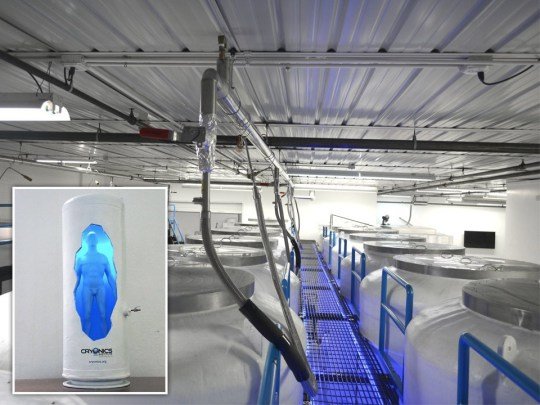
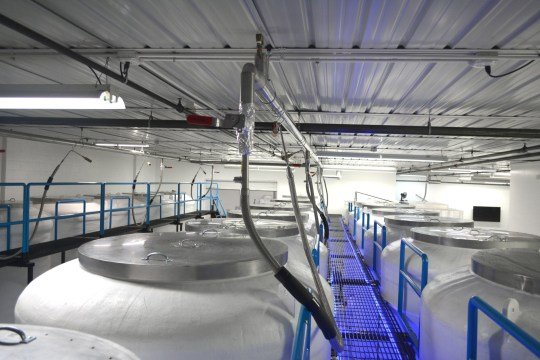
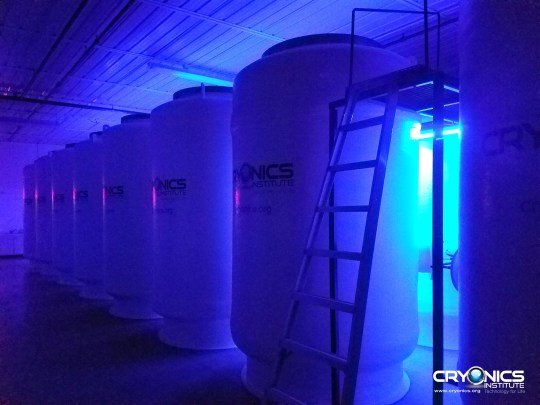
The aim is to preserve tissues, organs and the brain after the heart stops beating, with the body stored head-down in liquid nitrogen at -196C.
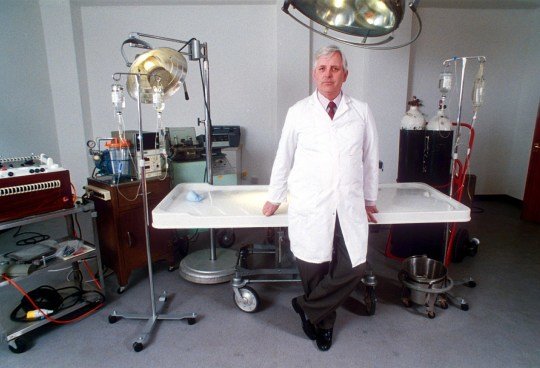
First, however, a patient’s blood is replaced with cryoprotectants – part of a process known as vitrification – to prevent freezing damage.
Then the body is placed in dry ice and transported to the US.
‘When I saw the programme I thought it was a wonderful idea,’ Alan said.
‘I think there’s a reasonable chance of being revived, there’s no other alternative and it’s better than being eaten by worms, so I thought, “that’s a reasonable gamble”.
‘It’s about waiting for people to be revived with future technology.
‘Scientists are making advances all the time, so there’s no reason why they might not be able to treat frostbite, which is what we’re really talking about.
‘One way to describe it is like a computer disc, you can scratch it or scrape it but you can revive it, whereas if you burn it, it’s gone forever. Recently there were 40,000-year-old worms that were revived. It’s just a matter of repairing the damage that’s been done through the dying itself.
‘With the likely advances there’s every chance that cancer will be cured within a few months, or a few years.
‘What we are doing, especially through vitrification, is keeping all the information there for reviving and repairing.’
Sylvia died within six weeks of being diagnosed with lung cancer in 2013, two decades after the couple had signed up to have their bodies placed in the deep freeze facility.
As the group’s founder, Alan had a support network in place to transport his wife of 46 years to the US.
The father-of-four has paid £28,000 for his own cryopreservation in a tank at the Institute’s facility in Michigan. Nanotechnology perhaps holds the most promise for the couple’s revival, with its scope for tissue repair and regeneration.
Opponents of cryonics view it as fanciful pseudoscience, with Dr Miriam Stoppard previously saying it ‘robs the dying of their dignity’.
Even with an optimistic view of scientific advances, it remains a far leap to see if the brain and other organs can be reawakened after the body shuts down. Furthermore, some may say they prefer the finality of death.
Alan said: ‘I enjoy life, I got up this morning to mess around with my car.
‘If someone put a gun to your head and said “do you want to die?” the chances are you would say “no thanks”. As I’ve got older I’ve got stiff, I’ve got problems, but I still enjoy living.
‘From my point of view, I can’t see any good thing about getting old, I still wish I was in my twenties and thirties when I was much more energetic.’
Alan, from Hove in Sussex, worked as a motor mechanic and electrician before retiring and has always had a keen interest in new technology.
He said: ‘If I went back a hundred years I’d love the idea of television and electric cars.
‘When I left school I always wanted to be a motor mechanic and I was very successful, I loved the job. I had an accident and couldn’t lift to I went into electronics and enjoyed that as well.
‘Now I’m looking forward to nanotechnology and other advances.’
Alan is matter-of-fact about the 3,700-mile journey his body will take after his clinical death.
‘You’re cooled down as quickly as possible, that’s the most important thing,’ he said.
‘Your blood is replaced with a vitrification fluid where you don’t actually freeze, you go into a glass-like state. Then you’re placed in dry ice and transported to America. Then they take you down to nitrogen temperature.
‘At that temperature you are ok for 24,000 years without any further deterioration.
‘The whole purpose of cryonics is to stop the biological clock.’
Sylvia was not given a funeral and only has a memorial plaque which is visited by her family on special occasions such as her birthday.
Alan, who has six grandchildren, believes they may yet be reunited.
He said: ‘I view it as someone who’s very ill going into suspension.
‘At the end of day it’s a gamble, but it’s not such a mad idea that they might revive us, and it’s a decision that was taken with a great deal of thought.
‘It’s reassuring thinking that we might be reunited. I don’t think that reviving people will be that difficult, it will just take another fifty to a hundred years.
‘People born today will have an indefinite lifespan.’