

One in 18 applications for government voter IDs rejected by councils
The local elections taking place in England on Thursday will require a form of ID to cast a vote for the first time – but one in 18 applications for the government’s free form of voter ID have been rejected.
There are around 2 million people without photographic ID, and of those around 86,000 have applied for the new certificate, research by The Big Issue has found.
However data obtained through Freedom of Information requests found there have been hundreds of rejected applications, with one local authority rejecting more than a quarter of the applications it received.
Tom Brake, a former Liberal Democrat MP who is now director of Unlock Democracy, said: ‘This investigative work confirms that the photo voter ID story is even worse than expected.
‘We already knew the take up of the government’s alternative photo voter ID scheme was appallingly low.
‘Now we also know that for those who did apply, a relatively high percentage have had their applications rejected.
‘With council election results often hanging on a handful of votes, it is unavoidable not only that the introduction of photo voter ID will depress turnout, but also distort election results.’
76 out of the 230 councils holding elections on Thursday responded to FOI requests and provided data on 16,000 applications – about one in six of the total submitted.
Overall, 889 applications, or 5.55%, were rejected, however the rejections were unevenly spread with some councils not rejecting a single application while others rejected around one in six.
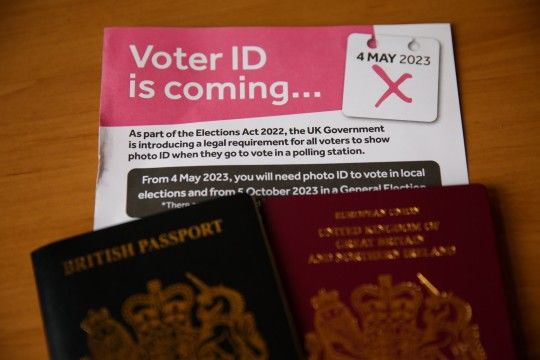 Passports are one form of acceptable ID
Issues with photographs, not being registered to vote in the first place, or not submitting their national insurance numbers were the most common reasons for rejection.
However, while a photo ID or certificate is required to vote in person at the local elections, those voting by post or proxy don’t need to provide any ID.
The Electoral Reform Society calls the findings ‘deeply concerning’, with Jess Garland from the group adding: ‘For many voters who lack photographic ID the voter authority certificate is their only route to being able to cast a vote in this week’s elections.
‘To find that the application process has such a high rate of rejection in some areas is deeply concerning.
‘With the government putting so many hurdles up between voters and the ballot box, it’s clear that these new voter ID rules remain a threat to democratic participation and free and fair elections.’
And Labour leader Sir Kier Starmer said it was the government’s responsibility to make sure voters know about changes to ID requirements ahead of the local elections.
 Kier Starmer says the onus is on the government to make sure everybody knows about the voter ID rule changes
He told broadcasters: ‘I want every single person who is eligible to vote to be able to vote tomorrow.
‘And if anybody turns up to vote without the ID because the government has not got the message through to them that they have changed the law – a really big change in our election law – then that is an indictment on the government and they bear responsibility.
‘I don’t want to see anybody turning up not knowing that they needed ID, because the government bore full responsibility for making sure that everybody who can vote knows they have got to bring that ID.
‘We will be watching very carefully tomorrow to see where responsibility lies.
‘A government that changes the law on ID has a heavy responsibility to make sure every single person knows that they have got to bring ID.’
The Local Government Association said councils have a responsibility to make sure the introduction of voter ID was done ‘rigorously’.
A spokesman said: ‘Councils are working around the clock to deliver the local elections and the new voter ID requirements, which is the biggest change to in-person voting in 150 years.
‘There are many reasons a voter authority certificate could be rejected and councils assess each application based on the guidance they have been given by the Electoral Commission.
‘As well as this, we are aware that some applications have been made by postal voters who do not require voter ID and so have been withdrawn.
‘It is vital that the implementation of voter ID, including the certificate application process, is rigorously and transparently evaluated to ensure that lessons are learned ahead of future elections.’

