

Nursery fees 'to rise by £1,000 this year' as childcare providers struggle with costs - forcing parents to quit work
The soaring cost of childcare in the UK is revealed in new figures today, suggesting nurseries will raise fees by £1,000 this year.
A survey of 1,156 providers by the Early Years Alliance found nine out of 10 expect to increase fees, typically in April, and by an average of 8% - higher than in previous years.
UK childcare costs are already among the most expensive in the world, with full-time fees for a child under two at nursery reaching an average £269 a week last year - or just under £14,000 annually.
An 8% rise would take that to more than £15,000.
Three and four-year-olds in England attending a nursery or childminder are eligible for either 15 or 30 free hours a week depending on whether their parents work, so their costs are a lot lower.
There are different schemes in Wales and Scotland.
But the concern is that by this stage many parents - particularly mothers - have felt forced to drop out of work or cut their hours.
Tory MPs have been pressing the chancellor to take measures to make childcare more affordable in the March budget in order to reduce pressure on families, and enable more women to re-enter the workforce.
Former chief secretary to the Treasury, Simon Clarke, said: "Government action here feels essential."
But an option to extend free hours to all two-year-olds is understood to have been ruled out.
Most nurseries and childminders surveyed - 87% - said the money they get from the government does not cover their costs to provide the "free" hours - leaving them out of pocket.
More than half of providers (51%) said they had operated at a loss last year. A handful said they were looking at fee increases of as much as 25%.
Becky Burdaky, 26, from Wythenshawe, Greater Manchester, told Sky News she had taken the "daunting" decision to leave her job in sales after having her second child, Bobby, last year.
Her daughter Harriet, aged three, goes to pre-school near their home, but the family found the costs they would face for their baby son beyond their reach.
She will stay at home and they will live on the wages of her partner Steve, an electrician.
'Not asking other people to pay for my kids'
Becky said: "When we looked into the fees it was £70 a day - it would have been all of my wage. With Harriet it was about £54, so that's a huge difference.
"And if he was home poorly, I wouldn't get paid but I'd still have to pay his fee. Once we sat down and worked it out I would have been paying to go to work.
"I never envisaged myself being a stay-at-home mum, you know just cooking and cleaning and bringing up children, as I've always worked.
 Becky says she could be starting from the bottom again when she returns to work
"But I think slightly subsidising the cost of fees so it's affordable for working parents means we can work and contribute.
"You don't know what it's going to be like when you return to work, you're starting from the bottom."
The campaign group Pregnant Then Screwed surveyed 27,000 parents last year and found nearly two thirds paid more for childcare than their rent or mortgage.
Although childcare costs have risen significantly in recent years, many providers are struggling to stay in business - with 5,400 closing their doors in the year to August 2022.
Fees for the youngest children, aged under three, are often used to keep the nurseries in business, and the rising cost of living means parents are cutting back.
'I've put my savings in to cover wages'
Delia Morris is the owner of Morris Minors pre-school in Croxley Green, Hertfordshire, where children used to start aged two but are now increasingly starting at three.
She is paid £5.41 an hour by the local authority for their free hours, but says providing it costs her around £7.
"Children come in later, when they are funded," she said.
"That's had a huge impact. I did raise my fees a very small amount this year but it doesn't cover it because we only have one or two children doing a couple of sessions a week [that parents pay for].
"I've had to put my own savings in to cover the wages last summer, and the staff had to drop a session."
As to what the government should do, she said: "They have to put money in. It's difficult to say, but I have to be realistic that if I can't make ends meet I will have to close and that's it."
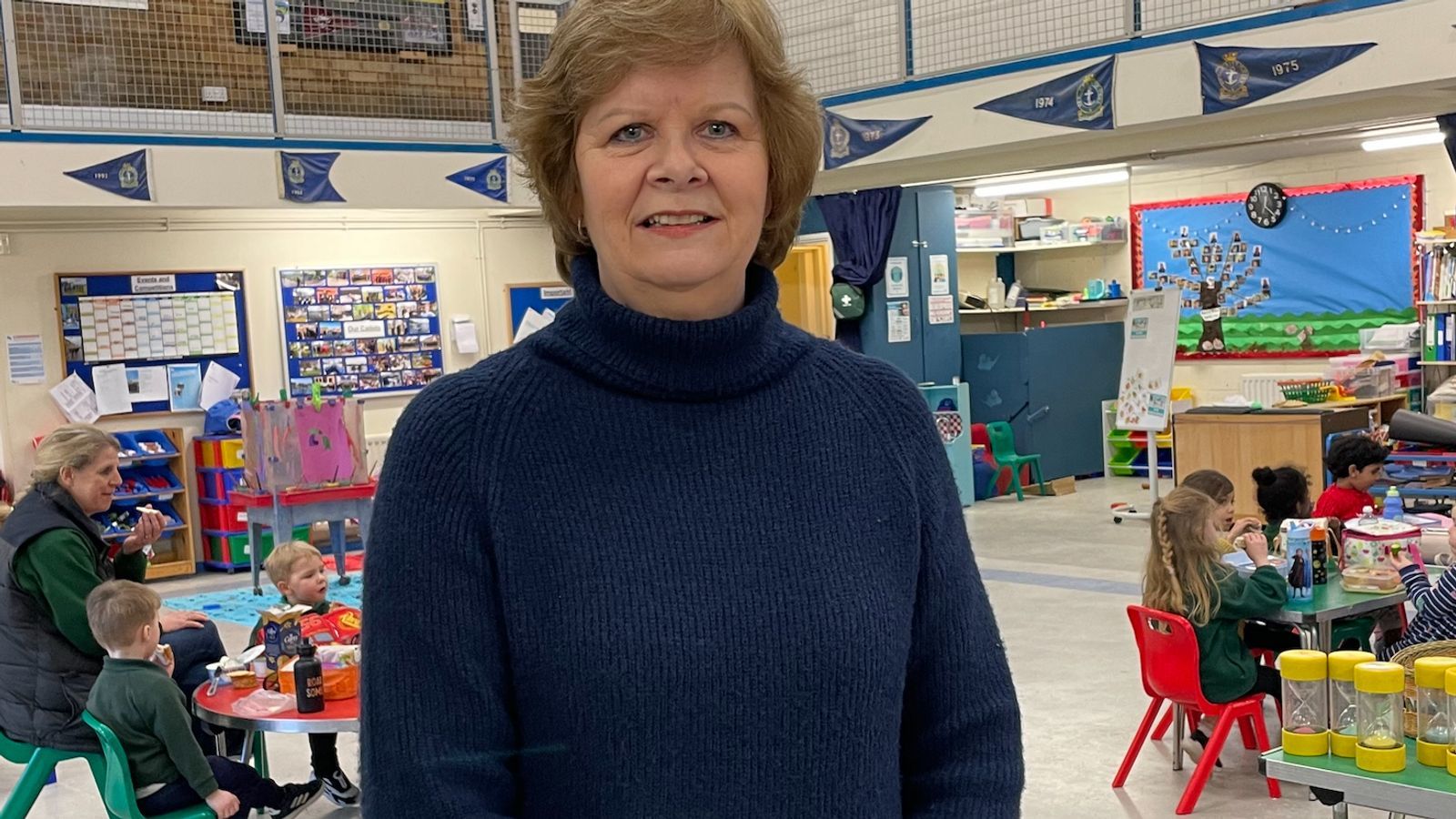 Delia Morris says the government should provide extra funding for childcare
Neil Leitch, chief executive of the Early Years Alliance, said the organisation had closed half of the 132 nurseries it operated in the last four years.
"They are exclusively in areas of deprivation, which seems to fly in the face of any levelling up agenda. These are families and children who would benefit most from support and care," he said.
According to the OECD, the UK tops the table for the proportion of a mother's income taken up by childcare costs - based on two children in full-time care.
'The gender pay gap just explodes'
Christine Farquharson, education economist at the Institute for Fiscal Studies, said childcare costs for two-year-olds have risen twice as fast as inflation in the past decade - with a lasting effect on women's pay.
"We ended up in a situation where the youngest children have the highest prices they're ever going to pay, with the least access to government support," she said.
"And it's coming at this critical moment where parents are making decisions about whether or not to go back to work after they've been on parental leave.
"When mothers - and it is mostly mothers - make that choice to step back from the labour market it's not just those few years. The gender pay gap just explodes and literally takes decades to come back to anything approaching the situation before they became parents."
Proposals, championed by Liz Truss, to increase the ratio of children looked after by each adult, have attracted opposition from nurseries and parents.
But Tory MPs are pressing the government to help parents with the cost of childcare by reducing business rates for nurseries or extending free hours to two-year-olds.
Robin Walker, chair of the education select committee, said some of the existing schemes are not working effectively - such as tax-free childcare - for which uptake is only around 40%.
Universal Credit claimants are also eligible to have up to 85% of their childcare costs funded but are put off by having to make upfront payments.
"There is money there that isn't being used," he said. "Upfront payment for Universal Credit and tax-free childcare are putting a lot of parents off using them at all.
"The government is already spending more than any previous government has in this space, but other countries in Europe are spending more particularly in the 0-2 age bracket.
"If we were to make the case for more investment it would unlock those opportunities for people to continue in the workplace and stimulate children in the early years."
If they win power, Labour have promised an expansion of childcare from the end of maternity leave until the start of primary school.
Shadow education secretary Bridget Philipson told Sky News this would be a "key battleground issue" at the next election.
A Department for Education spokesperson said: "We recognise that families and early years providers across the country are facing financial pressures and we are currently looking into options to improve the cost, flexibility, and availability of childcare.
"We have spent more than £20bn over the past five years to support families with the cost of childcare and the number of places available in England has remained stable since 2015, with thousands of parents benefitting from this."

