London Daily

Focus on the big picture.
Thursday, Jun 18, 2026

Now a Brexit deal is done, do I need to order a new passport?

Now a Brexit deal is done, do I need to order a new passport?

The UK finally has a Brexit deal agreed with the EU, just days before the transition period is due to come to an end.

Despite fears that the country would walk away from the Bloc with no deal on December 31 of this year, a trade deal is now in place, as announced by Ursula von der Leyen and Michel Barnier

But while that means we may have avoided the disruption of a no-deal departure, people can still expect many changes as of January 1 2021 – among them travel to EU countries and the arrival of blue passports replacing the burgundy ones.

Just what will happen to those passports now – and when will the new British ones be necessary?

Will I need a new passport after Brexit?


If your passport is less than 10 years old and has more than six months left to run, you can continue to use it in EU countries – as well as Norway, Iceland, Liechtenstein and Switzerland – after December 31 2020.
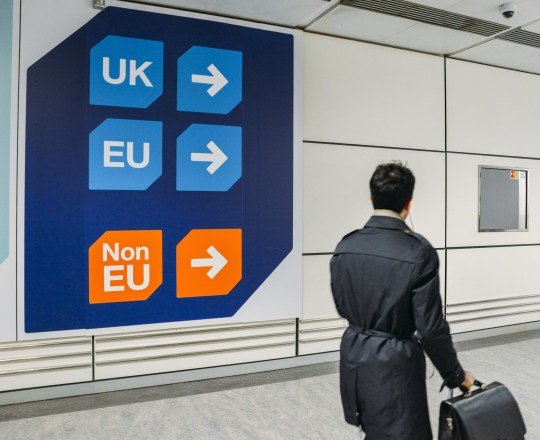

The UK is officially no longer part of the EU.


The exception to this rule is Ireland, where you can continue to use your passport regardless of when it is valid until.

One change that has been phased in throughout 2020 will be the introduction of the blue passports – which is actually a throwback to one of the earliest versions of the British passport.

Blue passports will eventually replace the burgundy one we use currently, returning to the colour passports used to be from 1921 to 1988, when the UK followed the practices of the European Economic Community.
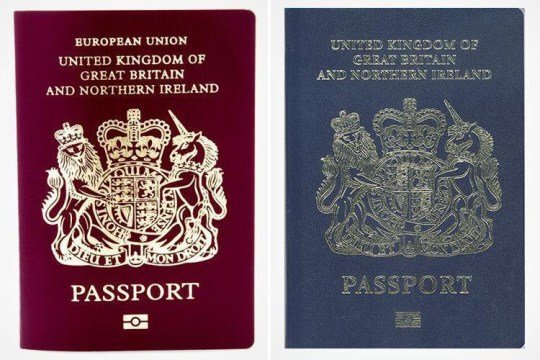

New and old UK passports


When will the UK blue passport be issued?


According to the Home Office, the new blue British passport started being issued from the beginning of 2020, and will be introduced steadily throughout the year.

If you renew your passport during early 2020, you may be given either a blue or a burgundy British passport but all styles of passport will be equally valid.

All passports issued from mid-2020 will be blue.

Will we need a visa for Europe after Brexit?


After December 2020, Brits can still travel to European counties without a visa for holidays.


According to GOV.UK, if you’re a tourist, you won’t need a visa for short trips to EU countries, Iceland, Liechtenstein, Norway and Switzerland.

You’ll be able to stay for up to 90 days in any rolling 180-day period, however this will apply to all the trips you make within that time – so for example a long weekend away in an EU country and a fortnight’s break in another one within the time frame would all add up to the 90-day total.

The exception to this rule is if you travel to Bulgaria, Croatia, Cyprus or Romania – the number of days you spend in these countries will not count towards that total

If you’re planning to stay for longer, to work or study in an EU country, or if your visit is for business purposes, you may need to apply for a work permit or visa.

You should check the individual travel page of the country you plan to visit – available at the Foreign Office website – to see what documentation you will need.

From January 1 2021, British passports will also need at least six months left on them to travel throughout Europe, and your passport will need to be less than 10 years old.


You’ll also face different rules at border control in any European country.

You’ll need to:

*  Show a return or onward ticket

*  Show you have enough money for your stay – this could depend on where you’re going and how long you’re going for

*  Use separate lanes from EU, EEA and Swiss citizens when queueing

If you’re hiring a car in Europe from 1 January 2021 you might need an additional international driving permit (IDP) to drive in some countries and if you’re driving your own car you might also need an insurance ‘green card’ and a GB sticker.

Newsletter

Related Articles

0:00
0:00
Close
Cornwall Clergy Raise £40,000 for Church Repairs Through Everest-Themed Charity Challenge
UK Business and Social Landscape Reflects Strain From Geopolitical and Domestic Pressures
Tensions Grow in UK Over Sikh Kirpan and Religious Symbolism in Public Debate
Energy Price Cap Increase Set to Lift UK Household Bills by 13 Percent
University of Reading Ranked 196th in QS World University Rankings
UK Maritime Archaeologists Identify 17th-Century Dutch Shipwreck Off Devon Coast
Oxford Union Islam Debate Sparks Protest From Faith Leaders in UK
UK Social Cohesion Debate Intensifies After Religious Prejudice Survey Findings
UK SME Lending Rises Despite Geopolitical Uncertainty and Cautious Outlook
Foreign Demand for UK Gilts Remains Sensitive to Global Inflation Trends
Labour Party Faces Leadership Pressure After Weak Local Election Results in UK
Transport Costs Drive Inflation Pressure as Petrol Prices Push Up UK CPI
British Chambers of Commerce Cuts Growth Forecast as Middle East Conflict Weighs on Investment
UK Economy Grows 0.6 Percent in First Quarter but Outlook Remains Weak
Bank of England Holds Interest Rates at 3.75 Percent as Inflation Risks Persist
Energy Price Cap Rise Expected to Keep UK Inflation Above Target Through 2026
Health Authorities Warn of Rising Cases of Seasonal Respiratory Illnesses
BAE Systems and Rolls-Royce Advance Multi-Nation Fighter Aircraft Programme
National Archives Publish Declassified Documents on Cold War Energy Security Planning
British Retail Spending Rises Despite Continuing Cost-of-Living Pressures
Wales Launches Social Housing Pilot to Address Affordability Pressures
British Energy Companies Commit £5 Billion to Geothermal and Hydrogen Projects
Northern Ireland Debates Cross-Border Healthcare Partnership With the Republic of Ireland
UK Establishes National Artificial Intelligence Safety Centre With Leading Universities
UK Reports Decline in Small Boat Crossings After Expanding Intelligence Cooperation With France
Scottish Parliament Launches Inquiry Into Delays to Renewable Energy Projects
National Crime Agency Dismantles Alleged Multi-Million-Pound Money Laundering Network in London
Transport Strikes Disrupt Rail and Bus Services Across Northern England
United Kingdom and European Union Open New Security Dialogue on Defense and Border Cooperation
Bank of England Holds Interest Rates at 5% as Services Inflation Remains Elevated
UK Government Unveils Major National Health Service Reform Focused on Decentralization and Performance Funding
Government Advances New Airport Slot Rules to Ease Airline Operating Constraints
BBC Opens Flagship Science-Fiction Franchise to Competitive Production Bids
Chancellor Meets City Leaders Amid Concerns Over Gilt Market Liquidity
Rathbones Shares Fall Seventeen Percent After Regulatory Review Reveals Compliance Failings
United Kingdom Joins Group of Seven Initiative Using Artificial Intelligence and Quantum Computing for Cancer Research
Parliament Debates Doubling Tax Allowance for Pensioners After Major Public Petition
Measles Cases Exceed Seven Hundred in London and the West Midlands
British Military Leadership Faces Parliamentary Scrutiny After Defence Secretary's Sudden Resignation
House of Lords Begins Debate on Steel Industry Nationalisation Legislation
Parliament Advances Bill to Abolish NHS England and Create Single Patient Records
Parliament Fast-Tracks National Security Bill to Expand Powers Against Foreign Threats
United Kingdom and European Union Set July Summit to Deepen Post-Brexit Cooperation
United Kingdom Imposes Seventy New Sanctions on Russia and Expands Support for Ukraine's Nuclear Sector
United Kingdom Announces Social Media Ban for Children Under Sixteen
0British Government Investigates Reports of Russian Warship Firing Warning Shots Near Isle of Wight
UK Supreme Court Revises Legal Definition of Deprivation of Liberty
King’s Birthday Honours Recognise Contributions Across Science, Culture and Public Service
UK Ministry of Defence Reports Interdiction of Russian Shadow Fleet Vessel
UK and US Launch Joint Regulatory Programme for Medicines and Healthcare Products
×