

Not following Hong Kong’s Legco race? Here’s what you need to know
Hong Kong’s Legislative Council election on Sunday will be its first under a Beijing overhaul of the political system to ensure only “patriots” can govern the city.
A total of 153 hopefuls are vying for 90 seats in the expanded Legco after being cleared by the Candidate Eligibility Review Committee, a powerful vetting body set up to screen aspirants for national security risks.
The city’s mainstream opposition parties – many of their leaders already behind bars – are sitting out the race, with the bloc saying the design of the poll was aimed at stifling dissent.
Amid such an unprecedented political landscape for Hong Kong, the Post looks at five key questions:
1. What exactly happened to the electoral system?
Following the chaos and violence of the anti-government protests that rocked the city in 2019, and the initial “35-plus” strategy touted by the opposition camp to wrest control of Legco by winning a majority of seats, Beijing in March rolled out a revamp of the system to ensure only “patriots” can hold office.
Under the shake-up, the number of Legco seats has been expanded from 70 to 90, in favour of the pro-establishment camp, with 40 lawmakers to be selected by the powerful Election Committee, which can field its own members.
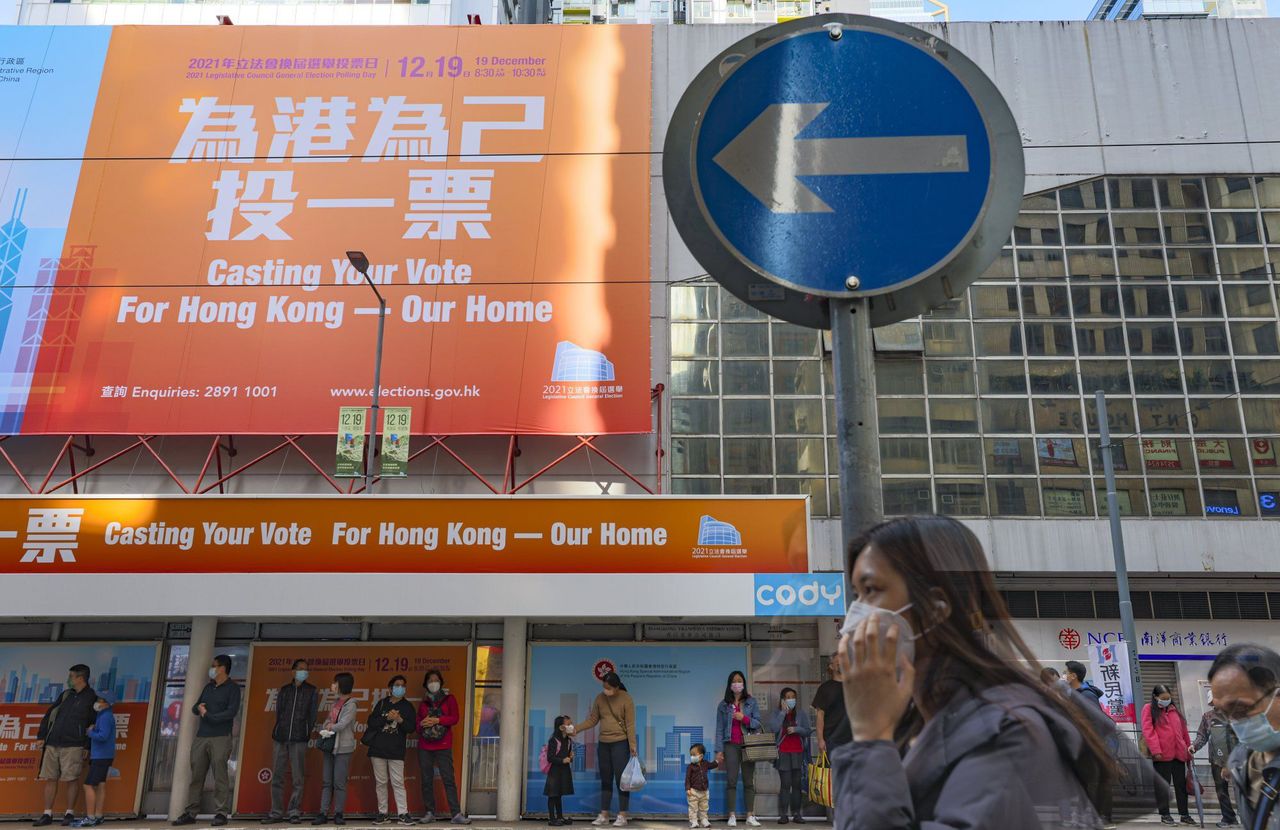 Banners in Wan Chai encouraging members of the public to vote.
Only 20 seats will be filled by direct elections in the city’s geographical constituencies, drastically down from 35 under the previous system. Another 30 legislators will come from functional constituencies, mostly representing various industries.
Legco hopefuls must bag at least 10 nominations from the Election Committee dominated by Beijing loyalists before being screened by the vetting committee.
2. Will the new Legco become merely an echo chamber?
With the opposition party sitting out the race, critics have questioned if the newly minted lawmakers will become a group of yes men rubber-stamping all government policies.
Roughly only a dozen centrist or moderate candidates have thrown their hats into the ring, but voter appetite for their brand of politics remains unclear.
Xia Baolong, China’s top official overseeing Hong Kong affairs, insisted there would be balanced representation in the revamped Legco, citing the Chinese phrase “five lights and 10 colours” to indicate diversity from across the political spectrum.
It will also be the first time since the city’s return to Chinese rule in 1997 that all seats in the Legco race will be contested. The candidates come from an array of backgrounds, including former lawmakers seeking re-election, party members, university professors, lawyers, think tank leaders, business veterans, retired officials, unionists, Westerners, as well as a priest, electrician and bus driver.
Chung Kim-wah, deputy chief executive officer of the Hong Kong Public Opinion Research Institute, said the new Legco members, with narrow voter bases in their respective constituencies, would fall short of representing the public.
“Many Hong Kong people don’t even recognise the candidates’ faces or names. How can they represent the public even if they are elected?” he argued.
3. Will there be enough checks and balances in Legco if there is no opposition?
Some candidates were quick to dismiss the notion that the government would not be held to account, saying they intend to ensure the administration delivered on its policy promises.
One such individual was Professor Sun Dong, 54, head of City University’s biomedical engineering department, running in the Election Committee constituency.
“Perform or step down,” he said. “The government should set performance indicators every year and if officials fail to achieve them, they should step down the way their mainland counterparts have done.”
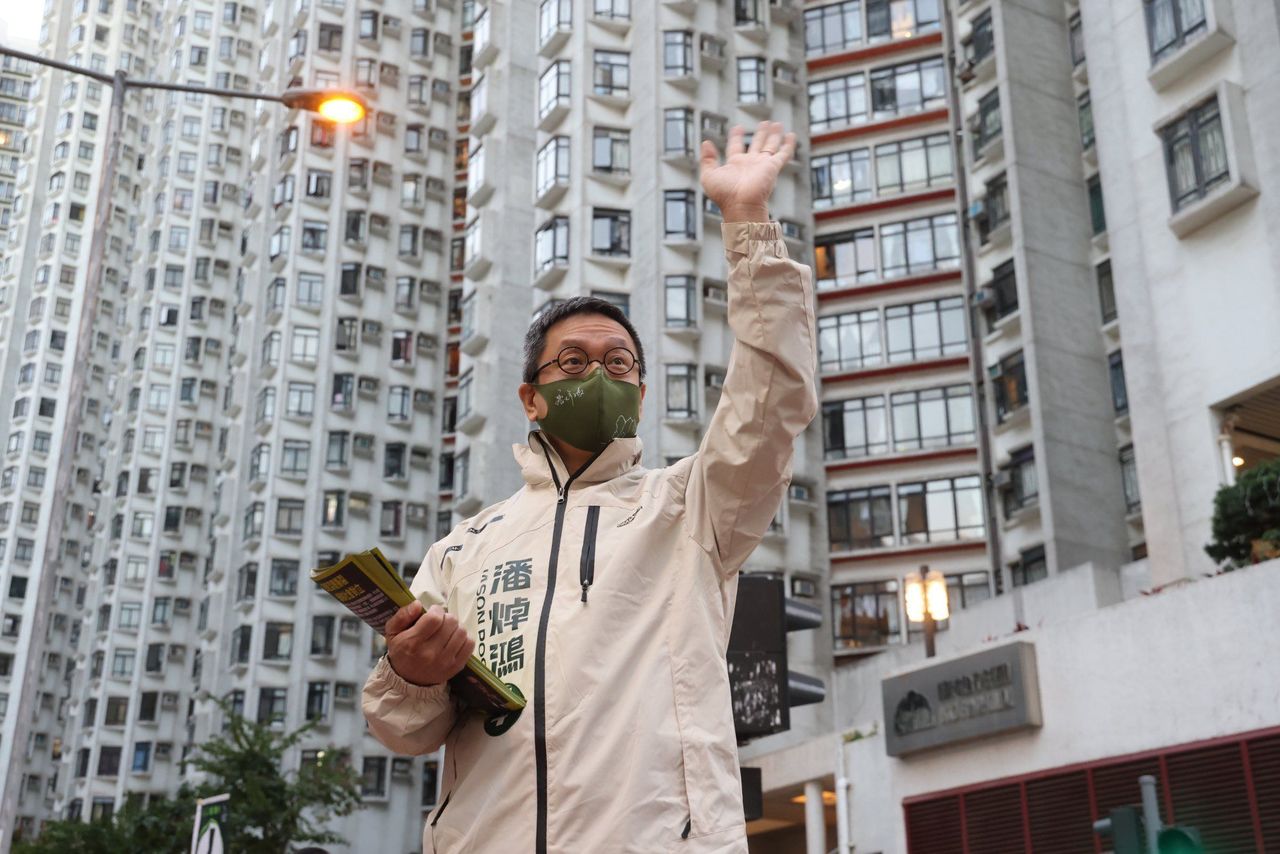 Legislative Council candidate Jason Poon.
Independent candidate Jason Poon Chuk-hung, running in the Hong Kong Island East constituency and also a vocal critic of the government, said he would strive to be the biggest “whistle-blower” over policy failures if elected. He referred to his expose of shoddy construction work that plagued the city’s railway operator, the MTR Corporation, in 2018.
“I will flare up the issues, using public pressure from the city’s millions of residents to scrutinise the government,” he said.
Lau Siu-kai, vice-president of the semi-official think tank, the Chinese Association of Hong Kong and Macau Studies, also said the administration might have more to worry about with new patriotic lawmakers demanding effective governance.
“Beijing has been unhappy with many local policies and has indicated the need to strengthen Hong Kong’s competence in governance, meaning it will demand more accountability from senior officials through scrutiny by new Legco members,” he said.
4. Will voters be breaking the law if they do not cast their ballots?
Voting is not compulsory so residents have the freedom to choose whether to act.
But those who publicly encourage others to boycott elections or spoil their ballots as a form of protest against Beijing’s political revamp will be committing a crime carrying a jail sentence of up to three years under the law.
That would include public communication through speeches, broadcasts, screening and playing of recordings, or publishing of materials such as emails or leaflets.
Hong Kong’s anti-graft agency last month issued arrest warrants for fugitive ex-lawmaker Ted Hui Chi-fung and former district councillor Yau Man-chun, who took to social media to urge Hongkongers to boycott or cast blank votes as a way to protest against the election. Hui has settled in Australia while Yau is in Britain.
So far, a total of 10 people have been arrested for allegedly inciting others to skip Sunday’s vote or cast blank ballots.
5. What can residents expect from the new Legco?
With only “patriots” allowed to hold power in a Legco devoid of opposition members, it is widely expected that government policies will sail through the chamber, unhampered by filibustering or fierce debates.
The new lawmakers are expected to use their expertise to push for effective policies in line with Beijing’s 14th five-year national plan, such as creating a science and technology hub, diversified industries, green initiatives and speedier supply of affordable housing.
On the political front, many observers expect Article 23 of the Basic Law, Hong Kong’s mini-constitution, to be back on the government’s agenda. Under the provision, the city would need to set up legislation of its own against national security offences.
Observers and activists across the political spectrum have said that a massive pushback on Article 23, experienced in 2003 when half a million people took to the streets in protest, is unlikely to occur again, with the opposition camp out of the picture and most potential obstacles cleared under the political revamp.