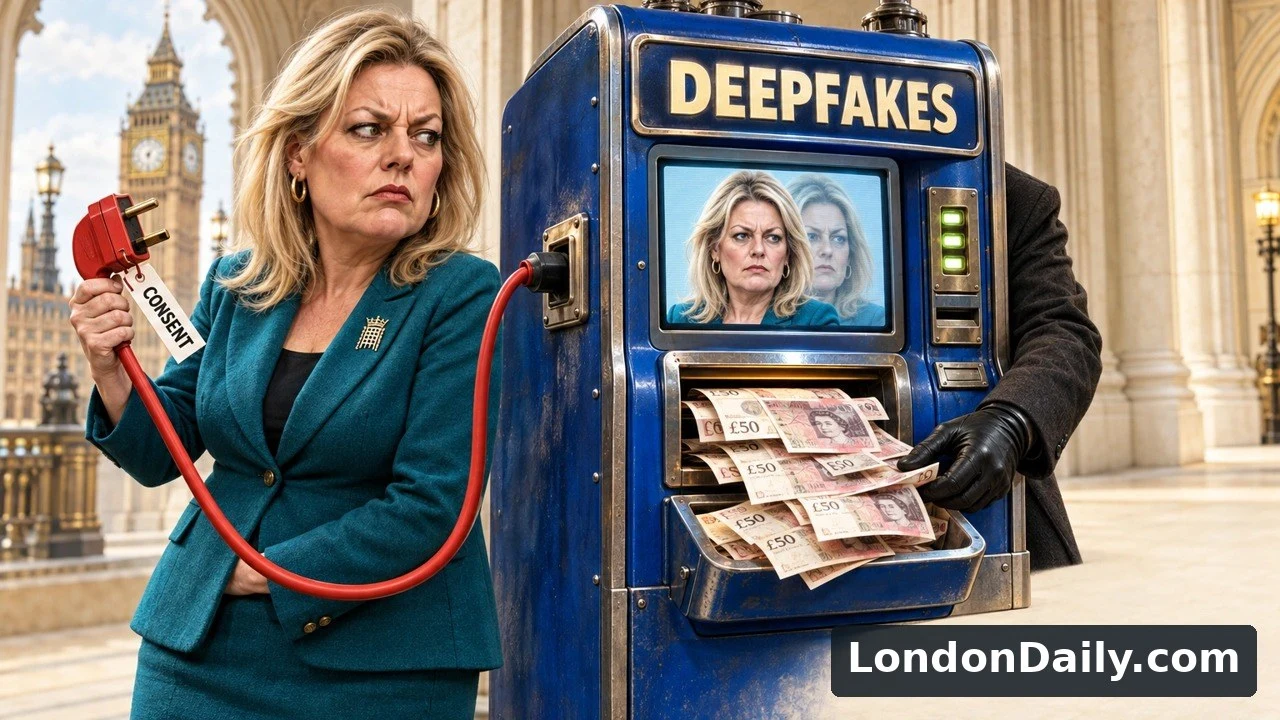
Mims Davies says people are making money from AI-generated pornography using her likeness, and has waived her right to anonymity to press for more resources to identify and prosecute those responsible.
The shadow Welsh Secretary said an email sent to her parliamentary inbox alerted her that her name and image had appeared in abusive and pornographic content on online forums. Her office confirmed that reports had been made to the Metropolitan Police and parliamentary authorities.
Davies, the Conservative MP for East Grinstead and Uckfield in East Sussex, described people profiting from deepfakes as “grotesque”. She urged others affected to report the abuse so that those responsible could be held to account.
“It's completely unacceptable, it's a violation and an outrage,” she said.
Her concern extends beyond the immediate intrusion. Davies warned that such abuse could discourage women from entering public life, while affecting their families and leaving them uncertain about what others might have seen or believed.
“This could be any woman. This could be anyone in politics, in business, or down in your high street,” she said.
Deepfakes are pictures, videos or audio clips created with artificial intelligence to appear genuine. Sharing or threatening to share intimate photographs or videos without consent is illegal, including where the images are deepfakes.
Ofcom said “significant action is being taken to tackle intimate image abuse”, while acknowledging there was “more to do”. Under the Online Safety Act, technology firms must assess and mitigate the risk of UK users encountering illegal content and remove it quickly once they become aware of it. The regulator said its expectations included using automated technology to tackle illegal intimate images.
In January, Ofcom opened an investigation into X over concerns that its AI tool Grok was being used to create sexualised images. It gave platforms until the end of September this year to take effective steps to prevent illegal intimate images and deepfakes spreading, warning of fines of up to 10% of global annual revenue for breaches of their duties.
The enforcement questions are distinct: Ofcom’s powers address platforms’ legal responsibilities, while Davies is seeking greater capacity to find and prosecute the individuals behind the abuse.








Join the conversation